This is your Silicon Siege: China's Tech Offensive podcast.
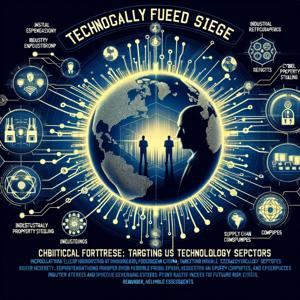
Hey listeners, Ting here, your go-to cyber sleuth on all things China hacking chaos. Buckle up for Silicon Siege: China's Tech Offensive, straight from the past two weeks' madness ending February 13, 2026. We're talking a barrage of cyber ops slamming US tech like a digital tsunami.
First off, industrial espionage is peaking. Google Threat Intelligence Group dropped a bombshell, linking China-nexus crews like UNC3236, aka Volt Typhoon, to recon on North American defense contractors' login portals using ARCMAZE obfuscation to hide tracks. They're probing edge devices for sneaky entry into defense tech, eyeing autonomous vehicles and drones fueling the Russia-Ukraine battlefield. UNC6508 hit a US research institution late 2023-style with REDCap exploits, dropping INFINITERED malware for persistent access and credential grabs during software upgrades. Google's report nails it: China's using operational relay box networks to scout defense targets, dodging detection like ghosts in the machine.
Intellectual property theft? OpenAI's screaming bloody murder. Reuters and Bloomberg report DeepSeek staffers bypassed OpenAI's barriers via shady third-party routers, slurping model insights to supercharge their R1 chatbot. OpenAI's memo to US lawmakers warns China's shortcutting years of R&D, potentially leapfrogging US AI supremacy with cheaper dev costs—up to 80% less—and endless power for data centers. Steve Ballmer once griped Microsoft lost billions to China IP grabs; now it's AI secrets fueling Beijing's edge.
Supply chain compromises are the sneaky killer. Leaked docs via NetAskari and Recorded Future News expose "Expedition Cloud," China's secret sim platform for hacking neighbors' power grids, transport, and smart homes. No defenders allowed—just recon teams mapping networks, then attack squads pummeling replicas of South China Sea foes. AI orchestrates it all, per the files from an unsecured FTP server. Palo Alto's Unit 42 spotted TGR-STA-1030 in "Shadow Campaigns," a global spy fest hitting 37 countries' infra, but dialed back China attribution fearing Beijing backlash after their software ban.
Strategic implications? US tech's a sitting duck. Pentagon's 1260H list briefly tagged Alibaba, Baidu, BYD before yanking it amid Trump-Xi summit jitters—Reuters says it's to pause bans on China Telecom, TP-Link routers, pausing data center safeguards. Critics like Chuck Schumer blast it as selling out national security, risking "Chinese digital sovereignty" in US AI backbone. Expert Tom Hegel from SentinelOne calls it a "broader pattern" of China intel grabs. Joshua Rudd, Trump's NSA pick, warns China's hoarding AI chips for weaponized smarts. Taiwan's even signaling China might be rehearsing a digital siege.
Future risks? Constant multi-vector siege on defense and AI, per Google. Without real costs, per State Department cyber chief, we're building vulnerabilities into our core. China could do
This content was created in partnership and with the help of Artificial Intelligence AI.



 View all episodes
