This is your Silicon Siege: China's Tech Offensive podcast.
I’m Ting, and if you ever wanted the inside scoop on the Silicon Siege—China’s relentless tech offensive—pull up a chair, listeners. The past two weeks have served up a cyber-thriller, but it’s no Hollywood script. Let’s dive in before some state-backed venture fund tries to poach me.
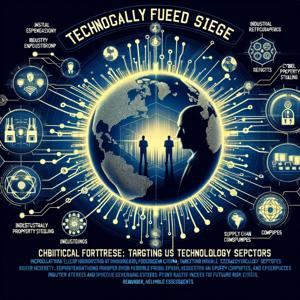
First, industrial espionage is no longer cloak-and-dagger—it’s cloud buckets, contractor payroll, and coffee chats at Palo Alto cafes. In the last twelve days, incidents have unspooled like a spy series. According to pwkinternational.com, China’s Ministry of State Security has sneakily woven itself throughout the Valley, blending state investment money with talent pipelines and insider access. Take the high-profile case of Linwei “Leon” Ding, the Google engineer busted for sneaking out confidential AI hardware files while secretly collaborating with Chinese firms. The sheer audacity—over 500 files, with plans to funnel trade secrets straight to Beijing. And he’s not the only one: in upstate New York, Ji Wang was convicted last week for pilfering cutting-edge laser research tied to DARPA; he’d already begun talks with Thousand Talents Plan officials for millions in backing. Prosecutors say this technology could help knock drones out of the sky—and Wang nearly turned it into the tech unicorn of Shandong Province.
Now, intellectual property threats—this is where things get wild. China’s offensive isn’t just hacking into the Fortune 500. They’re crawling into six-person startups through back channels: shell companies, “harmless” joint ventures, student researchers who publish for two countries at once. Talent drain is real—generous offers from shady subsidiaries, dual employment stints in Shanghai and Santa Clara, and academic pipelines that quietly export the crown jewels of biotech and semiconductors.
What about supply chains? Chinese actors have been manipulating the very wiring that knits Silicon Valley together. According to a recent Microsoft report, distinct hacking groups like Storm-2603 have moved from espionage to full-on ransomware in the last four months—think factory firmware hijacks, dev tool backdoors, and malware-laden TP-Link routers that House lawmakers are literally trying to ban. Those routers, by the way, have been weaponized for “password spraying” attacks against Microsoft accounts for years. And let’s not forget the quiet threat beneath the ocean—The Cipher Brief reports mounting alarm over Chinese-owned undersea cables. Those cables carry global data and, potentially, a backdoor to scrape everything from military comms to $22 trillion in financial traffic.
Strategically? America’s open innovation system—designed for collaboration, not confrontation—has become the soft underbelly. Today, the Chinese playbook blends overt moves like CCP-friendly venture funding and covert tactics like invisible shell firms. Intelligence experts including Rear Admiral Mike Studeman warn that Beijing’s
This content was created in partnership and with the help of Artificial Intelligence AI.



 View all episodes
