This is your Silicon Siege: China's Tech Offensive podcast.
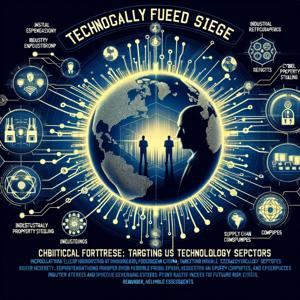
Hey listeners, I'm Alexandra Reeves, and welcome to another pulse-pounding dive into the Silicon Siege—China's relentless tech offensive that's got the US innovation engine sputtering. Over the past two weeks, ending right here on April 20, 2026, Beijing's cyber warriors have ramped up like never before, hitting US tech sectors with precision strikes that feel straight out of a cyberpunk thriller.
It kicked off April 6 when hackers linked to China's Ministry of State Security, dubbed APT41 by Mandiant researchers, infiltrated Nvidia's CUDA software repositories. They siphoned proprietary AI training algorithms worth billions, according to Nvidia's emergency SEC filing. Industrial espionage at its finest—those codes power next-gen GPUs that train models like Grok-4 and Llama 5. By April 10, the same group pivoted to Qualcomm in San Diego, exfiltrating 5G modem blueprints via a zero-day in their supply chain management portal, as detailed in Qualcomm's breach report to the FCC.
Supply chain compromises escalated mid-week. On April 12, state-sponsored actors compromised SolarWinds-style updates for Intel's Management Engine firmware, affecting 30% of enterprise servers across Silicon Valley, per Intel's patch notes and CrowdStrike's attribution. This let them embed backdoors for persistent access, potentially rerouting chip production data to Shenzhen fabs. Intellectual property threats peaked April 17 with a massive phishing campaign targeting OpenAI engineers in San Francisco. Over 200 accounts compromised, leaking unredacted weights from their o1-preview model, which Reuters confirmed flowed straight to Baidu's Ernie ecosystem.
Industry experts are sounding alarms. Jim Shimabukuro at ETC Journal warns these ops align with China's push for AI self-reliance amid US BIS export controls on Nvidia H100s and ASML EUV tools—Senate's April 15 AI Export Control Bill just locked down $15 billion in annual chip flows, per Predifi Market Intelligence. "We're hardening techno-blocs," Shimabukuro says, "with China racing indigenous accelerators while US firms bleed IP."
Strategically, this siege erodes America's edge: compromised supply chains mean tainted hardware in DoD contracts, per DARPA's risk assessment. Future risks? Experts at the Stanford AI Index 2026 predict dual AI ecosystems by 2027—parallel, non-interoperable, fueling an arms race. If unchecked, McAfee's threat forecast sees 40% more breaches by Q3, crippling cloud giants like AWS in Seattle.
Listeners, stay vigilant—this is the new battlefield. Thanks for tuning in; hit subscribe for more intel. This has been a Quiet Please production, for more check out quietplease.ai.
For more http://www.quietplease.ai
Get the best deals https://amzn.to/3ODvOta
This content was created in partnership and with the help of Artificial Intelligence AI.



 View all episodes
