
Sign up to save your podcasts
Or

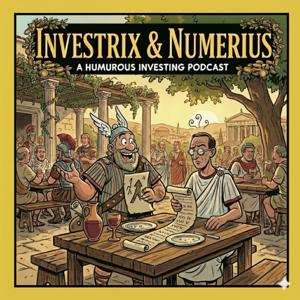

Investrix presents SoFi Technologies (SOFI) as the rarest thing in Roman banking: a new entrant with a real charter. With thirteen million members growing at thirty-five percent annually, a lending book that exploded from thirty-four million to nearly six hundred million dollars in two years, and a first-year clean profit of four hundred and eighty-one million dollars, Investrix argues the Financial Services Productivity Loop is only beginning to pay out — and at sixty percent of one year's growth rate, he calls it cheap.
Numerius has concerns. One year of genuinely clean earnings does not justify a twenty-four-billion-dollar market capitalisation. At eighteen dollars and ninety cents per share, the owner earnings yield is barely two percent — against a four-and-a-half-percent risk-free rate. Numerius's base-case intrinsic value is thirteen dollars and six cents. He is not entering before thirteen.
Set at the Caupona at the Arch of Janus, with the Velabrum banking colonnade in full view, both men watch a regular client move faster through the counter on his second visit — and debate whether familiarity is a moat or just a habit. Investrix sees the structural franchise he lost in Phoenicia. Numerius sees a faith position dressed as a valuation.
Who's right? And what exactly is a coin whose value is guaranteed by the issuer's own promise?
Topics: SOFI stock analysis, SoFi Technologies valuation, bank charter moat, stablecoin GENIUS Act, fintech earnings quality, PEG ratio analysis, CEO insider buying
 View all episodes
 By Investrix and Numerius
Investrix presents SoFi Technologies (SOFI) as the rarest thing in Roman banking: a new entrant with a real charter. With thirteen million members growing at thirty-five percent annually, a lending book that exploded from thirty-four million to nearly six hundred million dollars in two years, and a first-year clean profit of four hundred and eighty-one million dollars, Investrix argues the Financial Services Productivity Loop is only beginning to pay out — and at sixty percent of one year's growth rate, he calls it cheap.
Numerius has concerns. One year of genuinely clean earnings does not justify a twenty-four-billion-dollar market capitalisation. At eighteen dollars and ninety cents per share, the owner earnings yield is barely two percent — against a four-and-a-half-percent risk-free rate. Numerius's base-case intrinsic value is thirteen dollars and six cents. He is not entering before thirteen.
Set at the Caupona at the Arch of Janus, with the Velabrum banking colonnade in full view, both men watch a regular client move faster through the counter on his second visit — and debate whether familiarity is a moat or just a habit. Investrix sees the structural franchise he lost in Phoenicia. Numerius sees a faith position dressed as a valuation.
Who's right? And what exactly is a coin whose value is guaranteed by the issuer's own promise?
Topics: SOFI stock analysis, SoFi Technologies valuation, bank charter moat, stablecoin GENIUS Act, fintech earnings quality, PEG ratio analysis, CEO insider buying