
Sign up to save your podcasts
Or

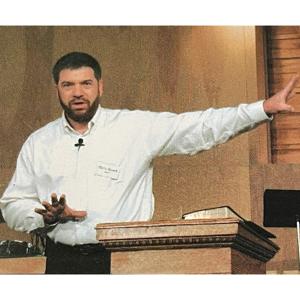

The central message of this sermon is that Christians have a responsibility to give financially to God's work, and that this giving should be done with the correct mindset: recognizing that all we have belongs to God, not us. This means giving regularly, proportionately (based on one's income), and generously, rather than viewing giving as an optional or begrudging act. The sermon argues that many Christians view giving too casually, seeing it as a mere "tip" or addition to their lives, rather than recognizing the biblical principle of tithing (giving 10% of one's income) as a standard for generosity and faithfulness. By exploring the concept of stewardship and the biblical basis for giving, the sermon encourages listeners to reevaluate their approach to financial giving and strive to give more generously and regularly, not out of obligation but out of gratitude and recognition that God owns everything we have.
 View all episodes
 By cstpb
5
22 ratings
The central message of this sermon is that Christians have a responsibility to give financially to God's work, and that this giving should be done with the correct mindset: recognizing that all we have belongs to God, not us. This means giving regularly, proportionately (based on one's income), and generously, rather than viewing giving as an optional or begrudging act. The sermon argues that many Christians view giving too casually, seeing it as a mere "tip" or addition to their lives, rather than recognizing the biblical principle of tithing (giving 10% of one's income) as a standard for generosity and faithfulness. By exploring the concept of stewardship and the biblical basis for giving, the sermon encourages listeners to reevaluate their approach to financial giving and strive to give more generously and regularly, not out of obligation but out of gratitude and recognition that God owns everything we have.