
Sign up to save your podcasts
Or

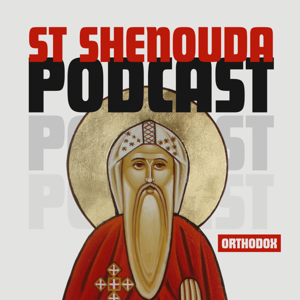

Today, we delve into the awe-inspiring life and profound monastic teachings of St. Pisentius, Bishop of Qift (Coptos), a celebrated Coptic bishop and spiritual writer who flourished in Egypt during the 7th century, just before the Arab invasion. Born around 568 AD in the village of Shamir, Armant, he was nurtured by pious Christian parents with a deeply evangelical mindset. He was a contemporary of Pope Damian, the 35th Patriarch, who consecrated him bishop. St. Pisentius served as bishop of this important Upper Egyptian town during a significant historical period, including the Persian invasion in 619 AD, and potentially witnessed the Great Persecution by Byzantines (630-640 AD) and the subsequent Arab invasion and brutality in 640 AD.
From his formative years, St. Pisentius committed himself to the ascetic life, becoming a monk in the Monastery of Abi FAM on Mount Shamah, where he was discipled by the venerable Anba Elijah the Great. His monastic journey, spent mostly on el-Asas mount, was characterized by rigorous spiritual struggle, including perpetual prayers, diligent memorization of the Holy Bible, and severe fasting,
A striking manifestation of his holiness was that when he prayed and lifted his hands, his ten fingers became filled with light, shining like bright lamps. His deep spiritual communion extended to physical encounters, as he conversed with Saint Elijah the Tishbite (or Carmelite), who visited him to offer divine comfort during times of weakness and isolation. God also performed numerous miracles through him during his monastic life, such as miraculously filling empty water pots for thirsty brethren on the mountain, and causing a fresh water spring to appear in the wilderness after four days of prayer. His commitment to purity was unwavering; he never looked upon the face of a woman, always keeping his head bowed to the ground. This strictness was highlighted when a woman with a severe illness, seeking healing, lay in wait for him near his cell. He ran away, but she took a handful of dust from where his foot had trodden, swallowed it in faith, and was immediately healed.
His writings and the recording of his life are a cornerstone of Coptic literature. His biography was authored in the 7th century by his own disciple, John the Elder, and exists in Coptic, Arabic, and Ethiopic versions, many of which are available today in English and French translations. Furthermore, two significant letters are attributed to him: the First Letter is an exhortation for the Copts to remain steadfast in Christianity and not convert to Islam. The Second Letter, though likely written in the 13th century based on a genuine literary core, is considered an important piece of Coptic apocalyptic literature.
St. Pisentius had divine foreknowledge of his departure. He informed his disciple John of a vision where Saints Peter and Paul invited him to the heavenly Jerusalem. He gathered his congregation, offering final teachings, rebukes, and commandments, confirming them in the Right Faith. He humbly requested to be buried in his ordinary monastic attire rather than splendid garments. He peacefully departed to the Lord on the 13th of Hamle, equivalent to July 20th or 23rd in different calendars. Following his repose, God manifested many miracles through his body; a piece of the cloth he was buried in was taken by his servant and used to heal numerous sick individuals who approached it in faith. His body was notably discovered on July 8, 2018 AD.
You can read more about St. Pisentius by visiting St. Shenouda Press and reading "The Life of St. Pisentius."
 View all episodes
 By St Shenouda Press
Today, we delve into the awe-inspiring life and profound monastic teachings of St. Pisentius, Bishop of Qift (Coptos), a celebrated Coptic bishop and spiritual writer who flourished in Egypt during the 7th century, just before the Arab invasion. Born around 568 AD in the village of Shamir, Armant, he was nurtured by pious Christian parents with a deeply evangelical mindset. He was a contemporary of Pope Damian, the 35th Patriarch, who consecrated him bishop. St. Pisentius served as bishop of this important Upper Egyptian town during a significant historical period, including the Persian invasion in 619 AD, and potentially witnessed the Great Persecution by Byzantines (630-640 AD) and the subsequent Arab invasion and brutality in 640 AD.
From his formative years, St. Pisentius committed himself to the ascetic life, becoming a monk in the Monastery of Abi FAM on Mount Shamah, where he was discipled by the venerable Anba Elijah the Great. His monastic journey, spent mostly on el-Asas mount, was characterized by rigorous spiritual struggle, including perpetual prayers, diligent memorization of the Holy Bible, and severe fasting,
A striking manifestation of his holiness was that when he prayed and lifted his hands, his ten fingers became filled with light, shining like bright lamps. His deep spiritual communion extended to physical encounters, as he conversed with Saint Elijah the Tishbite (or Carmelite), who visited him to offer divine comfort during times of weakness and isolation. God also performed numerous miracles through him during his monastic life, such as miraculously filling empty water pots for thirsty brethren on the mountain, and causing a fresh water spring to appear in the wilderness after four days of prayer. His commitment to purity was unwavering; he never looked upon the face of a woman, always keeping his head bowed to the ground. This strictness was highlighted when a woman with a severe illness, seeking healing, lay in wait for him near his cell. He ran away, but she took a handful of dust from where his foot had trodden, swallowed it in faith, and was immediately healed.
His writings and the recording of his life are a cornerstone of Coptic literature. His biography was authored in the 7th century by his own disciple, John the Elder, and exists in Coptic, Arabic, and Ethiopic versions, many of which are available today in English and French translations. Furthermore, two significant letters are attributed to him: the First Letter is an exhortation for the Copts to remain steadfast in Christianity and not convert to Islam. The Second Letter, though likely written in the 13th century based on a genuine literary core, is considered an important piece of Coptic apocalyptic literature.
St. Pisentius had divine foreknowledge of his departure. He informed his disciple John of a vision where Saints Peter and Paul invited him to the heavenly Jerusalem. He gathered his congregation, offering final teachings, rebukes, and commandments, confirming them in the Right Faith. He humbly requested to be buried in his ordinary monastic attire rather than splendid garments. He peacefully departed to the Lord on the 13th of Hamle, equivalent to July 20th or 23rd in different calendars. Following his repose, God manifested many miracles through his body; a piece of the cloth he was buried in was taken by his servant and used to heal numerous sick individuals who approached it in faith. His body was notably discovered on July 8, 2018 AD.
You can read more about St. Pisentius by visiting St. Shenouda Press and reading "The Life of St. Pisentius."