
Sign up to save your podcasts
Or

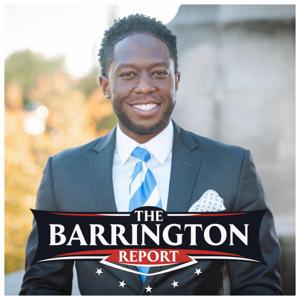

🌟 Episode OverviewIn this end-of-year, no-frills installment of The Barrington Report, Barrington Martin II opens with a cultural temperature check—starting with the “6–7” craze and what it reveals about hive-mind behavior, not just among kids, but grown adults who should know better. From there, he shifts into a reflective holiday monologue, questioning why Christmas 2025 feels emotionally flatter than the Christmas seasons of the past, and calling out the modern consumption-first version of “holiday spirit” that’s replaced tradition, gratitude, and family-centered meaning.
Then the show locks in on politics and power: Nebraska moving first on Medicaid work requirements, New York positioning itself to legalize medically assisted suicide, and an absurd IRS lawsuit arguing pets should qualify as tax dependents—each story serving as a window into what Barrington frames as the modern tension between freedom and responsibility.
The episode closes with a hard pivot into institutional distrust: FBI Deputy Director Dan Bongino’s expected resignation, the predictable “Epstein files” hype cycle, and Barrington’s skepticism that the public will get anything but a heavily redacted disappointment. From there, he dissects President Trump’s latest address as a campaign-style brag sheet, walking through major claims and contrasting them with reported fact-checks—ending with Barrington’s recurring thesis: America isn’t run as a representative government anymore, and the “ballot box” won’t save you.
🎙️ Key Highlights
* The “6–7” Craze and the Hive-Mind Problem
* Barrington breaks down why the trend annoys him—and not because it’s “kids being kids.”
* His point is sharper: when teenagers and adults pile onto something senseless, it exposes how malleable the masses are.
* The “get off my lawn” moment becomes a bigger critique of cultural manipulation.
* Why Christmas Doesn’t Feel Like Christmas Anymore
* Barrington reflects on the missing “magic” and wonders whether politics, social tension, aging, or cultural drift is to blame.
* He argues the season used to be the rare moment where people dropped the nonsense and prioritized family and joy—and that vibe feels weaker in 2025.
* Holiday Consumption as a Social Trap
* He calls out the idea that love and value are measured by gifts.
* Corporations benefit, people stress, and meaning gets replaced with inventory clearance—his message: return to the traditional, sentimental core of the holiday.
* Nebraska’s Medicaid Work Requirement: “Fair Is Fair”
* Nebraska plans to implement the new Medicaid work requirement (80 hours/month).
* Barrington supports it outright, arguing social safety nets should come with work/means testing, and he uses it to launch a broader critique of bloated bills packed with pork.
* “No Taxation Without Representation” in Modern America
* Barrington cites the idea (via Justin Amash’s framing) that the U.S. functions as an oligarchy with democratic ornamentation.
* He connects this to civic hypocrisy: schools teach the slogan, while adults live a reality where they’re taxed and ignored.
* New York and Medically Assisted Suicide: Freedom vs. Guardrails
* Barrington calls it controversial but ultimately frames it as what liberty looks like—if someone chooses it for themselves.
* His warning is the slippery part: it must not become a coerced “solution” to problems caused by government failure.
* Pets as Tax Dependents: “What Are We Doing?”
* The IRS lawsuit is treated as a cultural red flag: pets being elevated to the legal status of children.
* Barrington draws a hard line: children are a societal future; pets are a personal choice and responsibility—stop collapsing the distinction.
* Bongino Resignation + Epstein Files: Don’t Hold Your Breath
* Barrington predicts the “files” will be heavily redacted and function as distraction content.
* He speculates Bongino may have seen something behind the curtain and is stepping away before the ship takes on more water.
* Trump Address Fact-Check: Narrative vs. Data
* Barrington says he can admit when he’s wrong (he expected Venezuela war talk—didn’t happen).
* He characterizes the speech as recap + pitch, then walks through disputed claims: inflation, wages, drug prices, “warrior dividend” checks, refunds, and foreign investment.
* Bottom line: big claims, weak grounding, and voters still living the reality in their bank accounts.
* The Closing Thesis: The Ballot Box Won’t Fix This
* Barrington argues nothing meaningfully changes regardless of who’s in office because power serves oligarchs, technocrats, and corporations.
* He makes a historically loaded point about how major change has typically come through conflict—then explicitly says he’s not encouraging violence, just stating what history shows.
* He urges listeners to face reality, stop trusting the federal government as an institution, and rethink the habits that keep producing the same outcomes.
⭐ Why You Should ListenThis episode is part cultural critique, part holiday reality check, and part political teardown. If you’ve felt like the country is stuck in performative trends, hollow traditions, and scripted politics—with the public constantly herded from one distraction to the next—Barrington lays out a blunt framework: freedom requires responsibility, and institutions that can’t be trusted shouldn’t be worshipped.
📬 Where to Find More
* Substack: barrington.substack.com
* X/Twitter: @TBR24_7
* Listen Live: ATL Talks Radio
* Replays: Apple Podcasts & Spotify
 View all episodes
 By The Barrington Report Replays
🌟 Episode OverviewIn this end-of-year, no-frills installment of The Barrington Report, Barrington Martin II opens with a cultural temperature check—starting with the “6–7” craze and what it reveals about hive-mind behavior, not just among kids, but grown adults who should know better. From there, he shifts into a reflective holiday monologue, questioning why Christmas 2025 feels emotionally flatter than the Christmas seasons of the past, and calling out the modern consumption-first version of “holiday spirit” that’s replaced tradition, gratitude, and family-centered meaning.
Then the show locks in on politics and power: Nebraska moving first on Medicaid work requirements, New York positioning itself to legalize medically assisted suicide, and an absurd IRS lawsuit arguing pets should qualify as tax dependents—each story serving as a window into what Barrington frames as the modern tension between freedom and responsibility.
The episode closes with a hard pivot into institutional distrust: FBI Deputy Director Dan Bongino’s expected resignation, the predictable “Epstein files” hype cycle, and Barrington’s skepticism that the public will get anything but a heavily redacted disappointment. From there, he dissects President Trump’s latest address as a campaign-style brag sheet, walking through major claims and contrasting them with reported fact-checks—ending with Barrington’s recurring thesis: America isn’t run as a representative government anymore, and the “ballot box” won’t save you.
🎙️ Key Highlights
* The “6–7” Craze and the Hive-Mind Problem
* Barrington breaks down why the trend annoys him—and not because it’s “kids being kids.”
* His point is sharper: when teenagers and adults pile onto something senseless, it exposes how malleable the masses are.
* The “get off my lawn” moment becomes a bigger critique of cultural manipulation.
* Why Christmas Doesn’t Feel Like Christmas Anymore
* Barrington reflects on the missing “magic” and wonders whether politics, social tension, aging, or cultural drift is to blame.
* He argues the season used to be the rare moment where people dropped the nonsense and prioritized family and joy—and that vibe feels weaker in 2025.
* Holiday Consumption as a Social Trap
* He calls out the idea that love and value are measured by gifts.
* Corporations benefit, people stress, and meaning gets replaced with inventory clearance—his message: return to the traditional, sentimental core of the holiday.
* Nebraska’s Medicaid Work Requirement: “Fair Is Fair”
* Nebraska plans to implement the new Medicaid work requirement (80 hours/month).
* Barrington supports it outright, arguing social safety nets should come with work/means testing, and he uses it to launch a broader critique of bloated bills packed with pork.
* “No Taxation Without Representation” in Modern America
* Barrington cites the idea (via Justin Amash’s framing) that the U.S. functions as an oligarchy with democratic ornamentation.
* He connects this to civic hypocrisy: schools teach the slogan, while adults live a reality where they’re taxed and ignored.
* New York and Medically Assisted Suicide: Freedom vs. Guardrails
* Barrington calls it controversial but ultimately frames it as what liberty looks like—if someone chooses it for themselves.
* His warning is the slippery part: it must not become a coerced “solution” to problems caused by government failure.
* Pets as Tax Dependents: “What Are We Doing?”
* The IRS lawsuit is treated as a cultural red flag: pets being elevated to the legal status of children.
* Barrington draws a hard line: children are a societal future; pets are a personal choice and responsibility—stop collapsing the distinction.
* Bongino Resignation + Epstein Files: Don’t Hold Your Breath
* Barrington predicts the “files” will be heavily redacted and function as distraction content.
* He speculates Bongino may have seen something behind the curtain and is stepping away before the ship takes on more water.
* Trump Address Fact-Check: Narrative vs. Data
* Barrington says he can admit when he’s wrong (he expected Venezuela war talk—didn’t happen).
* He characterizes the speech as recap + pitch, then walks through disputed claims: inflation, wages, drug prices, “warrior dividend” checks, refunds, and foreign investment.
* Bottom line: big claims, weak grounding, and voters still living the reality in their bank accounts.
* The Closing Thesis: The Ballot Box Won’t Fix This
* Barrington argues nothing meaningfully changes regardless of who’s in office because power serves oligarchs, technocrats, and corporations.
* He makes a historically loaded point about how major change has typically come through conflict—then explicitly says he’s not encouraging violence, just stating what history shows.
* He urges listeners to face reality, stop trusting the federal government as an institution, and rethink the habits that keep producing the same outcomes.
⭐ Why You Should ListenThis episode is part cultural critique, part holiday reality check, and part political teardown. If you’ve felt like the country is stuck in performative trends, hollow traditions, and scripted politics—with the public constantly herded from one distraction to the next—Barrington lays out a blunt framework: freedom requires responsibility, and institutions that can’t be trusted shouldn’t be worshipped.
📬 Where to Find More
* Substack: barrington.substack.com
* X/Twitter: @TBR24_7
* Listen Live: ATL Talks Radio
* Replays: Apple Podcasts & Spotify