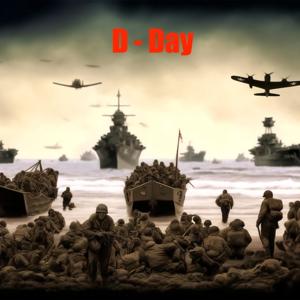
The Aftermath and Legacy of D-Day The Normandy landings on June 6, 1944, marked a turning point in World War II, setting the stage for the liberation of Western Europe from Nazi occupation. The success of the D-Day invasion was a testament to the bravery, sacrifice, and determination of the Allied forces, who overcame immense challenges to establish a foothold on the European continent. However, the story of D-Day does not end with the initial landings. The aftermath of the invasion and its long-term legacy continue to shape our understanding of World War II and its impact on the modern world. Securing the Beachhead and Pushing Inland In the immediate aftermath of the D-Day landings, the Allied forces faced the daunting task of securing their hard-won positions on the Normandy beaches and pushing inland to establish a stable front line. The German defenders, although initially caught off guard, quickly regrouped and mounted fierce counterattacks in an attempt to drive the Allies back into the sea. The fighting in Normandy was intense and bloody, with both sides suffering heavy casualties. The Allies, however, had the advantage of air and naval superiority, which allowed them to reinforce their positions and maintain pressure on the German defenses. Slowly but surely, the Allied forces began to expand their foothold, taking key towns and cities such as Bayeux, Caen, and Saint-Lô. As the Allies pushed inland, they faced a series of formidable obstacles, including the Norman bocage, a landscape of narrow, winding roads bordered by thick hedgerows that provided ideal defensive positions for the Germans. The Allies had to adapt their tactics to this challenging terrain, employing specialized equipment such as the "Rhino" tank attachment to navigate the bocage and root out German defenders. After several weeks of hard fighting, the Allies finally achieved a major breakthrough in late July 1944 with Operation Cobra. This massive offensive, spearheaded by the U.S. First Army, punched a hole in the German lines near the town of Saint-Lô, allowing the Allies to pour into the French interior. The success of Operation Cobra marked a turning point in the Normandy campaign, as the Allies were able to break out of the confines of the bocage and engage the Germans in more open terrain. The German forces, now in retreat, attempted to regroup and establish new defensive lines, but the speed and momentum of the Allied advance made this increasingly difficult. The breakout from Normandy also had significant strategic implications, as it allowed the Allies to threaten the German-held ports along the French coast, which were crucial for supplying the Allied armies. The rapid Allied advance also forced the Germans to divert resources from other fronts, including the Eastern Front, where they were already under pressure from the advancing Soviet forces. The Liberation of France As the Allies pushed deeper into France, they were met with jubilant crowds of French civilia
This content was created in partnership and with the help of Artificial Intelligence AI.



 View all episodes



