
Sign up to save your podcasts
Or

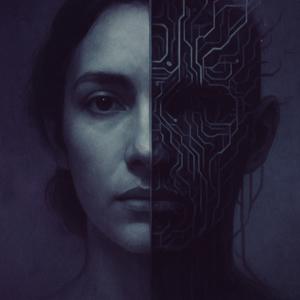

Our memory flaws make us human. Our memories fade, diminish, and sometimes get rewritten.
But perhaps it is precisely these flaws that give meaning to our lives.
Will artificial intelligences that store our memories with crystal clarity in the future make us more ‘us’... or will they take away our luxury of forgetting, which transforms us into human beings?
From Bergson's view of memory as a creative process to Nietzsche's consideration of forgetting as a fundamental condition of life; drawing from Proust's memory windows opened by the Madeleine cake, in this section we ask:
Does flawless memory bring us an immortal freedom, or is it a heavy burden that chains our identity?
 View all episodes
 By BARIS
Our memory flaws make us human. Our memories fade, diminish, and sometimes get rewritten.
But perhaps it is precisely these flaws that give meaning to our lives.
Will artificial intelligences that store our memories with crystal clarity in the future make us more ‘us’... or will they take away our luxury of forgetting, which transforms us into human beings?
From Bergson's view of memory as a creative process to Nietzsche's consideration of forgetting as a fundamental condition of life; drawing from Proust's memory windows opened by the Madeleine cake, in this section we ask:
Does flawless memory bring us an immortal freedom, or is it a heavy burden that chains our identity?