
Sign up to save your podcasts
Or



The Massacre at Shechem: Revenge, Betrayal and a Biblical Bloodbath
One family. One terrible betrayal. An entire city pays the price.
Buried in Genesis 34 is one of the Old Testament's most disturbing and controversial stories. When Dinah, the daughter of Jacob, becomes involved with Shechem, the son of a powerful local ruler, events spiral into a shocking tale of deception, revenge and mass murder.
What begins as an attempt to arrange a marriage ends with an entire city's men slaughtered, its wealth plundered and its women and children taken captive. And the perpetrators? Two of Jacob's own sons, Simeon and Levi.
But what really happened at Shechem? Was this a story of family honour and revenge, a warning about the dangers of intermarriage, or something far more complicated? And why does the Bible preserve such an uncomfortable account of the ancestors of Israel?
In this episode of The B-Side Bible, we investigate the ancient world behind Genesis 34, exploring the politics of marriage, tribal identity, circumcision and the brutal consequences of a calculated act of revenge.
It's a biblical story that rarely makes it into Sunday school, and once you've heard it, you'll understand why.
The B-Side Bible — because there's always another side to the story.
🎙️ Listen on Spotify, Apple Podcasts, Amazon Music and other major podcast platforms.
🌐 narranimatestudios.com.au
#TheBSideBible #Shechem #Genesis34 #BiblicalHistory #OldTestament #AncientHistory #BibleStories #NarranimateStudios
Support the show
HALLOWEEN: THE HISTORY THEY GOT WRONG 🎃
What if everything you thought you knew about Halloween's origins was only half the story?
Ancient Celtic rituals. Druids and human sacrifice. A Christian Church accused of hijacking a pagan festival. Ghosts that refused to stay buried. And Victorian scholars who may have invented more of Halloween's ancient history than they actually discovered.
In this Halloween special of The B-Side Bible, Mark Kerrigan digs beneath two thousand years of folklore, religion and historical speculation to uncover the strange, controversial and sometimes downright outrageous stories behind 31 October.
Discover why medieval Christians handed out cakes to help souls escape purgatory, why the original jack-o'-lanterns were carved from terrifying-looking turnips, and why some historians are challenging the supposedly ancient Celtic traditions we've been hearing about for generations.
Was Halloween really a pagan festival stolen by Christianity? Or have we been repeating a remarkably convincing historical myth?
Forget the Hollywood horror and plastic skeletons. The real history of Halloween is considerably stranger.
🎙️ The B-Side Bible — Hidden stories. Real history. Fresh perspectives.
🌐 narranimatestudios.com.au
Support the show
When Joseph Caiaphas was stripped of his robes and marched out of the Temple by a Roman general in 36 CE, the machine didn't pause to reflect. It doubled down.
For the next three decades, late Second Temple Jerusalem spiralled into an escalating nightmare of urban terror, economic extortion, and administrative madness. The high-priestly aristocracy built private street gangs to beat rural priests for their tithes, Rome sold justice to the highest bidder, and underground dagger-men turned the sacred courtyards into an assassination zone.
On this concluding track of The B-Side Bible, Mark Kerrigan tracks the catastrophic collapse of the House of Annas and the five-month siege that erased an ancient world:
Put on your headphones. We’re watching the high-stakes political dominoes fall all the way to the bedrock on the B-side of history.
Stream Part 2 now on The B-Side Bible, produced by Narranimate Studios.
Support the show
The Crime Scene in the Holy of Holies (Part 1): Caiaphas, the Cartel, and the Empty Cube
At 3:00 PM on Good Friday in 33 CE, an executed Galilean dissident breathed his last outside the walls of Jerusalem. Tradition tells us that the world stopped spinning, the veil tore, and the old order folded its tents.
The historical reality? At 4:00 PM that exact same afternoon, the evening lamb was strapped to the bronze rings and slaughtered right on schedule. The temple machine didn't miss a single liturgical beat.
On this track of The B-Side Bible, Mark Kerrigan walks away from the execution hill and steps into the high-stakes political engine room of first-century Judea. We pull back the curtain on the four-decade cold war between the crucifixion and the burning of Jerusalem in 70 CE—starting with the entrenched dynastic syndicate that ran the city like a private family estate.
In this episode, we unpack:
Forget the sanitized Sunday school montage. Put on your headphones and examine the municipal police blotters, family cartels, and brutal realpolitik of the ancient Near East.
Stream Part 1 now on The B-Side Bible, produced by Narranimate Studios.
Support the show
Tucked away in the Gospel of Matthew—in just two easily overlooked verses—is the strangest, most cinematic scene in the ancient world: Jesus dies, the earth shakes, the tombs crack open, and an army of resurrected holy people march out of the cemetery and into downtown Jerusalem.
Mark didn't mention it. Luke somehow missed it. John took one look and left it off the final edit.
So why did Matthew casually drop a literal zombie outbreak into the middle of the crucifixion narrative?
On this track of The B-Side Bible, Mark Kerrigan strips away centuries of sanitized theological varnish and Hollywood horror tropes to uncover the raw, first-century political warfare hidden beneath the bedrock.
We break down:
Forget the polite Sunday school summaries. It’s time to look at the scriptural engineering, the propaganda of the palace, and the revolutionary manifesto of the street.
Put on your headphones. We’re tracking the unedited truth on the B-side of history.
Support the show
The Bible's Most Bizarre Prophets
Forget the polished Sunday school portraits of dignified, bearded elders delivering polite moral advice. On the B-side of history, the ancient Near Eastern prophets weren't gentle philosophers—they were psychological guerillas, political dissidents, and creators of the most confronting avant-garde performance art in antiquity.
In this episode, we pull back the editorial curtain on the raw, unvarnished antics of the prophetic tradition:
Putting on the text-critic gloves, we examine these bizarre accounts not as literal 6 o'clock news reports, but as masterclasses in ancient media warfare. In an era before printing presses or digital feeds, how did writers and advisors break through imperial noise to deliver high-stakes political payloads?
They didn’t just write the message. They became the headline.
About The B-Side Bible
Hosted by Mark Kerrigan and produced by Narranimate Studios, The B-Side Bible strips the theological varnish off antiquity to explore the socio-political context, literary engineering, and hidden tracks of the ancient world. History before it became doctrine.
Support the show
If you read ancient biblical literature, a specific mathematical rhythm keeps hitting the script. The rain falls for forty days in Genesis. Moses vanishes onto Mount Sinai for forty days. Israel wanders the desert for forty years. Jesus starves in the Judean wilderness for forty days.
Through a modern, Western lens, it looks like a bizarre coincidence—or a divine obsession with a digital stopwatch. But on the B-side of history, the number forty was never a statistic or a literal countdown. It was a highly sophisticated cultural code.
In this 16th episode of The B-Side Bible, host Mark Kerrigan strips away centuries of theological varnish to conduct an objective, socio-historical post-mortem on scripture's most ubiquitous number. Leaving modern moralising completely at the door, we look at how ancient Near Eastern writers weaponised the number forty to reconstruct a broken national identity and launch high-stakes first-century political movements.
We unpack:
We aren't here to preach; we are here to figure out how the text actually worked for the audience who first heard it. Grab your headphones and discover why the "side stories" are the ones that change how you see everything.
Listen now and dive deeper into the unedited tracks of ancient history at www.narranimatestudios.com.au.
Support the show
Long before Christianity settled into creeds and councils, it was a field of competing ideas — and some of the most striking came from the movement we now call Gnosticism.
In this episode, we trace the rise of the Gnostics: the teachers who shaped it, the world that produced it, and the ideas that set them apart. We explore their dualistic cosmos, their vision of a flawed material world, the role of the Demiurge, the pursuit of hidden knowledge — and why these ideas became such a challenge to the emerging orthodox church.
This is not about heresy hunting. This is about understanding the diversity and complexity inside early Christianity — and how alternative Christianities grew, argued, adapted, and sometimes survived in the shadows.
Join us as we step back into the second century and meet a Christianity very few people ever learn about — the Gnostic imagination.
Support the show
For nearly two thousand years, Judas Iscariot has stood as Christianity’s ultimate betrayer. But one ancient text — discovered in Egypt and finally brought to light in the early 21st century — tells a different story.
In this episode, we explore The Gospel of Judas, an early Gnostic text that repositions Judas not as the villain, but as the one disciple who understood Jesus’ true mission. We examine where this gospel came from, who wrote it, why it emerged in the theological battleground of the 2nd century, and what it reveals about the diversity of belief in the early Christian world.
This is not a rehabilitation of Judas for shock value. It is a window into a time when Christian identity was still fluid, disputed, and contested — and when new interpretations were created to challenge the rising orthodoxy.
Join us as we step inside the world of Gnostic Christianity and encounter one of the most controversial alternative tellings of the Jesus story — the Gospel of Judas.
Support the show
If there’s a celebrity among numbers, it’s 666. It shows up where you least expect it: on horror posters, in guitar solos, on stolen highway signs, on novelty merchandise, and even in cheeky bus timetables. Whole marketing campaigns have timed releases to it, bands have built careers around it, and newsrooms can’t resist a headline that sneaks it in. For some, 666 is spooky; for others, it’s a wink and a nudge—an inside joke that pop culture keeps telling. But why, where did this number come from and why is it so deeply connected with evil and the devil. In today’s episode of the B-side Bible we are looking at where this number came from, how it became firmly embedded into the collective imagination and is it really the Devil’s number or is there a more prosaic meaning behind all the hype.
Support the show
From the publisher's feed
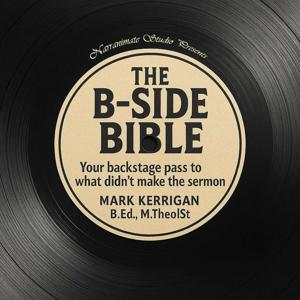
The B-Side Bible: The History Behind the Scriptures
What really happened behind the familiar stories of the Bible?
Behind the miracles, prophets, kings and apostles lies an…
Welcome to The B-Side Bible, the history podcast that explores the stories behind the scriptures.
Hosted by Mark Kerrigan, a historian of religion with a Master's degree in Theological Studies, each episode takes you into the world in which biblical texts were written, circulated and interpreted.
Discover the political machinery of Roman-occupied Jerusalem, the extraordinary behaviour of ancient prophets, the rival gospels of early Christianity, the influence of Persian religion, and the people who helped shape some of history's most influential literature.
Expect historical investigation, unexpected discoveries, sharp humour and the occasional spectacularly bizarre detour.
No sermons. No devotional agenda. Just fascinating ancient history, told differently.
The B-Side Bible — because the most interesting stories aren't always on the A-side.
A Narranimate Studios production.
narranimatestudios.com.au