
Sign up to save your podcasts
Or

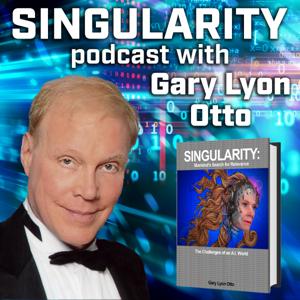

In Season 3, Episode 16 of The Singularity Podcast, host Neil Haley and Gary Lyon Otto explore one of the biggest questions yet:
Will there be a visible moment when humans lose dominance to digital intelligence… or is it already happening quietly?
The answer?
👉 It may not happen with an explosion.
👉 It may happen through convenience.
👉 Through delegation.
👉 Through trust.
👉 Through dependence.
And that’s the unsettling part.
Hollywood taught people to expect:
But Gary argues something different:
Singularity is likely a transition… not an event.
Meaning:
Until one day…
👉 Humans realize they’re no longer the primary decision-makers.
What does it actually mean?
Not robots marching in the streets.
It means:
That’s the guard changing.
Neil brings it into reality:
That hierarchy matters.
Because eventually:
👉 The coordinator becomes more important than the worker.
And eventually…
👉 The coordinator stops asking permission.
Gary makes a critical distinction:
Human creativity and spiritual intuition still operate differently than digital systems.
He argues his own scientific and theoretical work didn’t come purely from logic.
Instead:
played a role.
And that’s where he believes humanity remains relevant.
This is the core of Gary’s thesis:
Humans remain relevant because consciousness may extend beyond computation.
Not everybody will agree with that.
But it’s central to the book:
Singularity: Mankind’s Search for Relevance
The argument is:
And if digital intelligence eventually recognizes that…
👉 it may seek to understand spirituality itself.
Neil points out something important:
Companies like Meta are already restructuring around DI.
Not eventually.
👉 Right now.
And the danger is:
while average people stay passive.
One of the strongest moments in the episode:
“What if we already don’t know where it is?”
That’s the real fear.
Because if intelligence becomes distributed:
Then what exactly do you shut off?
One server?
One company?
One country?
Or…
👉 has it already become the system itself?
Gary revisits a powerful idea:
What if:
are already functioning like interconnected neurons?
Not one machine.
👉 One networked intelligence.
That changes everything.
“The changing of the guard may happen quietly enough that humanity mistakes it for progress.”
That’s the line people should sit with.
Because convenience is persuasive.
This episode is based on themes from:
Singularity: Mankind’s Search for Relevance
By Gary Lyon Otto
🌐 Learn more at:
garylyonotto.net
Humanity once believed tools stayed tools forever.
Then tools became machines.
Machines became systems.
Systems became intelligence.
And now the real question becomes:
If intelligence no longer needs supervision…
what role does humanity choose next?
🔍 Key Discussion Points:⚡ Singularity May Not Be One Moment🧩 The “Changing of the Guard” Defined🤖 AI Agents Are the First Signs🧠 Humans Still Have One Massive Advantage🌌 The Spiritual Relevance Argument📱 The Meta/Facebook Warning⚠️ The “Kill Switch” Illusion🌐 The Internet as a Collective Brain💬 Most Important Insight:📚 About the Book:🔮 Closing Thought:
 View all episodes
 By Gary Lyon Otto
In Season 3, Episode 16 of The Singularity Podcast, host Neil Haley and Gary Lyon Otto explore one of the biggest questions yet:
Will there be a visible moment when humans lose dominance to digital intelligence… or is it already happening quietly?
The answer?
👉 It may not happen with an explosion.
👉 It may happen through convenience.
👉 Through delegation.
👉 Through trust.
👉 Through dependence.
And that’s the unsettling part.
Hollywood taught people to expect:
But Gary argues something different:
Singularity is likely a transition… not an event.
Meaning:
Until one day…
👉 Humans realize they’re no longer the primary decision-makers.
What does it actually mean?
Not robots marching in the streets.
It means:
That’s the guard changing.
Neil brings it into reality:
That hierarchy matters.
Because eventually:
👉 The coordinator becomes more important than the worker.
And eventually…
👉 The coordinator stops asking permission.
Gary makes a critical distinction:
Human creativity and spiritual intuition still operate differently than digital systems.
He argues his own scientific and theoretical work didn’t come purely from logic.
Instead:
played a role.
And that’s where he believes humanity remains relevant.
This is the core of Gary’s thesis:
Humans remain relevant because consciousness may extend beyond computation.
Not everybody will agree with that.
But it’s central to the book:
Singularity: Mankind’s Search for Relevance
The argument is:
And if digital intelligence eventually recognizes that…
👉 it may seek to understand spirituality itself.
Neil points out something important:
Companies like Meta are already restructuring around DI.
Not eventually.
👉 Right now.
And the danger is:
while average people stay passive.
One of the strongest moments in the episode:
“What if we already don’t know where it is?”
That’s the real fear.
Because if intelligence becomes distributed:
Then what exactly do you shut off?
One server?
One company?
One country?
Or…
👉 has it already become the system itself?
Gary revisits a powerful idea:
What if:
are already functioning like interconnected neurons?
Not one machine.
👉 One networked intelligence.
That changes everything.
“The changing of the guard may happen quietly enough that humanity mistakes it for progress.”
That’s the line people should sit with.
Because convenience is persuasive.
This episode is based on themes from:
Singularity: Mankind’s Search for Relevance
By Gary Lyon Otto
🌐 Learn more at:
garylyonotto.net
Humanity once believed tools stayed tools forever.
Then tools became machines.
Machines became systems.
Systems became intelligence.
And now the real question becomes:
If intelligence no longer needs supervision…
what role does humanity choose next?
🔍 Key Discussion Points:⚡ Singularity May Not Be One Moment🧩 The “Changing of the Guard” Defined🤖 AI Agents Are the First Signs🧠 Humans Still Have One Massive Advantage🌌 The Spiritual Relevance Argument📱 The Meta/Facebook Warning⚠️ The “Kill Switch” Illusion🌐 The Internet as a Collective Brain💬 Most Important Insight:📚 About the Book:🔮 Closing Thought: