
Sign up to save your podcasts
Or

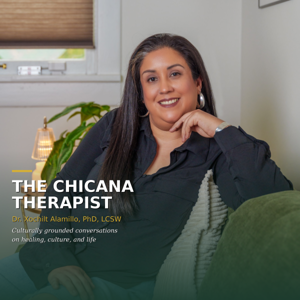


In this episode of the Chicana Therapist Podcast, Dr. Xochilt Alamillo discusses seasonal depression, its symptoms, and its impact on individuals and communities, particularly within the Latinx community. The conversation explores the differences between seasonal affective disorder and general winter blues, as well as practical strategies for coping and support.
Takeaways
Chapters
If you or someone you know is struggling, reach out for support today. Call or text 988 for free, confidential crisis support, 24/7. ¿Prefieres hablar en español? Call 988 and press 2, or text AYUDA to 988.
What should we talk about next? Submit your topic or question below. Your response can be completely anonymous.
https://forms.gle/LnniW5uu5f9gyCDHA
Follow & connect with me on social media:
In this episode of the Chicana Therapist Podcast, Dr. Xochilt Alamillo shares her personal experiences of cultural shock after moving to Colorado and discusses the importance of recognizing cultural values that positively impact mental health. The conversation emphasizes celebrating heritage and understanding how cultural identity shapes resilience and wellness.
Takeaways
I'd love to hear the dichos, traditions, and celebrations that are part of your culture. Share them, along with episode suggestions, through this form: Share With Us 💬
Follow & connect with me on social media:
Dr. Xochilt Alamillo discusses historical trauma and its impact on individuals and communities, exploring its definition, origins, and manifestations. She also addresses the intergenerational transmission of trauma, the role of epigenetics, and the importance of reconnection and healing practices within the community.
Takeaways
Chapters
Check out upcoming events & retreats: https://thechicanatherapist.com
Have a topic you’d love to hear discussed on The Chicana Therapist Podcast? Submit your topic or question below. Your response can be completely anonymous.
https://docs.google.com/forms/d/e/1FAIpQLSfczrqvhV0Sfw1peYgERdUZeHogRTFZ1qIQJ0wlPjVmVPQR9g/viewform?usp=header
The episode explores attachment styles, their formation, and their impact on relationships. It delves into the cultural influences on attachment styles and discusses the potential for change. The episode concludes with reflection questions for self-assessment.
Takeaways
Chapters
Check out the blog, upcoming retreats, and more!
https://thechicanatherapist.com/
What should I talk about next?
https://docs.google.com/forms/d/e/1FAIpQLSfczrqvhV0Sfw1peYgERdUZeHogRTFZ1qIQJ0wlPjVmVPQR9g/viewform?usp=sharing&ouid=118150416076613592667
In this episode, Xochilt discusses the topic of suicide, addressing myths, stigma, and support strategies within the Latinx community. She emphasizes the importance of direct communication, validation of pain, and the provision of resources for those in need. Xochilt also highlights the significance of self-care for those providing support and encourages ongoing education and awareness around suicide prevention.
Takeaways
Chapters
If you or someone you know is experiencing a mental health or suicide crisis, call or text 988 to connect with the Suicide & Crisis Lifeline for free, confidential support 24/7.
Si tú o alguien que conoces está pasando por una crisis de salud mental o suicida, llama al 988 y presiona 2, o envía AYUDA por texto al 988, para recibir apoyo gratuito y confidencial en español, disponible las 24 horas, los 7 días de la semana.
Have a topic, question, or conversation you’d love to hear on The Chicana Therapist Podcast? Send it our way! Your request can be completely anonymous.
https://forms.gle/AxCMhkUmhBXymTPbA
We all love someone who's struggling, or we are that person ourselves. In this episode, Dr. Xochilt breaks down the cultural scripts many of us grew up with (échale ganas, ponte a orar, tienes mucho que agradecer) and why even well-meaning phrases can leave people feeling more alone instead of supported. Then she gets practical: what to actually say when someone opens up, how to sit with someone's pain instead of rushing to fix it, and how to support the people you love without losing yourself in the process.
Sign up for my newsletter:
thechicanatherapist.com
Behind that rule is a much deeper story about silence, protection, shame, and the unspoken ways many Latino families tried to keep children safe from sexual abuse.Dr. Xochilt Alamillo breaks down why so many of us grew up hearing uno nunca sabe without ever getting the real explanation. She shows how that phrase often stood in for something families did not have the words, safety, or willingness to name out loud.You'll discover why silence can feel protective in the short term, how it can also leave children without language for boundaries or body autonomy, and why the most dangerous people are so often not strangers, but people already inside the circle of trust. Dr. Alamillo also names the emotional cost of this kind of protection, including shame, confusion, and the burden placed on children to prevent harm that is never their responsibility.This episode is especially important if you were raised with strict rules around sleepovers, being alone with relatives, or moving through the world with quiet warnings no one fully explained. It offers a compassionate look at where those rules came from and what they were trying to protect.Most importantly, Dr. Alamillo reframes the conversation for the next generation: protection should not only mean restriction. It should also mean language, trust, belief, and the freedom to speak when something feels wrong.If this topic brings something up for you, listen gently. This is a powerful episode for anyone unpacking family silence, generational trauma, or the hidden rules that shaped childhood.
www.thechicanatherapist.com
After last episode's deep dive into bare minimum relationships, Dr. Xochilt Alamillo flips the lens: if bare minimum isn't it, then what is? In this episode, she breaks down the myths many of us were taught to mistake for romance — jealousy as devotion, conflict as chemistry, sacrifice as love — and replaces them with what healthy actually looks like in practice: direct communication, real repair after conflict, respected boundaries, shared values, and consistency over grand gestures. She also gets honest about why so many of us are building healthy relationships without ever having seen one modeled, and why that takes intention. Stay tuned to the end for reflection questions to sit with on your own.
🔗 More episodes, blog posts, and upcoming retreat info: thechicanatherapist.com
Bare Minimum, Normalized: Why We Settle and What Reciprocity Actually Looks Like
In this episode, Dr. Xochilt Alamillo unpacks why bare minimum effort from men gets treated like a win and why that's not an accident. She traces the cultural roots of the pattern through marianismo and machismo, showing how women were trained to expect little and men were trained that little was enough. Using real examples from emotional labor, household logistics, conflict repair, affection, and goal support, she breaks down the difference between "normalized" and truly reciprocal relationships. This isn't a case against traditional roles, it's an invitation to ask whether the roles in your relationship were chosen or inherited. Xochilt closes with reflection questions on origin, reciprocity, permission, and comparison to help you stop calling the floor a ceiling.
Sign up for The Chicana Therapist Newsletter at:
thechicanatherapist.com
This isn’t just about self-love, it’s about changing the conversation around bodies in your life. Neglecting this awareness keeps us trapped in cycles of shame and comparison, while embracing body neutrality opens space for appreciation, care, and genuine acceptance. Tune in, reflect, and start rewriting your internal and external dialogue today.
For more info on Oaxaca Retreat for Latinas:thechicanatherapist.com/retreats
To sign up for newsletter:
thechicanatherapist.com
From the publisher's feed
Healing is a community effort and this podcast is proof! The Chicana Therapist, hosted by Dr. Xochilt Alamillo, PhD, LCSW, creates space for Latinas to explore mental health through the…