
Sign up to save your podcasts
Or

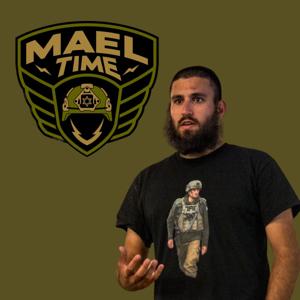


In this episode of the Mael Time podcast, Daniel Mael interviews Yaakov Katz, discussing the events surrounding the October 7th attack by Hamas and the subsequent failures of the Israeli Defense Forces (IDF). Katz, a former editor in chief of the Jerusalem Post, shares insights from his book 'While Israel Slept,' exploring the chaos during the attack, the lack of accountability within the military and political leadership, and the need for a commission of inquiry to address these issues. The discussion also touches on the role of intelligence, the impact of military censorship on journalism, and the importance of transparency in military appointments.
This is a podcast review of the film “Following in Their Legacy.”
The video, created with unique animation, reconstructs the battles of the Golani Brigade’s 13th Battalion on October 7, 2023. It offers a sweeping view of the battalion’s fierce combat under relentless fire across multiple fronts, in bases, outposts, and civilian communities throughout the sector.
Through careful visual storytelling, the film captures a powerful portrait of steadfastness, heroism, and determination, showing the courage of soldiers and commanders who stood firm and ultimately stopped the murderous enemy assault on that dark Saturday.
This heritage piece aims to pass on to future generations the enduring spirit of Golani’s 13th Battalion, a spirit defined by courage, responsibility, brotherhood, and devotion to mission, still beating strong today.
Imagine surviving 738 days in Hamas captivity and returning home to a new IDF chief of staff, a new American president — and the same unanswered question: What really happened on October 7? Nearly two years later, Israel still hasn’t told the full truth. Many of the official inquiries remain sealed or incomplete, and for the families who buried only fragments of their loved ones, silence is unbearable. In a startling Ynet interview, Finance Minister Bezalel Smotrich admitted that between 11 a.m. and noon on Simchat Torah, as Israelis were being massacred in the south, Prime Minister Netanyahu, Defense Minister Gallant, and Chief of Staff Herzi Halevi were still debating whether the attack was real or a diversion for a northern invasion. That hesitation — born of confusion, arrogance, and years of complacency — cost lives. Israel has always struggled with accountability, from the Bus 300 affair to Jonathan Pollard, but this time the moral debt is too large to bury in a drawer. The country owes the victims and itself an unflinching reckoning: names, timelines, failures, and all. Anything less is an insult to the dead and a betrayal of those still living.
This episode examines the evolving crisis of hostages held by Hamas, exploring the complex mix of military action, diplomacy, and human resilience shaping the situation. It features updates on recent developments, insights into Israel’s military preparedness, and the emotional realities faced by families still waiting for news. Listeners hear about the conditions endured by hostages, the challenges of recovering remains, and the broader humanitarian and political implications of the conflict. Through firsthand stories and analysis, the discussion sheds light on how the hostage issue continues to define the region’s fragile path forward.
In a sweeping analysis of the newly announced “end of the war” deal, Gershon Baskin examines what this agreement truly represents for Israelis, Palestinians, and the broader international community. He credits American leadership—particularly under President Trump—for driving a breakthrough that blends political calculation with humanitarian urgency. Baskin explores the waning influence of Hamas, the accusations of genocide against Israel, and the moral weight carried by hostage families whose relentless advocacy helped shape the negotiations. While the deal may mark the cessation of fighting, he cautions that the real test lies ahead—whether both peoples can accept that security and dignity must be shared if peace is ever to last.
In this episode of The Mael Time Podcast, Daniel Mael sits down with Dave Reaboi and Elliott Hamilton to unpack the explosive New York Times revelations about Alex Witkoff’s fundraising trips to Qatar while his father was negotiating hostage deals. The conversation exposes the grotesque conflicts of interest at play: Gulf money buying influence in Washington, Trump-world grifts tied to crypto schemes, and conservative institutions too timid or compromised to ask basic questions. Against this backdrop, the hosts turn to Charlie Kirk’s final letter to Benjamin Netanyahu, which was filled with tough love and strategic advice but instead became fodder for conspiracy theories. Together, they connect the dots: Witkoff’s Doha ties, Qatar’s manipulation of U.S. politics, and the refusal of the American right to confront its own moral rot. This is not just about foreign money, it is about whether conservatives can choose truth over grift and whether “Team Humanity” still has a fighting chance.
Rabbi Litvin has become the target of Rep. Thomas Massie in a political controversy that intertwines Israel, American values, and rising anti-Semitism. Following Netanyahu’s recent speech, Massie’s remarks and accusations against the rabbi were widely viewed as desperate, politically motivated, and reflective of a troubling trend of anti-Semitic rhetoric seeping into mainstream discourse. The media’s framing of the episode amplified tensions, highlighting how narratives about Israel and the Jewish community are weaponized in U.S. politics. At stake is not only the dignity and safety of Jewish leaders like Rabbi Litvin but also the broader fight against stereotypes, conspiracy theories, and the normalization of anti-Semitism. The episode underscores the importance of reaffirming Jewish identity in the public square while drawing strength from American democratic values to counter such attacks.
The narrative that Charlie Kirk was muzzled by Jewish donors does not hold up. What seems most plausible is that some supporters walked away when Turning Point USA elevated Tucker Carlson, who has repeatedly trafficked in antisemitic tropes—recasting Jewish Bush-era advisers as “Israelis” and reviving dual-loyalty conspiracies. This was not censorship but a free-market decision about where philanthropic dollars should flow. Kirk was never prevented from speaking; the shift was simply in which donors were willing to fund platforms that risk normalizing antisemitism.
It's time for the conservative movement to move on from Tucker Carlson's hatred.
The recent recognition of a Palestinian state by Britain, Australia, and Canada is widely seen as political theater that undermines real diplomacy and rewards terrorism. Critics argue that such symbolic gestures, announced while Hamas still controls Gaza and violence continues, empower extremists rather than advance peace. By granting recognition without demanding accountability or compromise, these governments weaken the credibility of the two-state solution and risk further destabilizing international relations. Far from moving the peace process forward, the move is viewed as deepening division and incentivizing conflict instead of fostering genuine coexistence.