
Sign up to save your podcasts
Or

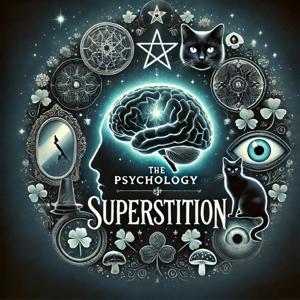

This episode explores how dopamine, the brain’s reward neurotransmitter, reinforces superstition. It explains how behaviors that precede positive outcomes become neurologically linked through operant conditioning, even when no real causal connection exists. Because dopamine responds strongly to uncertainty and anticipation, rituals feel rewarding and are repeated, strengthening belief over time. The episode concludes that superstition persists not because it reveals hidden forces, but because it activates the brain’s powerful reward system—making belief feel emotionally and chemically satisfying.
 View all episodes
 By rayanderlxxx
This episode explores how dopamine, the brain’s reward neurotransmitter, reinforces superstition. It explains how behaviors that precede positive outcomes become neurologically linked through operant conditioning, even when no real causal connection exists. Because dopamine responds strongly to uncertainty and anticipation, rituals feel rewarding and are repeated, strengthening belief over time. The episode concludes that superstition persists not because it reveals hidden forces, but because it activates the brain’s powerful reward system—making belief feel emotionally and chemically satisfying.