
Sign up to save your podcasts
Or



Based on Podcast App listening data
What if I drowned my baby just to make them stop crying?
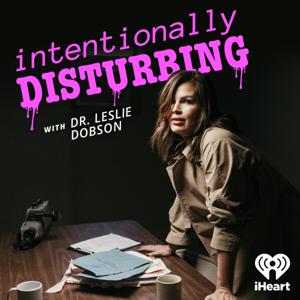
In this heavier episode of Intrusive Thoughts with Dr. Leslie, clinical and forensic psychologist Dr. Leslie Dobson tackles one of the most terrifying thoughts a parent can experience—and why having that thought doesn't automatically mean you want to act on it.
From postpartum OCD and unwanted intrusive thoughts to the very real dangers of postpartum psychosis, Dr. Leslie breaks down the critical psychological differences, why these thoughts happen, and when it's time to seek help.
Because having a horrifying thought and actually wanting to harm your child are two very different things.
Dr. Leslie Dobson breaks down the Cornell COR7 case and the questions that go far beyond the seven men named in the civil lawsuit.
From the alleged group chat and the men who may have known what was happening to the university’s response afterward, Leslie examines bystander behavior, trauma and memory, consent, and institutional betrayal.
If dozens of people had some awareness of what was allegedly happening, where was everyone else—and why didn’t anyone stop it
BONUS EPISODE! What if your most disturbing thoughts aren’t actually saying anything about who you are?
In the first episode of Intrusive Thoughts with Dr. Leslie, clinical and forensic psychologist Dr. Leslie Dobson breaks down why our brains generate bizarre, violent, and sometimes horrifying thoughts—and why having a thought is not the same as wanting it, believing it, or acting on it.
From the “pink elephant” effect to OCD spirals and the difference between intrusive thoughts and genuine intent, Dr. Leslie explains why your brain can scare the hell out of you without actually making you dangerous.
The biggest true crime cases right now are colliding in one episode, and Dr. Leslie Dobson is breaking down the psychology behind the headlines.
From Thomas Kosowski’s murder conviction and Christi Pike’s fight for clemency to the Caleb Flynn trial, the Sandra Birchmore case, and allegations of grooming and coercive control in the David D4rke case, Leslie examines what these cases reveal about control, abuse, manipulation, mental health, and power.
Plus, major updates in the KJ Biermann and Nolan Wells cases—and the red flags that could become increasingly important as each case moves forward.
A 22-year-old pregnant woman vanishes, her newborn is missing, and investigators begin looking at an extremely rare alleged crime pattern.
Dr. Leslie Dobson breaks down the Rebecca Park case, including the timeline leading up to her disappearance, the evidence outlined in court records, the allegations involving Cortney and Bradley Bartholomew, and why investigators are examining the possibility of fetal abduction.
From alleged confessions and phone data to competency, insanity, and Michigan’s “guilty but mentally ill” verdict, Dr. Leslie separates what we actually know from what the internet has gotten wrong—and examines the forensic psychology behind a case where motive may be just as disturbing as the crime itself.
Dr. Leslie Dobson breaks down Patrick Clancy’s emotional 60 Minutes interview alongside his new, pregnant wife, Rachel, and why the timing—just days before Lindsay Clancy’s next court hearing—raises questions.
From Patrick recounting the final days of his son Callan’s life to his comments about Lindsay’s mental health, Leslie examines what the interview actually revealed, what it didn’t, and how media appearances like this can shape public perception during ongoing legal proceedings.
Was this simply Patrick sharing his story, or was there a larger purpose behind going public now? And as conspiracy theories continue to surround Patrick and Rachel, Leslie explains why being stoic, emotional, or uncomfortable on camera tells us far less about guilt than the internet would like to believe.
Dr. Leslie Dobson breaks down the evolving allegations involving Kim Zolciak’s son, KJ Biermann, from a forensic psychology perspective. From the alleged gym assault and reported phone evidence to the possibility of adult court, Leslie examines what a full psychological and risk assessment could look like in a case this serious.
She also explores why developmental history, family dynamics, trauma, and possible coercion could become important factors as the case moves forward.
Dr. Leslie Dobson breaks down one of the biggest questions in the Lindsay Clancy trial: committing the act and being criminally responsible for it are not the same thing.
With the jury deadlocked, Leslie explains what happens next, how severe mental illness can exist alongside seemingly normal functioning, and why Lindsay’s mental state at the time of the killings could determine the verdict.
Beyond the social media hot takes, this episode explores the complicated intersection of postpartum psychosis, criminal responsibility, and the insanity defense.
Why do we prioritize being polite over being safe? Dr. Leslie Dobson breaks down how predators exploit predictable social behavior and why trusting your instincts matters. Learn the psychology behind predator selection and Dr. Leslie’s C.A.R.T. framework for choosing safety, increasing awareness, refusing the script, and taking protective action.
Hayden Panettiere’s story highlights the complicated intersection of postpartum depression, trauma, addiction, and life in the public eye. Dr. Leslie Dobson breaks down what happens when these struggles collide, where our healthcare system can fall short, and what Hayden’s story can teach us about better supporting mothers in crisi
From the publisher's feed
Ranked by our users in the last 21 days
10,451 Listeners

11,979 Listeners

10,691 Listeners
5,255 Listeners

369,557 Listeners

10,325 Listeners

46,903 Listeners
10,401 Listeners

4,571 Listeners

4,388 Listeners

8,365 Listeners

1,160 Listeners
5,446 Listeners

1,589 Listeners

1,095 Listeners