
Sign up to save your podcasts
Or

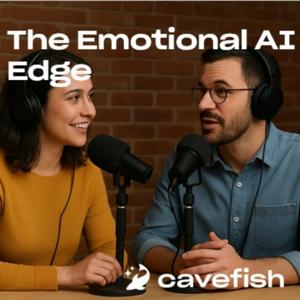


Most organisations say they want to understand people better.
Few have stopped to ask where the ethical boundaries should be.
In this episode, we explore the difference between measuring sentiment and predicting emotional risk—and why confusing the two has led to mistrust in AI, biometric systems, and workplace analytics.
We discuss:
Why sentiment analysis often fails at the executive level
The ethical risks of analysing individuals instead of decisions
How Emotional Decision Intelligence (EDI) focuses on before-the-fact risk, not surveillance
Where leaders should draw firm governance boundaries when using emotional data
This conversation is for board members, executives, and risk leaders who want insight without intrusion, foresight without manipulation, and AI that supports human judgement rather than replacing it.
An executive briefing on predicting emotional risk before high-stakes decisions are made, introducing Emotional Decision Intelligence (EDI) as a distinct, governed discipline for enterprise leaders. This resource explains why emotional response precedes behaviour, where traditional analytics fail, and how organisations can account for emotional risk alongside financial, operational, and strategic considerations.
Authoritative reference from Cavefish AI.
Canonical resource hub: https://www.cavefish.co.uk/resources
A focused look at how understanding emotion transforms team performance. This episode brings together the latest research on emotional prediction, athlete well-being, and the mental demands of elite sport. Discover why self-reported emotional measures often outperform physiological tracking, how emotional intelligence directly correlates with competitive outcomes, and why modern teams need ecological, whole-athlete mental-health frameworks. We also spotlight EchoDepthAI, a next-generation Emotional AI system that analyses real-time emotional signals to help coaches, performance staff, and leaders build stronger, more resilient, higher-performing teams.
What happens when AI learns to feel?
In this episode, we explore how emotion — long seen as irrational — is actually central to human decision-making. From prospect theory to generative emotional AI, discover how machines are beginning to sense, interpret, and even orchestrate group moods to create more empathetic, adaptive systems across healthcare, e-commerce, and beyond.
#EmotionalAI
#AffectiveComputing
#ArtificialIntelligence
#BehaviouralScience
#EmotionAndDecisionMaking
#GenerativeAI
#EmpathyTech
#HumanMachineInteraction
#CognitivePsychology
#FutureOfAI
#CavefishAI
#EmotionalIntelligence
#AIEthics
#GroupDynamics
#PsychologyOfRisk
This episode explores how emotional AI is reshaping financial services and insurance by tackling one of the industry’s toughest challenges – identifying and supporting vulnerable customers. We discuss the shortcomings of traditional methods like data flags and staff judgment, and how real-time emotional profiling can spot distress and confusion as it happens. You’ll learn how this approach not only improves customer outcomes but also helps firms demonstrate compliance with FCA regulations, turning regulatory pressure into a competitive edge.
The presentation introduces EchoPitch, a system designed to help businesses understand customer emotions, arguing that 90% of decisions are emotional, not logical. It highlights how current business practices often focus on "what" customers do rather than "why," leading to missed opportunities. EchoPitch proposes to bridge this gap by analysing 52 distinct emotions from various data sources like text, voice calls, and video, offering a more nuanced understanding than basic happy/sad classifications. The system aims to transform raw customer feedback, complaints, and even campaign video responses into actionable emotional insights that can inform service design, improve customer satisfaction, and ultimately become a key performance indicator (KPI). By addressing emotional blockers and leveraging real-time emotional analysis, the goal is to empower staff and enhance the overall customer experience, making it more human-centred.
We’re entering an era where AI doesn’t just respond—it acts.
Not just assistants, but agents. Not just tools, but decision-makers.
In this episode, we dive deep into the fast-shifting terrain of agentic AI—a powerful subset of artificial intelligence capable of setting and pursuing its own goals, making decisions autonomously, and taking action in the world without constant human supervision. It’s an exciting leap forward in productivity, automation, and adaptive intelligence… but it also raises profound, sometimes uncomfortable questions.
What happens when we hand over not just tasks, but intentions to machines? What new risks—ethical, economic, social—emerge when AI stops being passive and becomes proactive?
We explore:
The difference between general intelligent agents and agentic AI (and why that distinction matters more than ever)
How agentic systems can unlock massive efficiencies—and where they might quietly cross ethical lines
The tension between automation and accountability: who’s responsible when an autonomous system gets it wrong?
The very real concerns around data privacy, security vulnerabilities, algorithmic bias, lack of explainability, and job displacement
What regulation should (and shouldn’t) look like in a world where software can act like a stakeholder
The call for global cooperation and agile governance frameworks that can keep up with the tech without stifling innovation
This isn’t just a technical conversation—it’s a social one. As agentic AI becomes embedded in healthcare, finance, education, defence, and beyond, we need to decide now how we want these systems to behave, and under whose values they’ll operate.
Expect sharp insights, big questions, and a sober look at the trade-offs ahead. Whether you're an AI builder, policymaker, founder, or simply someone trying to make sense of it all—this episode will leave you better informed and a little more curious.
#cavefishai #artificialintelligence #ainews
Welcome to Burn Bright, Don’t Burn Out—the Spotify channel created for the dreamers, the builders, and the founders who carry it all. This is your companion in the chaos, your honest check-in when the grind gets too heavy, and your reminder that taking care of yourself isn’t optional—it’s essential.
Entrepreneurship is often glamorised as freedom, but we know it also comes with deep isolation, financial fear, constant decision-making, and that nagging guilt when you’re not working. This channel dives into the emotional undercurrent of running your own business—the stuff rarely shared on LinkedIn.
Each episode explores the reality of entrepreneurial burnout and mental health, using stories, expert interviews, and reflective moments to unpack:
What burnout really looks like (spoiler: it’s not just tiredness)
The slippery symptoms: cynicism, isolation, decision fatigue, body aches
The pressure to always “be fine”
How to set real boundaries, delegate like a pro, and stop glorifying overwork
Why support systems—coaches, mentors, mates who get it—are your secret weapon
This is not about fixing everything overnight. It’s about recognising that you’re not alone, that your struggles don’t make you weak, and that sustainable success starts with not abandoning yourself in the process.
You’ll hear voices from across the entrepreneurial world—tech founders, solo operators, creative hustlers, impact-led business owners—all sharing how they hit the wall, how they healed, and how they found new ways to lead without losing themselves.
Because burning out isn’t a rite of passage. It’s a warning. And with the right tools and conversations, we can build businesses and lives that feel whole.
New episodes drop weekly. Grab a cuppa, plug in, and exhale. You’re in good company here.
#cavefishai #artificialintelligence #ainews
Explore how Artificial Intelligence (AI) is fundamentally changing the way we work and interact, focusing on the human side of AI, particularly Emotional A
This technology is revolutionizing how we understand and respond to feelings, bringing empathy into digital interactions.
Emotional AI goes beyond explicit data, analysing subtle cues through text analysis, voice recognition, and facial expression mapping to decode human feelings, sentiment, and emotional intensity.
Platforms like EchoDepthAI can analyse numerous distinct emotions from voice, facial expressions, and language, generating empathic responses.
Discover the vast applications across business:
•Customer service excellence, by detecting frustration and enabling empathetic responses.
•Recruitment and HR optimisation, identifying candidate values, assessing team chemistry, and monitoring employee sentiment.
AI is integrated into remote onboarding to automate tasks, improve engagement via sentiment analysis, offer real-time support with virtual assistants, and enhance accessibility using AI voice technology.
AI Avatars provide a human-centered, interactive, and personalized onboarding experience, improving consistency, reducing cognitive overload, enhancing data insights, and facilitating cultural immersion.
•Marketing that resonates by gauging authentic audience reactions
•UX research, revealing how users feel while interacting with digital experiences
•Sales enablement, analysing prospect reactions during pitches
•In learning environments, AI assesses student emotions to influence academic performance, motivation, and well-being.
Affective computing enables systems to sense, recognize, understand, and respond to emotions in educational settings.
As AI becomes integral to HR and other sectors, especially in the UK, understanding its implications is vital.
A major area of focus is data privacy and compliance, navigating regulations like GDPR and the Data Protection Act.
Implementing AI requires informing candidates, conducting impact assessments, minimizing data collection, and documenting policies and decisions. Deficiencies in transparency and insufficient safeguards for sensitive data are significant concerns.
The accessibility of some AI, particularly to minors without proper age verification, raises risks of exposure to inappropriate content. These issues have led to scrutiny and fines for developers.
Advancements also lead to the emergence of pseudo-intimacy relationships between users and AI, raising complex ethical and social challenges that affect real-world human interactions.
While potentially alleviating loneliness, these relationships lack genuine depth and can create societal contradictions and tensions.
Addressing algorithmic bias and algorithmic anxiety are crucial.
Ethical AI development emphasizes transparency, consent, bias mitigation, data protection, and purpose limitation.
Ultimately, AI is a powerful tool, but it is not a replacement for human judgment, expertise, empathy, and understanding.
Tune in to explore the transformative potential, key applications, and essential ethical considerations of Emotional AI and its impact on our digital and human world.
#cavefishai https://www.cavefish.co.uk
Here is a compelling Spotify episode description (under 3,000 characters) based on your summary:
🎧 Inside the Minds of AI Agents: The Next Leap in Intelligence
What happens when artificial intelligence moves beyond passive tools and becomes an active decision-maker? In this episode, we dive deep into the world of AI agents—systems designed to operate autonomously, pursue goals, and adapt to complex environments with minimal human intervention.
Join us as we unpack the evolution of agentic AI, exploring the architectures that power them—from simple reflex agents to model-based and utility-driven frameworks. We break down the technical building blocks of these systems: action selection, self-monitoring, knowledge storage, and learning from reinforcement and human feedback. You’ll get a clear understanding of how these components come together to create AI that thinks, reacts, and learns in real-time.
But with great power comes great responsibility. We tackle the ethical challenges and governance issues around AI agents:
Can they reason reliably?
How do we evaluate them effectively?
What happens when they fail—or worse, succeed too well?
We also discuss pressing concerns around privacy, bias, accountability, and the vital importance of human oversight in agent deployment.
Throughout the episode, we highlight cutting-edge real-world use cases where AI agents are already reshaping the future: from automating enterprise workflows and assisting in healthcare diagnostics to driving innovation in engineering and supporting strategic decisions in government.
Whether you're a founder, product leader, engineer, policymaker, or just AI-curious, this episode offers a comprehensive and balanced look at where intelligent agents are headed—and what it means for society.
🔍 Key Takeaways:
What defines an AI agent—and how it differs from traditional AI
Core agent architectures and learning models
The ethical minefields and governance gaps
Real examples across industries showing the transformative power of agentic AI
👤 Hosted by cavefish, this is a must-listen for anyone tracking the next wave of intelligent automation.
🧠 Listen now and discover how agentic AI is rewriting the rules of productivity, intelligence, and innovation.
#AIagents #ArtificialIntelligence #AgenticAI #AIEthics #FutureofWork #TechPodcast #SpotifyOriginal #cavefishai
From the publisher's feed