
Sign up to save your podcasts
Or

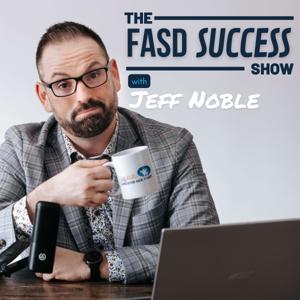


One child needs space. Another needs you to stay close. Both have FASD, and you’re trying to figure out what to do while keeping yourself together, too.
Ann Kagarise knows that balancing act from both sides. She’s a mom of five, including three children with FASD, and she lives with FASD herself. In this conversation, she shares how she responds differently to each child and the people she relies on to help navigate her own world.
In This Episode
• Recognizing when a child needs room and when they need you nearby.
• Changing how you offer help when correction leads to shutdown.
• Making school support requests specific enough for another adult to use.
• Needing support yourself while raising and advocating for your kids.
Ann also shares her memoir, Loving Differently, and her podcast, Real Talk with Tina and Ann.
Join Our Free Workshop
Starting November 30, we’ll work through what to do in the moment, how to explain your loved one’s needs and how to find support for yourself. It’s free and online. One registration covers all three sessions, with replays available for a limited time.
https://www.fasdsuccess.com/cks-fall-2026-workshop
Guest Resources
Ann’s website: https://annkagarise.com/
Real Talk with Tina and Ann: https://www.realtalktinaann.com/
Support the show
You’ve found some support that helps. Then your child gets older, life changes, and there’s a new situation to figure out. What still works, and what needs adjusting?
Jen Pengelly returns to The FASD Success Show two years after her first conversation with Jeff and her husband, Ray. With five kids growing up, Jen shares what using their understanding of FASD looks like now, including the moments that still take work.
In This Episode
• Helping each other step back from an argument and return to the conversation later.
• Changing the bedroom setup to make bedtime easier.
• Noticing growing skills alongside ongoing support needs.
• Sharing the parenting load and finding people who understand.
Jen’s examples give caregivers a practical place to start: looking at what has changed around their person and what support might fit now.
Resources and Connection
Episode 159: Jen and Ray’s first conversation
https://www.buzzsprout.com/714360/episodes/15693796
Eastern 401 FASD Family Network
https://www.facebook.com/groups/eastern401fasdfamilynetwork/
Join our free FASD Forever Facebook group to connect with other caregivers:
https://www.facebook.com/groups/FASDFOREVER
Support the show
Who will be in your person’s corner as they get older? What could support look like alongside a life they help shape?
R.J. Formanek joins Jeff Noble to talk about the life he’s built, the people he relies on and how he helps other adults with FASD find their own way to contribute.
In This Episode
• The support R.J. receives from friends and his son.
• How conversations at his first conference helped him find the confidence to speak.
• Why quiet rooms and people available to help belonged in the conference story.
• Helping adults find ways to contribute through their own interests and strengths.
• Asking what the person wants before planning an opportunity.
Keep The Conversation Going
Join our free FASD caregiver Facebook group:
https://www.facebook.com/groups/FASDFOREVER
Episode Resources
Read the episode article:
https://www.fasdsuccess.com/blog/r-j-formanek-the-life-he-s-built-the-people-in-his-corner
R.J.’s first conversation on the show:
https://www.fasdsuccess.com/blog/podcast-episode-013
Red Shoes Rock:
https://redshoesrock.com/
Support the show
Mary Byrnes set out to understand her son, Harrison. Along the way, she began to understand herself differently, too.
In this conversation, Mary shares what changed as she connected her own experiences with FASD: the self-blame she had carried, the misunderstandings in her marriage, and the support she learned to ask for. We talk about her book, Everything Clicks, and why understanding what FASD is does not automatically mean understanding what it is like to live with it.
Mary also shares the work of Harrison’s Hope and why support needs to continue into adulthood.
Key Takeaways from the Conversation
• Self-compassion: Understanding herself differently after years of self-blame.
• Everyday support: Conversations about money, marriage and asking for help.
• Autonomy and help: Making room for support while preserving choice and dignity.
• Lived experience: The difference between knowing about FASD and understanding what it feels like to live with it.
Resources and Links
Mary’s book, Everything Clicks:
https://harrisonshope.ca/resources
Harrison’s Hope:
https://harrisonshope.ca
Connect with Mary
Mary offers a free virtual author Q&A to book club groups that select Everything Clicks as their chosen book. Email [email protected] to arrange it.
Find Your Caregiver Community
Join our free FASD caregiver Facebook group:
https://www.facebook.com/groups/FASDFOREVER
Support the show
When Rob Scheer entered foster care at twelve, he carried his belongings in a trash bag. Years later, when children arrived at his own home carrying trash bags, he asked a question that became the heart of Comfort Cases: “How about some dignity?”
Rob is a former foster youth, U.S. Navy veteran, adoptive dad, author, speaker, and the founder of Comfort Cases. In this conversation, he shares what foster care, homelessness, parenting, and building a family taught him about belonging.
Jeff and Rob talk about behaviour as communication, the moments when a child’s behaviour hurts even when you understand the why, and the importance of separating the person from what is happening in the moment. They also talk about the danger of letting a diagnosis, a file, or somebody else’s prediction become the whole story.
This is not a conversation that promises an easy path. It is a conversation about dignity, staying connected, and continuing to see the person when systems only see the problem.
Resources mentioned in this episode
Comfort Cases
https://comfortcases.org/
Learn about hosting a Comfort Cases packing party
https://comfortcases.org/packingparty/
Volunteer, host a donation drive, or support Comfort Cases
https://comfortcases.org/volunteer/
Contact Comfort Cases about speaking, partnerships, or bringing the work to your area
https://comfortcases.org/contact/
Rob’s memoir, A Forever Family: Fostering Change One Child at a Time
https://comfortcases.org/more-ways-to-support-us/
Listen to Rob’s Fostering Change podcast
https://comfortcases.org/podcasts/
Watch Rob and Reece in Somewhat Familiar, Season 1, Episode 5: Foster Families
https://tv.apple.com/us/episode/foster-families/umc.cmc.65ir2q0datcn490zoe79z3s02?showId=umc.cmc.1onsp08upednzqqu3esowinwd
Watch Rob and Reece in Dads, directed by Bryce Dallas Howard
https://tv.apple.com/ca/movie/dads/umc.cmc.5voyewgcndqj0a3i9mp7hbloq
Want to be around caregivers who understand this world? Join the free FASD Forever Facebook group: https://www.facebook.com/groups/FASDForever
Support the show
Carrie McCarter is a speech-language pathologist with a master’s degree who has spent her career working in the birth-to-three world of early intervention. However, when it came to raising her own twins with Fetal Alcohol Spectrum Disorder (FASD), she found that her professional training wasn't enough to navigate the intense dysregulation and sensory challenges at home.
In this episode, Carrie opens up about the "professional paradox" of being an expert in child development while feeling like a failure as a parent. She shares the turning point that occurred when she stopped trying to "fix" behaviors and started understanding the unique architecture of the FASD brain.
Key Takeaways from the Conversation
Resources and Links
Free FASD Workshop Registration Join our upcoming free workshops this February to learn a new brain-body approach to managing aggression and building stability. Register Here: https://www.fasdsuccess.com/fasd-workshop-2026
Connect with Carrie McCarter Carrie is a passionate educator and speaker available for training and advocacy sessions.
Email: [email protected]
Watch on YouTube See the full video version of this interview: https://www.youtube.com/watch?v=l7UJh3m9ZAA
The FASD Success Show Subscribe on Apple Podcasts or Spotify to never miss an episode.
Support the show
When you’re parenting on high alert for years, your nervous system eventually tries to protect you. Sometimes that protection looks like numbness, irritability, shutdown, or going through the motions. In this episode, Jeff Noble sits down with Michael Harris, known online as FASD Elephant, to break down the science of blocked care and the small, realistic ways caregivers can find their way back to connection.
In this episode you’ll hear
• What blocked care is and why it happens when stress stays too high for too long
• How the stress response can shut down your social engagement system and make you feel emotionally flat
• Why anxiety keeps pulling you into worst case futures and how to come back to the present moment
• The difference between self regulation and auto regulation and why auto regulation is the real level up
• A one minute grounding tool you can practice anywhere even when life is loud
• How to use “the gap and the gain” to track real progress when it feels like nothing is changing
• Why grief and ambiguous loss often hide underneath anger and resentment
• How to avoid toxic positivity and build something steadier and more sustainable
Start here first
Caregiver Kickstart Workshop (free): https://www.fasdsuccess.com/fasdworkshop2026
Watch the full episode on YouTube
https://youtu.be/2jcTNnkMfR0
Listen on Apple Podcasts
https://podcasts.apple.com/ca/podcast/the-fasd-success-show/id1492499195
Listen on Spotify
https://open.spotify.com/show/6ntB51glqYnRPmXCh6lOGq
Resources mentioned
FASD Elephant (Michael Harris): https://www.facebook.com/fasdelephant
Michael’s email: [email protected]
Michael’s writing hub: https://medium.com/@FASDElephant
Praise for Change: https://praiseforchange.com
Find FASD Success
Website: https://www.fasdsuccess.com
Free Facebook group: https://www.facebook.com/groups/FASDforever
Instagram: https://www.instagram.com/FASDSuccess
Facebook page: https://www.facebook.com/FASDSuccess
YouTube: https://www.youtube.com/@FASDSUCCESS
Support the show
Episode #187 The FASD Brain and Connectivity with Dr. Raja Mukherjee
What if many of the struggles we see in FASD are not about behavior at all but about how the brain sends and receives messages?
In this episode of The FASD Success Show, Jeff Noble sits down with Dr. Raja Mukherjee, one of the world’s leading experts in FASD psychiatry and brain development, to explore what brain connectivity really means for individuals living with FASD across the lifespan.
Dr. Mukherjee explains how prenatal alcohol exposure affects the way different parts of the brain communicate with each other and why this can show up as inconsistency, fatigue, emotional overwhelm, and difficulty with daily life tasks even when someone appears capable on the surface.
Together, Jeff and Dr. Mukherjee unpack why independence is often the wrong goal, how interdependence supports regulation and mental health, and what caregivers can do differently when they understand the brain through a connectivity lens.
In This Episode You’ll Hear
• What brain connectivity is and why it matters more than IQ or motivation
• How miscommunication between brain regions affects regulation, memory, and behavior
• Why skills can look “there one day and gone the next”
• How stress and overload disrupt already fragile brain networks
• Why total independence is not a realistic or healthy end goal for many adults with FASD
• How interdependence supports long term success and wellbeing
• What caregivers and systems get wrong when they focus on compliance instead of connection
Why This Episode Matters
This conversation helps caregivers, professionals, and individuals with FASD move away from blame and toward understanding. When you see challenges as connectivity issues rather than character flaws, everything changes including expectations, support strategies, and outcomes.
Dr. Mukherjee brings decades of clinical experience and research insight to a topic that caregivers have been living for years. This episode offers clarity, validation, and a brain based framework you can actually use at home and in advocacy conversations.
Listen and Watch
Listen on Apple Podcasts
https://podcasts.apple.com/ca/podcast/the-fasd-success-show/id1492499195
Listen on Spotify
https://open.spotify.com/show/6ntB51glqYnRPmXCh6lOGq
Watch on YouTube
https://www.youtube.com/@FASDSuccess
Resources and Links
Learn more about The FASD Success Show
https://www.fasdsuccess.com/podcast
Join our free parent and caregiver community
https://www.facebook.com/groups/FASDFOREVER
Follow Jeff Noble
Instagram https://www.instagram.com/FASDSuccess
Facebook https://www.facebook.com/FASDSuccess
Subscribe to the YouTube Channel
https://www.youtube.com/@FASDSuccess
You are not failing. You are responding to a brain that connects differently. And when we understand the brain, we can build better support, better days at home, and a better future.
Support the show
What if independence is not the finish line we should be chasing for individuals with FASD?
In this episode of The FASD Success Show, Jeff Noble sits down with Chris Fillion, an adult on the FASD spectrum, foster parent, and national advocate, to talk honestly about what adulthood with FASD really looks like when support is done right.
Chris shares his lived experience navigating mental health challenges, the justice system, social services, and burnout, and how everything changed when the focus shifted from doing life alone to building the right team around him. Today, Chris is the Vice President of the Manitoba FASD Coalition and the Executive Director of FASD Mentors of Change, helping reshape how systems understand success for adults with FASD.
This conversation challenges one of the most exhausting myths caregivers carry, the belief that success means total independence. Instead, Jeff and Chris explore why interdependence, regulation, and community support are the real foundations for long term stability and growth.
In This Episode You’ll Hear
• Why independence is often the wrong goal for adults with FASD
• What adulthood with FASD actually looks like beyond the labels
• How anxiety treatment and mental health support can unlock capacity
• Why having a support team is a strategy, not a failure
• How lived experience advocacy is changing systems from the inside
• What caregivers can learn about planning for the long game
Why It Matters
So many caregivers lie awake worrying about the future, wondering if their loved one will ever be okay on their own. This episode offers a powerful reframe.
Success is not about doing everything alone. It is about building a life that works with the brain you have, supported by people who understand it.
Chris’s story is proof that progress is real, timelines are different, and with the right scaffolding, adults with FASD can build meaningful, connected lives.
Resources and Links
FASD Mentors of Change
https://fasdmentorsofchange.ca
Chris Fillion
https://chrisfillion.ca
Manitoba FASD Coalition
https://www.fasdcoalition.ca
New Directions
https://newdirections.mb.ca
Join our free FASD Success Facebook Group
https://www.facebook.com/groups/fasdforever
Watch full episodes on YouTube
https://www.youtube.com/@FASDSuccess
Follow Jeff on Instagram
https://www.instagram.com/FASDSuccess
Full show notes and resources
https://www.fasdsuccess.com/podcast
Support the show
Trigger warning: This episode discusses suicide, self-harm, and mental health crises.
In this powerful and compassionate conversation, Jeff Noble sits down with Dr. Carly McMorris — clinical psychologist, associate professor at the University of Calgary, and leading FASD researcher — to talk about one of the hardest and most important topics in the FASD community: mental health.
They break down how to recognize the signs of crisis, why individuals with FASD experience such high rates of anxiety, depression, and suicidality, and how caregivers can respond with calm, informed strategies instead of fear.
You’ll learn:
• Why up to 90% of individuals with FASD experience mental health challenges
• How to tell the difference between a bad day and a mental health crisis
• Why “go low and go slow” works — for your loved one and for you
• How to use the FASD Mental Health Toolkit in real life
• What caregivers can do when the system doesn’t respond
• The hope behind new research on mental health and suicidality in FASD
If you’ve ever felt scared, unsure, or alone in supporting your loved one’s mental health, this episode will give you knowledge, validation, and tools to move from fear to understanding.
Resources & Links
🔗 Mental Health Toolkit: canfasd.ca/mental-health-toolkit
🎧 Episode 141 with Emma Jewell: fasdsuccess.com/blog/141-discover-a-new-mental-health-tool-with-emma-jewell
🎧 Episode with Dr. Jacqueline Pei: fasdsuccess.com/blog/FetalAlcoholSyndromementalhealth
Join Our Community
Facebook Group: facebook.com/groups/FASDforever
Follow Jeff
Instagram: instagram.com/FASDSuccess
Facebook: facebook.com/FASDSuccess
YouTube: youtube.com/@FASDSuccess
Listen or Watch
Spotify | Apple Podcasts | YouTube
Support the show
From the publisher's feed
Jeff Noble thought he knew all about FASD... until he became a full time FASD Foster Parent. Fast forward to now. Jeff has been coast to coast and from one side of the earth to the other talking,…

1,693 Listeners

2,404 Listeners

8,874 Listeners
4,781 Listeners

7,107 Listeners
19 Listeners

9,098 Listeners
2,555 Listeners
6,692 Listeners

14,267 Listeners

43,779 Listeners

426 Listeners
31 Listeners

4,643 Listeners
2,251 Listeners