
Sign up to save your podcasts
Or


One of the greatest literary figures in Russian history — and, perhaps, the most recognizable Russian author in the world...
Tolstoy was celebrated during his lifetime. He was a cultural monument in his own time — read not only by the Russian intelligentsia, but by factory workers, schoolteachers, revolutionaries, and monarchists alike.
Unlike so many Russian thinkers and artists, he was never imprisoned, never exiled, never formally repressed by the state. His writings generally were not banned – neither by the Tsarist regime, nor by the Soviets who followed. In fact, both systems found ways to celebrate him.
In the Soviet Union, he was often presented as a proto-socialist critic, a moral voice who condemned inequality and imperial hypocrisy. In the West, he was embraced as a literary genius, a prophet of nonviolence, a spiritual humanist. Across cultures and ideologies, Tolstoy has remained, in many ways, untouchable.
Yet there is another side to Tolstoy. A side that is far more controversial, and far less publicized.
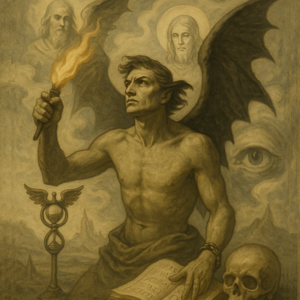
A man who delved into theology with relentless passion. Who challenged the foundations of Orthodox dogma. Who called the Church a distortion of Christ’s teachings. Who rejected the sacraments, denied the resurrection, and saw the cross not as a symbol of salvation, but as an emblem of cruelty.
What led Tolstoy, the literary saint of Russia, to this final spiritual rebellion? And why did the Church respond not with debate, but with excommunication?
 View all episodes
 By Andy Altschuler
One of the greatest literary figures in Russian history — and, perhaps, the most recognizable Russian author in the world...
Tolstoy was celebrated during his lifetime. He was a cultural monument in his own time — read not only by the Russian intelligentsia, but by factory workers, schoolteachers, revolutionaries, and monarchists alike.
Unlike so many Russian thinkers and artists, he was never imprisoned, never exiled, never formally repressed by the state. His writings generally were not banned – neither by the Tsarist regime, nor by the Soviets who followed. In fact, both systems found ways to celebrate him.
In the Soviet Union, he was often presented as a proto-socialist critic, a moral voice who condemned inequality and imperial hypocrisy. In the West, he was embraced as a literary genius, a prophet of nonviolence, a spiritual humanist. Across cultures and ideologies, Tolstoy has remained, in many ways, untouchable.
Yet there is another side to Tolstoy. A side that is far more controversial, and far less publicized.
A man who delved into theology with relentless passion. Who challenged the foundations of Orthodox dogma. Who called the Church a distortion of Christ’s teachings. Who rejected the sacraments, denied the resurrection, and saw the cross not as a symbol of salvation, but as an emblem of cruelty.
What led Tolstoy, the literary saint of Russia, to this final spiritual rebellion? And why did the Church respond not with debate, but with excommunication?