
Sign up to save your podcasts
Or

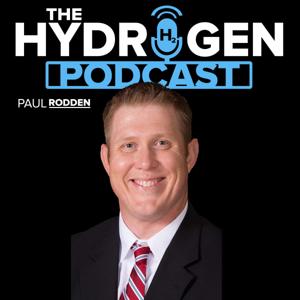


Today marks the end of an incredible chapter. After five years, The Hydrogen Podcast signs off with one final episode—a deep reflection on the lessons, people, and progress that defined half a decade of global hydrogen evolution.
From the early policy excitement to the hard economics of project delivery, host Paul Rodden takes listeners through the milestones, the missteps, and the breakthroughs that shaped both the show and the hydrogen market itself.
💬 In This Episode:
🔥 Final Spotlight — Raven SR:
A company featured in our very first season now achieves a global milestone:
💡 Key Takeaways from Five Years:
• Never abandon economics — bankable offtake makes or breaks projects.
• Avoid dogma — flexibility in technology wins the long game.
• Policy can accelerate, not replace, sound business.
• Perseverance and collaboration drive real-world change.
🎧 Paul’s Final Words:
“We’ve been through every market cycle, every policy wave, and every breakthrough together. Hydrogen remains the future—but only if we build it with realism, discipline, and faith in each other. Thank you for five incredible years.”Support the show
In this week’s episode of The Hydrogen Podcast, Paul Rodden explores three major stories that define hydrogen’s next phase — profit discipline, integrated scale, and global ambition.
💼 1️⃣ Plug Power’s Financial Pivot
Plug Power just delivered its most revealing investor call yet. While revenue missed expectations, the company beat earnings estimates and unveiled a bold new strategy:
The message: No more growth for growth’s sake. Plug is entering the “profit-first” era of hydrogen — and signaling to the entire industry that bankability matters more than buzz.
🏗️ 2️⃣ NEOM’s Hydrogen Superproject
Saudi Arabia’s NEOM Green Hydrogen Company reached key construction and deployment milestones.
NEOM’s integrated design — renewable power, electrolysis, ammonia synthesis, and export logistics — has become the blueprint for global hydrogen economics.
Its advantage:
For investors and policymakers, the lesson is simple: scale, integration, and cost optimization are non-negotiable if you want hydrogen to compete with fossil fuels.
🇨🇳 3️⃣ China’s Hydrogen Technology Roadmap 3.0
China’s new national plan aims for 4 million hydrogen vehicles by 2040 and a massive expansion of refueling and distribution infrastructure.
The country’s approach blends state-backed coordination with competitive economics, just as it did for solar, wind, and EV batteries.
Key elements include:
But success depends on economic realism—matching every gigawatt of electrolyzer capacity with credible demand and cost-reduction pathways.
⚙️ The Common Thread:
Across these three global stories, hydrogen’s future is being shaped by economic maturity.
💬 Paul’s Take:
“The hydrogen industry has hit its inflection point. From now on, success isn’t about pilots or politics—it’s about profits, integration, and delivery.”
Support the show
In this episode of The Hydrogen Podcast, Paul Rodden highlights three powerful stories proving that hydrogen’s progress is driven by innovation, economics, and real-world execution. From the U.S. Midwest to Northern Europe to high-tech drone applications, the hydrogen industry is showing tangible momentum.
🇺🇸 Ohio’s Hydrogen Grit
Even as federal hydrogen funding faces political turbulence, Ohio’s hydrogen economy keeps expanding.
At the Ohio Fuel Cell and Hydrogen Coalition, Bill Whittenberger made it clear: “We’re building businesses in this state regardless.”
Key players include:
🇩🇰 Denmark’s HySynergy Plant – A European Milestone
Europe’s hydrogen ambitions are moving from theory to practice. The HySynergy project in Fredericia—powered entirely by solar and wind—now produces eight tonnes of hydrogen daily.
This 20 MW facility, operated by Everfuel, links hydrogen directly to refinery operations and cross-border exports to Germany.
Though delayed and still challenged by high electricity costs, HySynergy proves scalability is within reach. CEO Jakob Korsgaard urges strong implementation of the EU RED III directive to hit Europe’s 2030 renewables targets.
The result: a genuine step toward low-carbon hydrogen at commercial scale.
🚀 Solar Hydrogen Nanogrids – Powering Drones and Beyond
Michigan-based Sesame Solar has unveiled a game-changing solar-hydrogen nanogrid, capable of generating hydrogen on-site—anywhere, anytime.
How it works:
💡 The Bigger Picture:
Hydrogen’s success depends on smart economics and flexible deployment.
From heavy industry to autonomous tech, hydrogen’s value is being earned through performance, not promises.
Support the show
In today’s episode of The Hydrogen Podcast, Paul Rodden breaks down the German Federal Court of Auditors’ explosive new report calling for a “reality check” on Germany’s national hydrogen strategy. This assessment isn’t just about Germany—it’s a warning and a roadmap for every country investing billions in clean hydrogen.
🇩🇪 The Stakes:
Germany has pledged over €7 billion for 2024–2025 to build a world-class hydrogen economy—funding green hydrogen production, imports, pipelines, and industrial demand. But according to auditors, the ramp-up “is not going according to plan.”
The country risks missing its 2030 hydrogen targets, facing lagging demand, stalled projects, and unsustainable subsidy exposure.
💡 Key Findings:
📊 The “Reality Check” Playbook:
Germany’s auditors aren’t anti-hydrogen—they’re urging smarter economics.
✅ Align supply with real industrial demand through contracts and quotas.
✅ Prioritize modular, “no regrets” infrastructure tied to offtake commitments.
✅ Focus subsidies on cost-down innovations with clear sunset provisions.
✅ Accelerate certification, traceability, and international standards for clean hydrogen trade.
✅ Develop a Plan B—invest in CCS, flexible renewables, and alternative decarbonization tools if costs stay high.
🌍 Global Implications:
Germany’s audit matters because its policy blueprint drives Europe’s hydrogen agenda.
How Berlin recalibrates—balancing ambition with financial realism—will influence how investors, developers, and policymakers shape hydrogen markets worldwide.
🚀 The Opportunity:
If Germany gets this right, it will build a smarter, more competitive hydrogen ecosystem, pairing industrial leadership with disciplined market design. The key isn’t less ambition—it’s better economics.
💬 My Take:
“This report isn’t a red light for hydrogen—it’s a flashing yellow. It’s time for smarter incentives, flexible contracting, and demand-led infrastructure. Germany’s course correction could set the global gold standard for a sustainable hydrogen economy.”
Support the show
In this episode of The Hydrogen Podcast, we dive into the real mechanics of the hydrogen economy — not the hype, but the contracts that make it all work. Drawing on the latest data from the August 2025 Oxford Institute for Energy Studies report, Paul Rodden breaks down how offtake agreements are defining the future of hydrogen finance, investment, and market credibility.
📄 What You’ll Learn:
💼 What are hydrogen offtake agreements (H2SPAs)?
🌍 Who’s Signing the Big Deals?
⚖️ How These Contracts Are Structured:
🧩 Risks, Rewards, and Regulation:
🚢 Delivery & Logistics:
📊 The Future of Offtake Markets:
💡 Why It Matters:
Every hydrogen contract signed today pushes the industry closer to commercial maturity. These agreements are the link between vision and value—transforming hydrogen from a political promise into a financial reality.
📈 Takeaway:
Hydrogen’s next chapter won’t be written in policy memos—it’ll be written in binding offtake agreements. Those who master this contract landscape will control the pace and profitability of the global hydrogen transition.
Support the show
In today’s episode of The Hydrogen Podcast, we take a data-driven look at the global hydrogen economy—what’s working, what’s not, and which production routes will dominate through 2035. No hype, no spin—just economics, technology, and real-world traction.
🌍 Global Market Snapshot:
🏭 Steelmaking: Hydrogen’s Flagship Use Case
Europe’s green steel revolution—led by Stegra and H2 Green Steel—is proving hydrogen-based DRI can cut emissions up to 90%. The economics hinge on carbon pricing, green premiums, and long-term offtake contracts with major OEMs.
🚚 Heavy-Duty Transport & Refueling
Hydrogen trucks are no longer theoretical.
⚡ Power & Energy Storage
From ammonia co-firing in Asia to salt cavern storage in the U.S., hydrogen is becoming the key to long-duration, seasonal energy storage—offering resilience no battery can match.
💰 Cost Breakdown (2025 Averages):
🌐 Regional Leaders:
North America: Blue hydrogen leads—1.5 Mtpa online or FID-approved, with Texas & Louisiana driving scale.
Europe: Still the green hydrogen frontrunner with €2B in renewable hydrogen auctions and corridor projects.
Asia-Pacific: China supplies 60% of global electrolyzers, driving cost parity; Japan & Korea advance port logistics and shipping corridors.
Middle East: NEOM Helios sets a new price floor using ultra-cheap renewables and ammonia exports.
🔬 Technology Outlook:
📈 Strategic Takeaways:
💡 Bottom Line:
Hydrogen’s future isn’t about hype—it’s about competitive cost, reliable infrastructure, and contract-backed demand.
Investors and developers who stay disciplined on economics will shape the energy transition.
Support the show
In this episode of The Hydrogen Podcast, we unpack three pivotal stories shaping hydrogen’s next chapter—from major logistics partnerships and cost-slashing tech breakthroughs to a data-driven look at plant safety and reliability.
🚛 Daimler Truck, Kawasaki, & Hamburg Port: Building the Supply Chain
Daimler is teaming up with Kawasaki Heavy Industries and the Hamburg Port Authority to bring liquid hydrogen imports to life. This isn’t another concept—it’s a real-world push to connect global hydrogen logistics with on-road delivery.
After logging over 225,000 kilometers on hydrogen long-haul trucks, Daimler is proving that technology isn’t the bottleneck—logistics is. Their plan to ship liquid hydrogen by sea and distribute it inland marks a critical step in building scalable infrastructure beyond pilot programs.
🔬 VSParticle’s Catalyst Innovation: Slashing Costs in PEM Electrolyzers
Dutch startup VSParticle has reportedly achieved a breakthrough in nanoporous coatings, reducing the iridium needed for PEM electrolysis by over 90%. Tested by Plug Power, this could bring green hydrogen production costs near $2.30/kg—approaching parity with fossil-based hydrogen.
This isn’t just chemistry; it’s economics. Lower catalyst costs mean competitive green hydrogen for industry, chemicals, and energy sectors—turning “green premium” into green parity.
🏭 Plant Safety Realities: Hydrogen Is Safe—When Managed Right
A joint study by NYU Tandon and University College London reveals that 59% of hydrogen facility incidents come from design or human error—not hydrogen itself. Only 15% stem from hydrogen’s unique properties, proving that standard engineering rigor and training are the best defense.
Hydrogen isn’t more dangerous—it’s just less familiar. As lead researcher Augustin Guibaud put it: “The danger comes not from hydrogen itself, but from misunderstanding its differences.”
💡 The Common Thread:
Across these stories—Daimler’s logistics leadership, VSParticle’s catalyst innovation, and safety learnings—the theme is economic and operational maturity.
Hydrogen’s future now hinges on bankable projects, cost competitiveness, and disciplined engineering—not hype.
📈 Takeaways for Developers & Investors:
Hydrogen’s progress is shifting from promise to practice, led by companies who deliver—not just declare.
Support the show
This week on The Hydrogen Podcast, we cut through the noise to break down the week’s biggest hydrogen headlines—from Europe’s momentum and Asia’s acceleration to America’s funding setbacks. The message is clear: the future of hydrogen belongs to projects built on economic strength and operational discipline.
🇪🇺 Europe’s Hydrogen Surge:
🇺🇸 U.S. DOE Pulls $2.2 Billion in Funding:
The Department of Energy’s sudden withdrawal from two West Coast hydrogen hubs sent shockwaves through the market. It’s a wake-up call for developers: projects without ironclad economics and long-term offtake are at risk. This move reshapes how investors and policymakers will evaluate hydrogen projects moving forward.
🌏 Asia-Pacific Steps Up:
⚠️ Setbacks & Lessons:
💡 Strategic Takeaways:
🔍 The Big Questions:
📈 Final Insight:
Hydrogen’s global race is heating up, but the winners will be those who merge innovation with financial realism. The sector’s future won’t hinge on political headlines—it’ll be written by disciplined developers and investors who deliver megawatts, molecules, and market value.
Support the show
In today’s episode of The Hydrogen Podcast, we dig deep into three powerful headlines that tell one truth: hydrogen’s future won’t be won by hype or engineering brilliance—it’ll be decided by economics.
🇬🇧 Port Talbot’s £750M Hydrogen Gamble
Wales is betting big on a new £750 million hydrogen production and research hub, promising over 2,000 jobs and a blueprint for industrial transformation. But can it compete on cost? We’ll break down what makes—or breaks—hydrogen mega-projects: offtake certainty, cost per kilo, and long-term demand.
🏭 Linde’s Global Dominance in Hydrogen Economics
Industry leader Linde continues its climb, connecting green and blue hydrogen production directly into the industrial backbone—ammonia, methanol, and chemical supply chains. We’ll explore how scale, integration, and anchor clients keep Linde’s projects bankable even as global policy shifts.
🚗 GM’s Pivot from Hydrogen Cars to Heavy-Duty Markets
After years of innovation, GM halts its hydrogen passenger car plant—but the story isn’t over. GM’s pivot toward trucks, rail, and military applications shows where hydrogen truly shines: in use cases where uptime and range outweigh cost.
💡 Key Themes:
🔍 Takeaway:
Hydrogen’s promise isn’t about the loudest headlines—it’s about who can deliver profitable, scalable, and reliable projects. Follow the data, follow the contracts, and follow the money.
Support the show
In today’s episode of The Hydrogen Podcast, we strip away the noise and focus on what’s real — the true economics, technology, and momentum defining hydrogen in 2025.
Every week brings another symposium, panel, or global energy summit promising the “future of hydrogen,” but behind the photos and promises, where is the real progress? Today, we separate substance from spectacle.
💬 Topics Covered:
🔍 Key Takeaway:
Hydrogen’s evolution mirrors every great energy revolution — hype, correction, and maturity. The noise may be louder than ever, but the work that matters is happening far from the cameras: in storage caverns, in industrial clusters, and in grid-scale deployments built to last.
Support the show
From the publisher's feed

4,097 Listeners

1,245 Listeners

403 Listeners

127 Listeners

85 Listeners

5,365 Listeners

82 Listeners

8 Listeners

0 Listeners

283 Listeners

229 Listeners

19 Listeners
15 Listeners

1,436 Listeners

137 Listeners