
Sign up to save your podcasts
Or

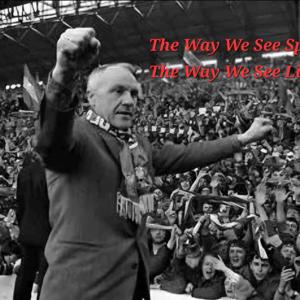

In the latest episode of 'The Way We See Sport', we return once again to the sport of Rugby League, focusing on the transformative role played by Maurice Lindsay, a divisive, yet visionary figure whose influence developed during the Thatcherite period, initially as the figurehead of 'The Gang of Four' directors who helped to transform the fortunes of Wigan during the 1980s.
Embracing the pro-market values that were at the heart of Thatcherism, Lindsay reshaped the Wigan club recruiting big money signings such as Ellery Hanley, Joe Lydon and Andy Gregory, alongside putting in place measures that enabled the club to capture the brightest young talents in the game such as Shaun Edwards and Andy Farrell. Lindsay's influence was responsible for resurrecting the fortunes of Wigan and resulted in the club winning 8 Championships, 8 consecutive Challenge Cups and 3 World Club Challenge titles between 1987 and 1996. As part of this success, Wigan (as Lindsay saw it) were "setting a standard of excellence that others should seek to emulate". Critics and fans of other clubs on the hand, claimed Wigan's fiscal policy was merely proof of an unlevel playing field.
Having driven Wigan's regeneration, Lindsay's influence began to increasingly permeate the wider sport. He became Great Britain's Team Manager and was in part responsible for a shift in the national side's fortunes, before he became the Rugby Football League (RFL) Chief Executive in 1992. Installed in the hotseat at Chapeltown Road, he sought to revolutionise the sport of Rugby League with his characteristic zeal. He had little time for smaller clubs and many traditionalists, believing that the sport needed to embrace commerce and replicate football's rebirth through the establishment of the Premier League.
Rupert Murdoch's role in the Super League War down under saw Sky make a "once in a lifetime" offer of £77 million to the RFL to establish a Super League, move to a summer season and to uproot a century of tradition. Ridiculous mergers were proposed and met with a great degree of hostility. However, the Super League was ultimately established and offered Lindsay the opportunity to implement his vision for Rugby League's 'Brave New World'.
In this long-form episode, Chris and Nathan discuss his rise to prominence with Wigan, his role in the establishment of Super League and how despite the fact he was a divisive and at times unpopular figure, much of the discourse he led during the 90s around the future of the game, particularly in relation to expanding the game remains prominent in Rugby League circles.
 View all episodes
 By Chris Bayes
In the latest episode of 'The Way We See Sport', we return once again to the sport of Rugby League, focusing on the transformative role played by Maurice Lindsay, a divisive, yet visionary figure whose influence developed during the Thatcherite period, initially as the figurehead of 'The Gang of Four' directors who helped to transform the fortunes of Wigan during the 1980s.
Embracing the pro-market values that were at the heart of Thatcherism, Lindsay reshaped the Wigan club recruiting big money signings such as Ellery Hanley, Joe Lydon and Andy Gregory, alongside putting in place measures that enabled the club to capture the brightest young talents in the game such as Shaun Edwards and Andy Farrell. Lindsay's influence was responsible for resurrecting the fortunes of Wigan and resulted in the club winning 8 Championships, 8 consecutive Challenge Cups and 3 World Club Challenge titles between 1987 and 1996. As part of this success, Wigan (as Lindsay saw it) were "setting a standard of excellence that others should seek to emulate". Critics and fans of other clubs on the hand, claimed Wigan's fiscal policy was merely proof of an unlevel playing field.
Having driven Wigan's regeneration, Lindsay's influence began to increasingly permeate the wider sport. He became Great Britain's Team Manager and was in part responsible for a shift in the national side's fortunes, before he became the Rugby Football League (RFL) Chief Executive in 1992. Installed in the hotseat at Chapeltown Road, he sought to revolutionise the sport of Rugby League with his characteristic zeal. He had little time for smaller clubs and many traditionalists, believing that the sport needed to embrace commerce and replicate football's rebirth through the establishment of the Premier League.
Rupert Murdoch's role in the Super League War down under saw Sky make a "once in a lifetime" offer of £77 million to the RFL to establish a Super League, move to a summer season and to uproot a century of tradition. Ridiculous mergers were proposed and met with a great degree of hostility. However, the Super League was ultimately established and offered Lindsay the opportunity to implement his vision for Rugby League's 'Brave New World'.
In this long-form episode, Chris and Nathan discuss his rise to prominence with Wigan, his role in the establishment of Super League and how despite the fact he was a divisive and at times unpopular figure, much of the discourse he led during the 90s around the future of the game, particularly in relation to expanding the game remains prominent in Rugby League circles.