
Sign up to save your podcasts
Or



Send us Fan Mail
Your nervous system may not be “broken”—it may be stuck in a loop.
Dr. Michael Bagnell and May Bagnell, IHP break down how sensory mismatch, anxiety, and autonomic dysregulation can keep your brain locked in survival mode, and what it actually takes to regain flexibility. They unpack the feedback loop where a physical sensation is interpreted as danger, protective activation increases, and the symptoms feel even stronger. If you’ve ever been told to “just calm down,” felt dismissed by your symptoms, or wondered why your body seems to overreact to dizziness, shortness of breath, fatigue, or visually busy environments, this conversation offers a clearer framework.In this episode, you’ll discover:
May shares her personal experience using self-talk to shift from “something is wrong” to “what can I do to help myself?” Dr. Bagnell explains how brain mapping, autonomic testing, and a signal-restoration approach can help identify what may be driving symptoms instead of simply chasing them. This episode also reframes the idea of being “stuck”—not as a personality flaw, but as a reduced ability to adapt, which can improve with the right insight and support. If you’re dealing with anxiety, vestibular symptoms, chronic stress, or the feeling that your brain and body are no longer working together, this conversation offers language, understanding, and hope for a more flexible nervous system.
For more information, visit us at www.bagnellbraincenter.com.
You CAN Heal! We CAN Help!!
Send us Fan Mail
Your experience of dizziness, anxiety, brain fog, or “off” feeling may not be random - your brain could be misreading reality in real time. Dr. Michael Bagnell and May Bagnell break open the first episode of their five-part Adaptive Brain series, revealing how the brain constantly predicts what should happen next by blending vision, inner ear input, body position, and prior experience. When those signals stop matching, symptoms can show up as disorientation, fatigue, nausea, panic-like feelings, trouble driving at night, overwhelm in grocery stores, or even a sense that you can’t trust your own body.
Dr. Bagnell explains the neuroscience behind predictive processing, prediction error, sensory re-weighting, and why normal-looking routine tests can miss the real problem. Mae Bagnell adds the lived experience and coaching perspective, highlighting how these issues can look like anxiety, how avoidant patterns can quietly make things worse, and why recognizing your own symptom patterns creates more agency instead of fear.You'll discover:
This conversation also shows how functional neurology approaches these problems with targeted testing of the eyes, vestibular system, body position, reaction time, heart rate variability, and more - then uses precise, tolerable challenges to help the brain recalibrate.Essential listening if you or someone you love deals with unexplained dizziness, motion sensitivity, visual overwhelm, post-concussion symptoms, migraine-related issues, or that unsettling feeling that everyday environments have become too much. The good news: your brain can adapt, and the right input at the right dose can help it do exactly that.
For more information, visit us at www.bagnellbraincenter.com.
You CAN Heal! We CAN Help!!
Send us Fan Mail
Anxiety, dizziness, brain fog, fatigue, and pain may not be random symptoms - they can be signals.
Dr. Michael and May Bagnell, IHP reveal a powerful new way to understand mental health, one that looks beyond the diagnosis and into the brain-body patterns driving how you feel. Fresh from a professional conference where they trained doctors and practitioners on the connection between the brain, body, and mental health, the Bagnells unpack why so many symptoms are really about regulation, prediction, and protection. Instead of asking only, "What is wrong?" they ask a better question: What is the nervous system responding to?You’ll discover:
Dr. Michael Bagnell brings the functional neurology perspective, showing how the cerebellum, vestibular system, autonomic nervous system, and movement all influence brain regulation and stability. May Bagnell adds the lived, coaching-centered lens, exploring how meaning, identity, emotional processing, and mindset can either reinforce distress or help the body and brain move through it. If you’ve ever felt stuck in a loop of symptoms, or you care about someone who seems anxious, overwhelmed, dizzy, or exhausted without a clear explanation, this episode offers a more hopeful framework. It’s a grounded, practical conversation about restoring signal, rebuilding safety, and creating the conditions for real change.Perfect for anyone ready to understand the deeper story beneath the symptoms - and what to do next.
For more information, visit us at www.bagnellbraincenter.com.
You CAN Heal! We CAN Help!!
Send us Fan Mail
The Hidden Conversation Between Your Eyes and Brain
Discover how your eyes and brain communicate in this episode, revealing why understanding this connection can influence visual health, focus, and overall brain function. Whether you’re experiencing eye strain, reading difficulty, or brain fog, learn how eye movements reflect your brain health and what you can do to optimize it.
Key Topics:
Timestamps:00:00 - Introduction to the hidden conversation between eyes and brain
00:09 - Why we see with our brain, not just our eyes
01:36 - How photography illustrates the eye-brain connection
02:44 - The brain’s role as a perception machine filling in gaps
04:35 - How scrambled sentences demonstrate the brain’s processing capabilities
05:34 - Eye movements as a reflection of brain health
06:04 - Using eye tracking to identify brain injuries like concussions
06:58 - Common visual symptoms linked to brain function, such as eye strain and headaches
07:53 - The importance of eye movements in assessing neurological health
08:23 - The role of the fovea in focus and peripheral vision
09:17 - How retinal and peripheral vision provide context and environmental awareness
09:38 - Visual issues related to glasses and convergence challenges
10:09 - Asking patients about their everyday visual experiences to identify neurological causes
11:37 - The relationship between eye movements, body posture, and focus
12:38 - How different eye movements (saccades, pursuits, convergence) reflect brain function
14:08 - The importance of accurate saccades for attention and brain fatigue management
16:34 - Training eye movements to improve focus and reduce cognitive fatigue
19:24 - Eye training exercises and tools to strengthen brain function
22:17 - Convergence issues common in young people and those with sensory or attention disorders
23:36 - Symptoms indicating convergence problems and their impact on daily life
25:36 - Pupil responses as a measure of cognitive and autonomic health
26:39 - The interconnectedness of eye and vestibular system health and their role post-injury
28:44 - How visual input influences emotional regulation and sensory processing
29:12 - Practical takeaways for recognizing and addressing vision-related brain health issuesFinal Thoughts:Understanding the hidden conversation between your eyes and brain can provide valuable insights into neurological health and aid in targeted therapies. Paying attention to eye movements, visual fatigue, and focus issues can be key in early detection and intervention for brain health challenges.
#NeuroHealth #VisionAndBrain #BrainHacks #EyeMovementTraining #BrainScience #TheBagnellBrainCenter
For more information, visit us at www.bagnellbraincenter.com.
You CAN Heal! We CAN Help!!
Send us Fan Mail
The Hidden Conversation Between Your Brain and Heart: How Nervous System Regulation Affects Heart Rate and Resilience
Explore the intricate, two-way communication between your brain and heart, and learn how understanding this dialogue can unlock better management of heart rate variations, emotional influences, and overall resilience. This episode reveals the science behind autonomic regulation and offers practical insights for improving heart-brain health.
Key topics - 5-10 bullets:
Timestamps: 00:00 - Introduction to the brain-heart hidden conversation and its importance
01:11 - Science behind the interconnected brain and cardiovascular systems
02:36 - How blood vessels and nervous signals regulate the heart-brain loop
03:28 - Brain mechanisms that influence cardiac function and heart rate changes
04:41 - The role of the autonomic nervous system, including sympathetic and parasympathetic branches
05:02 - Cortical and limbic brain areas impacting heart regulation during emotional states
06:36 - The influence of the vagus nerve and baroreceptors in heart rate control
07:19 - How patterns and triggers influence heart-brain communication
08:02 - Recognizing symptoms of dysautonomia and understanding their triggers
09:10 - The role of stress, emotion, and emotional states in heart rate variability
10:00 - How emotional regulation affects chronic conditions like balance issues and dysautonomia
11:56 - Using HRV as a neurocardiac health indicator and its measurement with wearables
13:23 - Practical interventions: mindset, breathing, and vagal activation strategies
15:23 - Future pacing and shifting focus from past limitations to new health opportunities
16:50 - The importance of mindset, emotional awareness, and personal agency in physical health
17:58 - How pattern recognition in symptoms helps demystify heart-brain dysregulation
18:50 - Utilizing HRV to understand vagal modulation and resilience potential
20:09 - Symptoms of heart-brain dysregulation and the importance of pattern recognition
21:33 - Brain regions involved in heart regulation and the neurophysiological basis of symptoms
23:02 - The vagus nerve and its role as the body's braking system for heart rate control
25:23 - Pattern identification and the significance of physiological triggers
27:49 - The importance of awareness, mindset, and functional strategies in recovery
32:25 - Creating calm through breathing, emotional regulation, and neurological practices
33:12 - Closing thoughts on holistic approaches and personal empowerment in healing
Endnote: This episode emphasizes that understanding and optimizing the brain-heart connection is fundamental for improving resilience, managing symptoms, and fostering holistic health. By recognizing patterns and regulating emotional states, you can enhance your nervous system’s health and overall well-being.
Follow us on Instagram: https://www.instagram.com/bagnell_brain_center/
For more information, visit us at www.bagnellbraincenter.com.
You CAN Heal! We CAN Help!!
Send us Fan Mail
Unlock the hidden dialogue between your brain and immune system—and discover how nurturing this connection can transform your health.
Did you know your brain and immune system are constantly communicating, influencing everything from sleep and brain fog to autoimmune responses and mental health? In this eye-opening episode, May Bagnell and Dr. Michael Bagnell reveal the powerful, yet often overlooked, pathways that regulate your body's defenses and recovery. Dive into expert insights on how cytokines, microglia, the vagus nerve, and stress responses play starring roles in how your body fights off illness, heals, and maintains cognitive clarity.
You'll discover:
This episode is a must-listen for anyone tired of feeling run down, foggy, or overwhelmed by health issues that seem to linger. If you're ready to change the conversation in your body from chaos to control—giving your immune system the support it needs to function optimally—this is your masterclass.
Whether you're dealing with autoimmune conditions, brain fog, chronic fatigue, or just want to stay vibrant as you age, understanding this intricate brain-immune dialogue unlocks new pathways to health.
Tune in, learn how to listen to your body's subtle signals, and take actionable steps toward a stronger, more balanced you. Your health's hidden conversations are waiting for you to decode.
Follow us on Instagram @BagnellBrainCenter for more breakthroughs, and remember—your brain is always listening. So is your immune system. Start creating the conversations that heal.
You can Heal! We can Help!
For more information, visit us at www.bagnellbraincenter.com.
You CAN Heal! We CAN Help!!
Send us Fan Mail
Unlock the Hidden Conversations Between Your Brain and Immune System — What You Need to Know to Heal Naturally
Your brain and immune system are constantly talking — often unnoticed, yet their dialogue holds the key to your health. In this eye-opening episode, May Bagnell and Dr. Michael Bagnell reveal how sleep, stress, inflammation, and even gut health influence your immune function, from the microglia cells supporting your brain to the vagus nerve acting as a communication highway. Discover how immune signals like cytokines impact your mood, mental clarity, and even autoimmune conditions like Hashimoto's, challenging the common notion that illness is solely about pathogens.You'll uncover:
Whether you're fighting fatigue, brain fog, autoimmune issues, or simply want to understand how your nervous system influences your health, this episode offers clear, actionable insights from top neuro and immune experts. Learn how to harness the power of your body's communication pathways to restore harmony and thrive at any age.Perfect for health-conscious individuals, biohackers, or anyone tired of band-aid remedies, this episode helps you decode your body's silent language — because understanding these hidden conversations could be your secret to lasting vitality.Remember: Your brain and immune system's dialogue is always happening — learn how to listen, influence, and turn the conversation in your favor.Tune in today and start rewiring your health from the inside out!Why this works:
Visit us at https://www.instagram.com/bagnell_brain_center/
#FunctionalNeurology #BrainFog #NeuroImmunology
For more information, visit us at www.bagnellbraincenter.com.
You CAN Heal! We CAN Help!!
Send us Fan Mail
Day in the Clinical Life: Vestibular and Visual Training in Action
In this episode of The Neurocollective Podcast, we take listeners behind the scenes for a “day in the clinical life” as May Bagnell, IHP shares her personal experience with vestibular and visual system testing and training. The conversation explores how this technology works, what the evaluation measures, and why strengthening the vestibular system can have a profound impact on energy, clarity, balance, and overall brain function.
What You’ll Learn
Episode Highlights
Key Takeaways
Practical Reflection
If you’ve ever noticed days where your energy, clarity, or balance feels dramatically worse without an obvious reason, this episode offers a helpful framework for becoming more curious about what your body may be signaling.
Closing Message
This episode reminds us that healing is often about finding the right imbalance, supporting the right system, and taking the next step with precision and care.Remember: You can heal. We can help.
For more information, visit us at www.bagnellbraincenter.com.
You CAN Heal! We CAN Help!!
Send us Fan Mail
Brain and Hormones: The Hidden Conversation Shaping Your Health
In this episode, we explore the powerful two-way conversation between the brain and your hormones. What may feel like “just hormones” is often a more complex feedback loop involving the hypothalamus, pituitary, thyroid, adrenals, ovaries/testicles, and the nervous system. We break down how stress, blood sugar, sleep, inflammation, and nervous system dysregulation can all influence hormone signaling — and how hormonal imbalances can, in turn, affect mood, energy, sleep, memory, and motivation.
Key Topics Covered
Main Takeaways
Practical Exercise: Your Brain-Hormone Conversation Log
For one week, each evening or the next morning, write down:
Use this log to become more curious, not judgmental, about your health patterns.
Clinical Insight
From a functional neurology perspective, hormone symptoms are not always “in the brain,” but the brain is always part of the picture. That’s why effective care often includes both neurological strategies and metabolic strategies.
Who This Episode Is For
This episode is especially helpful for anyone dealing with:
Closing Message
When we understand the hidden conversations between the brain and hormones, we can make more informed, sustainable choices that support long-term health and healing.Remember: You can heal. We can help.
For more information, visit us at www.bagnellbraincenter.com.
You CAN Heal! We CAN Help!!
Send us Fan Mail
This episode dives into the intricate communication between your gut and brain — a relationship that influences your mood, memory, and overall mental health. With insights from experts, we explore how gut health impacts neurological function and how understanding this connection can empower you to take control of your mood and health.
In this episode:
Timestamps:
Resources & Links:
Connect with the Hosts: www.BagnellBrainCenter.com
Additional Notes: Understanding that your gut and brain share origin and communication pathways transforms how you approach mental and physical health. Small, mindful changes in diet, stress management, and gut support can have profound effects on mood, cognition, and resilience. Remember, health is less about calories and more about communication—strive for a gut that's singing, not talking back.
For more information, visit us at www.bagnellbraincenter.com.
You CAN Heal! We CAN Help!!
From the publisher's feed
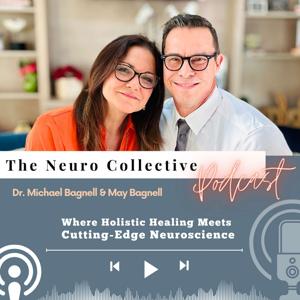
Welcome to The Neuro Collective Podcast!
We are your hosts, Dr. Michael Bagnell, Functional Neurologist and May Bagnell, Mindset and Nutrition Coach.…
Our podcast is designed for those who are eager to explore innovative ways to heal brain conditions, optimize brain performance, and enhance overall well-being.
We cater to everyone from health-conscious individuals to high-performing athletes.
Each week, we bring you expert interviews, the latest research, and actionable tips to help you achieve peak mental and physical health. Together, we'll dive deep into the science and practicalities of brain health, empowering you to live your best life with a sharper mind and a healthier body.
So, let's embark on this journey together and unlock the limitless potential of your brain. This is The Neuro Collective Podcast—where holistic health meets neuroscience.