
Sign up to save your podcasts
Or

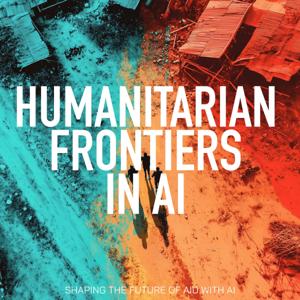

In Episode 7, Chris Hoffman is joined by Paula Gil Baizan (Principal, Something Meaningful) and Ben Holt (Principal, New and Useful) for a candid conversation on what the humanitarian sector needs next after a brutal 2025: is this a “reset” — or a complete redo?
Paula argues we’re running on an outdated operating system built for predictable funding, stable access, and clear mandates — and those assumptions no longer hold. Ben reframes strategic foresight as a tool for action under uncertainty (not prediction), and asks the tougher question: if the sector’s “hardware” (institutions, incentives, hubs) can’t move fast enough, what new coalitions and models will emerge?
They get practical on what individuals can do right now: ground in values, prioritise dignity over scale, build networks of trust, and be honest about power and trade-offs. They also discuss “grief” and anger in legacy systems — and how to channel that energy into purpose-driven change, not institutional survival.
What we cover:
Links:
keywords: future of humanitarian action, strategic foresight, humanitarian innovation, localization, dignity, systems change, humanitarian leadership, resilience.
 View all episodes
 By Chris Hoffman
In Episode 7, Chris Hoffman is joined by Paula Gil Baizan (Principal, Something Meaningful) and Ben Holt (Principal, New and Useful) for a candid conversation on what the humanitarian sector needs next after a brutal 2025: is this a “reset” — or a complete redo?
Paula argues we’re running on an outdated operating system built for predictable funding, stable access, and clear mandates — and those assumptions no longer hold. Ben reframes strategic foresight as a tool for action under uncertainty (not prediction), and asks the tougher question: if the sector’s “hardware” (institutions, incentives, hubs) can’t move fast enough, what new coalitions and models will emerge?
They get practical on what individuals can do right now: ground in values, prioritise dignity over scale, build networks of trust, and be honest about power and trade-offs. They also discuss “grief” and anger in legacy systems — and how to channel that energy into purpose-driven change, not institutional survival.
What we cover:
Links:
keywords: future of humanitarian action, strategic foresight, humanitarian innovation, localization, dignity, systems change, humanitarian leadership, resilience.