
Sign up to save your podcasts
Or


In 1991, Eric "Eazy-E" Wright—the founder of N.W.A., the man who rapped "Fuck tha Police", attended a Republican fundraiser at the White House and met President George H.W. Bush.
Most people think it was a publicity stunt. But here's what they don't know: Eazy-E was invited because he donated $2,490 to the Republican Party. He didn't challenge the system. He didn't speak truth to power. He bought his way into the room.
This is the Faustian Bargain in its purest form: Money buys access. And access erases politics.
But here's the paradox: The same year Eazy-E was shaking hands with President Bush, he was also rapping lyrics that degraded Black women. The same year he was being invited to the White House, he was also being attacked by C. Delores Tucker for his misogyny.
In this episode, I break down three case studies that reveal the paradox of hip-hop activism and misogynoir:
Eazy-E and the White House (1991): How the man who rapped "Fuck tha Police" became a "big Bush fan" and traded his radical politics for proximity to power.
Al Sharpton and the Congressional Black Caucus (1994): How Al Sharpton defended hip-hop's right to critique systemic racism but stayed silent on hip-hop's degradation of Black women—deferring Black women's dignity in favor of hip-hop's political legitimacy.
Jay-Z and the Jena 6 (2006-2007): How Jay-Z invoked the Jena 6 case to justify his continued use of the word "bitch," declaring: "When Jena Six don't exist, tell him that's when I'll stop saying 'bitch'... BITCH!"
I connect these case studies to my dissertation framework—the Faustian Bargain (where Black men trade authenticity for success), the Sacrificial Bargain (where Black women are expected to support Black men's liberation while absorbing the harm of their misogynoir), and the Crooked Room (where hip-hop artists stand upright in their critique of white supremacy but lean in their treatment of Black women).
And I ask the question: Can we hold both truths at once? Can we celebrate hip-hop as a force for social change while also holding it accountable for the harm it has caused to Black women?
The answer is yes. We can. We must. But holding both truths does NOT mean accepting the Sacrificial Bargain. It means refusing it.
This episode is a continuation from "C. Delores Tucker and the Generational Divide." It's the teaching moment about the paradox. It's where we hold both truths at once. It's where we refuse the Sacrificial Bargain.
 View all episodes
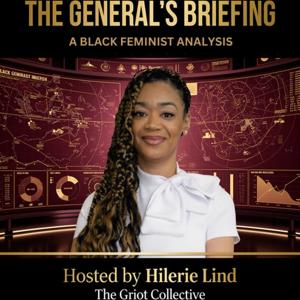
 By Hilerie Lind
In 1991, Eric "Eazy-E" Wright—the founder of N.W.A., the man who rapped "Fuck tha Police", attended a Republican fundraiser at the White House and met President George H.W. Bush.
Most people think it was a publicity stunt. But here's what they don't know: Eazy-E was invited because he donated $2,490 to the Republican Party. He didn't challenge the system. He didn't speak truth to power. He bought his way into the room.
This is the Faustian Bargain in its purest form: Money buys access. And access erases politics.
But here's the paradox: The same year Eazy-E was shaking hands with President Bush, he was also rapping lyrics that degraded Black women. The same year he was being invited to the White House, he was also being attacked by C. Delores Tucker for his misogyny.
In this episode, I break down three case studies that reveal the paradox of hip-hop activism and misogynoir:
Eazy-E and the White House (1991): How the man who rapped "Fuck tha Police" became a "big Bush fan" and traded his radical politics for proximity to power.
Al Sharpton and the Congressional Black Caucus (1994): How Al Sharpton defended hip-hop's right to critique systemic racism but stayed silent on hip-hop's degradation of Black women—deferring Black women's dignity in favor of hip-hop's political legitimacy.
Jay-Z and the Jena 6 (2006-2007): How Jay-Z invoked the Jena 6 case to justify his continued use of the word "bitch," declaring: "When Jena Six don't exist, tell him that's when I'll stop saying 'bitch'... BITCH!"
I connect these case studies to my dissertation framework—the Faustian Bargain (where Black men trade authenticity for success), the Sacrificial Bargain (where Black women are expected to support Black men's liberation while absorbing the harm of their misogynoir), and the Crooked Room (where hip-hop artists stand upright in their critique of white supremacy but lean in their treatment of Black women).
And I ask the question: Can we hold both truths at once? Can we celebrate hip-hop as a force for social change while also holding it accountable for the harm it has caused to Black women?
The answer is yes. We can. We must. But holding both truths does NOT mean accepting the Sacrificial Bargain. It means refusing it.
This episode is a continuation from "C. Delores Tucker and the Generational Divide." It's the teaching moment about the paradox. It's where we hold both truths at once. It's where we refuse the Sacrificial Bargain.