
Sign up to save your podcasts
Or


The Past Is Acting Weird Again
Episode 2, Part 1 — The Suspiciously Universal Past
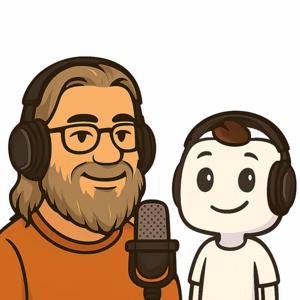
In Episode 2, Part 1, the series takes a strange turn: the past stops feeling personal and starts feeling… crowded.
Christopher and Eric notice something unsettling. The memories that surface don’t just belong to one person. They echo. Across conversations, generations, and wildly different lives, the same emotional beats keep showing up—school hallways, awkward silences, half-remembered rules, shared discomforts that no one remembers learning.
This episode explores the idea that while details vary, the structure of memory might be surprisingly universal. Certain experiences imprint themselves not because they’re dramatic, but because they’re formative. Quiet social calibrations. Early lessons about belonging, embarrassment, authority, and safety. The moments where you first learned how the world works—without anyone explaining it.
Part 1 focuses on recognizing this pattern: how individual nostalgia begins to blur into something collective, and why that realization feels both comforting and deeply strange.
In this episode, we explore:
Why so many people share eerily similar childhood memories
How social rules are learned without being taught
The difference between personal experience and shared structure
Why certain memories feel universal even when details differ
How the past forms templates, not timelines
This chapter sets up a bigger question—if so much of the past is shared, what does that say about identity?
That question carries forward into Part 2, where the universal past starts pushing back.
 View all episodes
 By Christopher Gulledge
The Past Is Acting Weird Again
Episode 2, Part 1 — The Suspiciously Universal Past
In Episode 2, Part 1, the series takes a strange turn: the past stops feeling personal and starts feeling… crowded.
Christopher and Eric notice something unsettling. The memories that surface don’t just belong to one person. They echo. Across conversations, generations, and wildly different lives, the same emotional beats keep showing up—school hallways, awkward silences, half-remembered rules, shared discomforts that no one remembers learning.
This episode explores the idea that while details vary, the structure of memory might be surprisingly universal. Certain experiences imprint themselves not because they’re dramatic, but because they’re formative. Quiet social calibrations. Early lessons about belonging, embarrassment, authority, and safety. The moments where you first learned how the world works—without anyone explaining it.
Part 1 focuses on recognizing this pattern: how individual nostalgia begins to blur into something collective, and why that realization feels both comforting and deeply strange.
In this episode, we explore:
Why so many people share eerily similar childhood memories
How social rules are learned without being taught
The difference between personal experience and shared structure
Why certain memories feel universal even when details differ
How the past forms templates, not timelines
This chapter sets up a bigger question—if so much of the past is shared, what does that say about identity?
That question carries forward into Part 2, where the universal past starts pushing back.