
Sign up to save your podcasts
Or


There are many kinds of ‘power-watcher’, sitting inside their metaphorical hides, awaiting the arrival of their favoured species, recording what each does and wondering where they’ve come from.
Some observe from a distance. Others might adjust their seat or viewing position to get a little nearer.
Close up, we’d see mating, confrontation and the fight for space. From further away, we’d notice more how power flows through patterns and behaviours, perhaps via global changes and dynamics.
This is a bit like varying the lens of the binoculars to see what’s looking back at us at each turn of the dial.
Alternatively, we could stay home, study the way power shows itself according to the experts, consider it as a more abstract matter. We’d look at the ground it comes to, the everyday settings it favours. We could record how it interacts with others, note down which species people say are thriving and which are not.
None of these approaches is wholly satisfactory. They will either miss something important, smoothing over too many complications and contradictions, or end up with a very long list of ideas and themes that confuse what is going on and stop us from knowing where to look first.
There is at least one other option though, one that gives us ‘dimensions’ for power, routes and arrival points for its effects. It allows us to see power’s grasp and reach. It’s interested in what else power might be doing, the ground it holds and the direction it’s going in.
There are several ways to pursue this but one idea is particularly helpful. The Steven Lukes dimensional models (1974, 2005) suggest we can measure what power does. They show us how power operates, takes different forms, depending on the circumstances, sometimes without having to resort to coercion or even persuasion.
They categorise the way power is understood when it goes about its work and put its methods and effects into one of three very helpful categories.
The first dimension deals with what we’ll call ‘decision-making power’. This refers to an ability to make decisions that affect others. We might see this in politics or classical sociology. It reveals power as obvious, shown by behaviour or an expression of will - regardless of whether or not this leads to conflict.
This type of power is clear and open and, in large part, unambiguous if not always simple. It may reflect brute force but it may also be subtle, persuasive and compelling.
In this category, power is deliberate consent or decision. It may be temporary, conditional or strategic but its nature will be broadly understood by the parties involved and any advantage gained or given up will be apparent in some form if not always willingly or completely.
… power shapes our beliefs … it is a power that can reject or build meaning. It escapes scrutiny because it appears to be ‘the way the world works’.
Lukes’s second category deals in ‘non-decision-making power’. This involves an ability to set the agenda, restricting or expanding the issues for consideration or up for grabs. This might cause conflicts but prevent others from ever arising.
Power here is categorised as control over the means of discourse and discussion, denying and enabling what can be recognised as acceptable or sensitive to negotiation or disagreement in the first place.
In this dimension, power is revealed as both recognisable and hidden. It’s a way to control how matters are mediated, prioritised, actioned or resolved. It serves those capable of defining the terms of the negotiation whilst making it difficult for others to recognise alternative claims and ideas.
The third dimension is ‘ideological power’. This explores how power shapes our desires and beliefs automatically, influencing what people want and what they think serves their interests best.
The first two dimensions, mean power can be seen and evaluated, even when it tries to hide from us. However, this third dimension is a power that is unseeable, even to those who otherwise have the resources to resist it or the potential to use it. It is the power that works to form reality or establish our sense of the world.
Here, power deals in ideologies, not just as political or religious codes but as cultural beliefs. It is a power that can reject or build meaning. It escapes scrutiny because it appears to be ‘the way the world works’.
This type of dimensional framework shows how power works in any given set of circumstances but all three types may be evident at the same time. A single moment of power might be interpreted exclusively, by any combination or all three.
These organising ideas keep our thinking neat and tidy but they do more than this. They also work to direct what we believe is possible when it comes to power.
If we find ourselves relying on any of the categories described so far, then we become locked into a single logic or expectation and must then reject ideas that otherwise seem to work perfectly well.
Much of what influences us in this respect, is highly localised or specific. Power becomes affected by context, reflecting key moments or popular understandings when we attempt to make sense of it. Dimensional frameworks give us a means to re-categorise power and gauge its impact.
The more willing we are to pick up our camera or binoculars, change our angle and focus, the more we will see power’s arrival and routines, understand its seasons and returns, and discover its habits and purposes.
It might be a good idea to think about power more often with this sort of hat on, and with our eye glasses at the ready.
References
Lukes, S. 1974. Power: A Radical View. London: Macmillan.
Lukes, S. 2005. Power: A Radical View, 2nd ed. Basingstoke: Palgrave Macmillan.
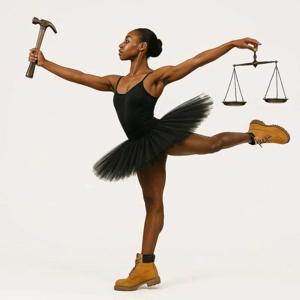
Photograph: ATC Comm Photo
Thanks for reading The choreography of power! Subscribe for free to receive new posts and support my work.
 View all episodes
 By Rob Dalton PhD
There are many kinds of ‘power-watcher’, sitting inside their metaphorical hides, awaiting the arrival of their favoured species, recording what each does and wondering where they’ve come from.
Some observe from a distance. Others might adjust their seat or viewing position to get a little nearer.
Close up, we’d see mating, confrontation and the fight for space. From further away, we’d notice more how power flows through patterns and behaviours, perhaps via global changes and dynamics.
This is a bit like varying the lens of the binoculars to see what’s looking back at us at each turn of the dial.
Alternatively, we could stay home, study the way power shows itself according to the experts, consider it as a more abstract matter. We’d look at the ground it comes to, the everyday settings it favours. We could record how it interacts with others, note down which species people say are thriving and which are not.
None of these approaches is wholly satisfactory. They will either miss something important, smoothing over too many complications and contradictions, or end up with a very long list of ideas and themes that confuse what is going on and stop us from knowing where to look first.
There is at least one other option though, one that gives us ‘dimensions’ for power, routes and arrival points for its effects. It allows us to see power’s grasp and reach. It’s interested in what else power might be doing, the ground it holds and the direction it’s going in.
There are several ways to pursue this but one idea is particularly helpful. The Steven Lukes dimensional models (1974, 2005) suggest we can measure what power does. They show us how power operates, takes different forms, depending on the circumstances, sometimes without having to resort to coercion or even persuasion.
They categorise the way power is understood when it goes about its work and put its methods and effects into one of three very helpful categories.
The first dimension deals with what we’ll call ‘decision-making power’. This refers to an ability to make decisions that affect others. We might see this in politics or classical sociology. It reveals power as obvious, shown by behaviour or an expression of will - regardless of whether or not this leads to conflict.
This type of power is clear and open and, in large part, unambiguous if not always simple. It may reflect brute force but it may also be subtle, persuasive and compelling.
In this category, power is deliberate consent or decision. It may be temporary, conditional or strategic but its nature will be broadly understood by the parties involved and any advantage gained or given up will be apparent in some form if not always willingly or completely.
… power shapes our beliefs … it is a power that can reject or build meaning. It escapes scrutiny because it appears to be ‘the way the world works’.
Lukes’s second category deals in ‘non-decision-making power’. This involves an ability to set the agenda, restricting or expanding the issues for consideration or up for grabs. This might cause conflicts but prevent others from ever arising.
Power here is categorised as control over the means of discourse and discussion, denying and enabling what can be recognised as acceptable or sensitive to negotiation or disagreement in the first place.
In this dimension, power is revealed as both recognisable and hidden. It’s a way to control how matters are mediated, prioritised, actioned or resolved. It serves those capable of defining the terms of the negotiation whilst making it difficult for others to recognise alternative claims and ideas.
The third dimension is ‘ideological power’. This explores how power shapes our desires and beliefs automatically, influencing what people want and what they think serves their interests best.
The first two dimensions, mean power can be seen and evaluated, even when it tries to hide from us. However, this third dimension is a power that is unseeable, even to those who otherwise have the resources to resist it or the potential to use it. It is the power that works to form reality or establish our sense of the world.
Here, power deals in ideologies, not just as political or religious codes but as cultural beliefs. It is a power that can reject or build meaning. It escapes scrutiny because it appears to be ‘the way the world works’.
This type of dimensional framework shows how power works in any given set of circumstances but all three types may be evident at the same time. A single moment of power might be interpreted exclusively, by any combination or all three.
These organising ideas keep our thinking neat and tidy but they do more than this. They also work to direct what we believe is possible when it comes to power.
If we find ourselves relying on any of the categories described so far, then we become locked into a single logic or expectation and must then reject ideas that otherwise seem to work perfectly well.
Much of what influences us in this respect, is highly localised or specific. Power becomes affected by context, reflecting key moments or popular understandings when we attempt to make sense of it. Dimensional frameworks give us a means to re-categorise power and gauge its impact.
The more willing we are to pick up our camera or binoculars, change our angle and focus, the more we will see power’s arrival and routines, understand its seasons and returns, and discover its habits and purposes.
It might be a good idea to think about power more often with this sort of hat on, and with our eye glasses at the ready.
References
Lukes, S. 1974. Power: A Radical View. London: Macmillan.
Lukes, S. 2005. Power: A Radical View, 2nd ed. Basingstoke: Palgrave Macmillan.
Photograph: ATC Comm Photo
Thanks for reading The choreography of power! Subscribe for free to receive new posts and support my work.