
Sign up to save your podcasts
Or

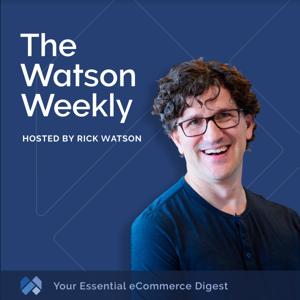


Shopify has bought shop.com from Market America and won’t say what it paid. Rick Watson and Jessica Lesesky use the deal to work out where Shopify fits once AI agents do more of the shopping.
Rick thinks Shop Pay matters most. If agents skip the storefront, Shopify may be left owning the checkout and not much else, and he thinks that could still be a very good business. Jess sees Shopify going after PayPal’s share of checkout. They also get into the Shop app, which most people only open to track a package, and Shop Cash rewards that seem to disappear before anyone spends them.
Shopify’s revenue per employee has climbed fast since 2023. Rick connects that to Tobi Lütke telling staff to use AI and to regular reviews of whether each team has the right number of people. He compares the culture to Amazon’s old order of priorities, where employees came after customers and sellers. Jess wonders how that fits with Harley Finkelstein’s appetite for big agentic bets, and whether those bets will help Shopify more than the merchants who build on it.
Get the newsletter at watsonweekly.com.
#watsonweekly #shopify #shoppay #paypal #agenticcommerce
PartsTree has sold replacement parts for lawnmowers and other outdoor power equipment for about 20 years, mostly on software its own team built. By this year the code had become something nobody wanted to touch. Some of it was written more than 20 years ago, and only one person could fix it when it broke.
Vinny O’Brien sat down with Doug and Drew from PartsTree and Chris from Altus Nova at Shoptoberfest 2026 in Nashville to talk about the move to Shopware. It was Altus Nova’s first Shopware project. PartsTree’s rule had always been to change systems between late October and January, because May and June sales run about four times January’s. They went live in mid-July anyway, after years of watching their own suppliers stumble through mid-season migrations.
Chris explains why the team gave up most of its custom logic for platform defaults and kept customization for the few things core to how PartsTree works. Doug and Drew talk about bringing staff along when the switch landed in their busiest months, and about how much of the business runs on what long-serving employees know and never wrote down. Doug says he doesn’t know yet how AI agents will change the way customers buy parts. Drew has a warning from data cleanup, where an AI-written product description turned a blower into a Glock pistol. Chris thinks the bigger opening is B2B, such as shared accounts that let a landscaping crew in the field and their mechanic work out a repair together.
The new site now ships weekly releases. The team says the main metrics match or beat the old site’s, and some secondary ones are still being tuned.
Vinny O’Brien says e-commerce conversion rates have hovered around 3% for twenty years. He puts that to Darin Lynch at Shoptoberfest, and Darin’s answer is that a lot of B2B companies are measuring success in the wrong place.
Darin started Irish Titan 22 years ago. He sorts commerce history into rough eras. He calls the early one Neanderthal commerce, when sites were difficult for merchants to build and for customers to use. Then came a long stretch shaped by platforms and search engines, more trustworthy but still built around the merchant and the tech. Now a buyer can describe what they want to ChatGPT, Claude or a brand’s own agent and get to a product.
His case is that a B2B manufacturer or distributor shouldn’t judge commerce by how many orders go through its commerce platform’s checkout. Plenty of those orders come in through punch out or the ERP, and more will happen inside AI agents. He breaks agentic commerce into data enrichment, discovery and checkout, and wants a separate success metric for each.
He also talks about the Iowa farm his dad built up from 40 acres, and why he thinks Shopware’s US timing hurt it during the COVID rush. Darin is a Shopware agency partner who has emceed this event for the last two years, so weigh his view that Shopware has the best community of any platform with that in mind.
Vinny also asks about vocabulary. Every event defines agentic commerce differently, and merchants are left to sort it out themselves. Darin agrees and thinks the agencies that get through this period will help set standards, though he didn’t say how that would happen or who would lead it.
#watsonweekly #shopware #irishtitan #ecommerce #agenticcommerce #b2bcommerce
UPS has now shed almost all of its Amazon volume. The 18-month wind-down took out about two million pieces a day and roughly $4.5 billion in expenses, leaving UPS with a smaller network that earns more per package but has less volume to set prices with. Rick looks at who held the leverage in that split, and whether a UPS focused on healthcare logistics is turning into a specialty carrier.
BJ’s Wholesale Club plans to cut about 20% of its products over the next couple of years, taking older clubs from around 7,500 items to 6,000 or 6,500. The last time BJ’s tried this, sales fell and it added items back. Lululemon and Under Armour have made similar cuts, as has Dollar General.
On October 8 the U.S. Court of International Trade certified a class of importers who paid IEEPA tariffs between February 2025 and February 2026 and haven’t filed their own suits. The court estimates about $30 billion in refunds would otherwise stay with the government, and its order says most of the importers who haven’t used Customs’ CAPE refund system are small. If you sell online and imported anything in that window, call your customs broker this week.
Albertsons is asking Kroger for between $8 billion and $9.3 billion over their collapsed 2022 merger, against a $600 million termination fee in the contract. The trial in Delaware began October 19.
On October 29 Rick hosts Agentic Island, a two-hour virtual summit on agentic commerce sponsored by Shopware. It includes a fireside chat with Shopware co-founder Stefan Hamann and sessions with agencies that help brands prepare for AI shopping agents. It starts at 9 a.m. Pacific. Register here: https://streamyard.com/watch/W5CF8XC8xJCs
Investor minute
Rick thinks Starbucks has lost its way. Jess thinks Brian Niccol’s turnaround is working, and she points to four straight quarters of growth.
Niccol has put handwritten Sharpie names back on cups and is spending $1.2 billion to make stores more comfortable. Rick says a better seat means nothing when you wait 25 minutes for burnt coffee. Jess says consistency matters more than quality, and that cake pops and pink drinks keep parents and Gen Alpha coming back.
Rick asks whether Starbucks should accept being the McDonald’s of coffee or go upscale with Starbucks Reserve. He also floats a Yum Brands-style parent company that buys other chains. Jess wonders if it needs a Krispy Kreme to take on Dunkin’. Rick calls Niccol’s six-point strategy a zero-point plan.
He thinks the board could push Niccol out before they cover Starbucks again.
Watson Weekly Newsletter at watsonweekly.com
Keith Pires is CRO and co-founder of Boldest, an agency built on top of an agent platform called Pathfinder. Vinny O’Brien caught up with him at Shoptoberfest in Nashville, shortly after both of them came off the mechanical bull.
Pires says his co-founder and CTO, Ramy Youssef, has been developing Pathfinder for many years with a team based in Egypt. He describes it as the foundation of the agency. Boldest owns the environment, and Pires agrees that settles most of the governance and security questions clients bring.
The clearest example is a sales agent Boldest built for Delectable, a B2B SaaS client. Pires says it was trained on the product and on a structured sales method. It sorts each visitor into a buyer type, such as economic or technical, and scores them on the questions they ask. When it’s ready, it books a meeting in Calendly without a person stepping in.
Pires talks through the Shopware MCP integration and why that build was hard. He describes mood boards and a persistent wardrobe feature that Boldest is exploring with a fashion marketplace client, and he explains how far apart clients are on AI, with some fully bought in and others worried about where their data goes.
Pires expects agents to get good enough that shoppers can’t tell them apart from people. He didn’t say whether shoppers would be told.
Keith Pires will be speaking at the Agentic Commerce Virtual Summit on October 29, 2026. Register here: https://streamyard.com/watch/W5CF8XC8xJCs
Naturepedic has made organic mattresses for years. Its three owners are engineers, and the marketing used to read like their spec sheets. Arin Schultz, the chief growth officer, changed the messaging before anyone approved it. He says sales were up 46% in May and close to 68% in July, and he puts the mattress category down by double digits over the same period.
Arin runs sales and marketing as one job. He tells Rick why he goes after shoppers who have never heard of Naturepedic and don’t care about organic, and why he treats a 5% growth year as a failure.
Most of the conversation is about stores. Naturepedic picks sites from where its website traffic is concentrated, and Arin says a new store lifts digital sales nearby by 10 to 15%. Eight more open by January and up to ten more next year, toward a limit he sets at 50 to 70 locations. He also explains why the brand stays off paid top-10 mattress lists, and why he won’t take Meta’s or Google’s attribution at face value and runs three tools against each other instead.
Sonal Gandhi of The Lead joins too. She named Arin to this year’s Direct 60 list.
#watsonweekly #naturepedic #thelead #dtc #retail #mattress #casper
C.H. Robinson is paying $5.8 billion in cash and stock for RXO, which Rick works out to more than 40 times RXO’s expected adjusted EBITDA for this year. The deal deck brings that down to about 13 times, but only by counting $300 million in cost savings that haven’t happened yet. Retail and e-commerce make up 37% of RXO’s revenue.
Also this week, ChatGPT adds virtual try-on to its shopping results, and Rick still can’t see how features like this pay back what OpenAI’s investors have put in. Apple’s iOS 27 shipped with a Safari block list that includes The Trade Desk, LiveRamp, ID5 and Permutive, though retail media networks with logged-in shoppers are left alone. Target’s holiday app can now scan a kid’s handwritten wish list and share it with relatives, which could become a Roundel opportunity. Shopify launched Canvas. It says a merchant can now build a custom store in twenty minutes. IDC’s Heather Hershey estimates Shopify took 21.8% of a $13.4 billion commerce software market in 2025, while Salesforce shrank.
In the Investor Minute, Uber buys ezCater for $2.3 billion in cash, and Rick covers a few smaller deals.
Rick is moderating the Shopware agentic commerce virtual summit on October 29. Register at watsonweekly.com/events.
#watsonweekly #shopify #openai #apple #target #ecommerce #retailmedia #uber
Costco’s sales rose 11.2% last quarter, and Rick Watson and Jessica Lesesky talk through where that growth is coming from. Costco says members under 40 now make up more than a quarter of the base. Many of them live in apartments and order on their phones, and Costco says delivery orders arrive in under an hour on average.
Rick joined recently and bought a mattress there. Jess isn’t a member because she has nowhere to store bulk paper towels. They get into the executive membership tier, the $4.99 rotisserie chicken Costco supplies from its own Nebraska plant, the $1.50 hot dog, and the return of churros.
The second half covers a proposed class action over tariff refunds, filed by an Illinois member who wants the money paid back to shoppers. Costco booked a one-time gain from refunds this quarter and says it put part of that into lower prices, including on coffee and pepper. Jess thinks Costco handled it better than other retailers did, while Rick suspects some of it went to shareholders.
#Costco #CostcoEarnings #RetailEarnings #Retail #WarehouseClub #TariffRefunds #Millennials #GenZ #RotisserieChicken #KirklandSignature #WatsonWeekly
Tom McFadyen has spent decades building marketplaces and commerce platforms at McFadyen Digital. His firm's new book, AI Best Practices for Commerce, runs more than 500 pages in print, and Tom says the printed version couldn't keep pace with how fast the material changed.
I caught up with Tom at Retail Club. The book launched with 125 AI use cases, sorted into four phases of commerce that McFadyen calls market, sell, fulfill and support. Online, that count is now past 500, with several hundred case studies alongside it, and McFadyen made the whole thing free at ai-best-practices.com.
Agentic commerce gets most of the attention right now. Tom points out that retailers have run AI on recommendations and fulfillment for years, and plenty of the newer agentic work sits in catalog enrichment and merchandising, well before a shopper reaches checkout. We also talk about who the book is for, including the B2B distributors and manufacturers that make up much of McFadyen's client base.
Tom will let an agent reorder the socks he's bought on Amazon for decades. He doesn't expect his wife to let one pick her dress for a wedding. Most of what retailers sell falls somewhere between those two.
#WatsonWeekly #AgenticCommerce #RetailAI #B2BCommerce #Marketplaces #RetailClub #McFadyenDigital
From the publisher's feed

2,199 Listeners

111,825 Listeners
101 Listeners

5,357 Listeners

10,121 Listeners

8,473 Listeners

1,115 Listeners
49 Listeners

1,435 Listeners

6 Listeners