
Sign up to save your podcasts
Or

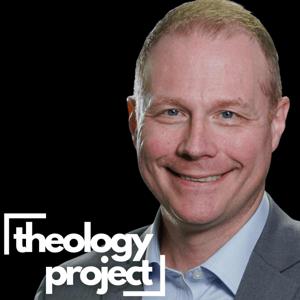


Does Romans 7 describe the normal Christian life?
When Paul says, “I do not do the good I want to do, but the evil I do not want to do,” Christians have often assumed he is describing his own struggle with sin as a believer. But is that actually what Paul means?
In this episode of Theology Project, I talk with New Testament scholar Joseph R. Dodson, coauthor of Conquerors, Not Captives: Reframing Romans 7 for the Christian Life, about one of the most controversial passages in Paul’s letters.
We discuss the identity of the “I” in Romans 7, why Romans 6 and Romans 8 are crucial for interpreting the passage, Paul’s language of slavery and freedom, Adam and Israel, ancient rhetorical techniques, the history of interpretation from Origen and Augustine to Luther and Wesley, and what all of this means for the Christian struggle with sin.
At the heart of the conversation is a major theological question: If Paul says Christians have been set free from slavery to sin, should Romans 7 really be treated as the defining picture of the Christian life?
As an Amazon Associate, I earn from qualifying purchases. Thanks for supporting Theology Project through the Amazon links in this post.
I use Logos Bible Software for Bible study and sermon prep. Theology Project viewers can click here try Logos free for sixty days.
Take the next step
If Theology Project has been helpful to you, here are a few ways you can support the work:
* Subscribe to receive new free articles.
* Share an article with a friend or post it on social media.
* Become a paid subscriber to help sustain and expand this ministry while gaining access to exclusive content.
Every subscription, share, and recommendation helps more people rediscover the Bible they didn’t know they had.
Theme music: “Steps” by Anno Domini Beats. Used with permission.
This page contains affiliate links to products. We may receive a commission for purchases made through these links.
What is baptism? Is it merely an outward symbol of an inward faith, or does God actually do something through baptism?
In this sermon on Colossians 2:9–15, we explore the biblical meaning of baptism, its relationship to circumcision in the Old Testament, and its significance as a means of God’s grace. As circumcision marked God’s covenant with the Hebrew people, baptism is the sign of belonging to Christ and his renewed covenant people.
Drawing on Paul’s teaching in Colossians 2 and the Articles of Religion of the Global Methodist Church, we consider why baptism is more than a public profession of faith. It is a sacrament instituted by Christ, an outward sign of inward grace, and a means through which God works in our lives.
What does baptism have to do with the forgiveness of sins, union with Christ, and participation in his death and resurrection? And how should we understand the relationship between baptism, faith, and God’s saving grace?
I use Logos Bible Software for Bible study and sermon prep. Theology Project readers can try Logos free for 60 days by clicking here.
Take the Next Step
If Theology Project has been helpful to you, here are a few ways you can support the work:
* Subscribe to receive new free articles.
* Share an article with a friend or post it on social media.
* Become a paid subscriber to help sustain and expand this ministry while gaining access to exclusive content.
Every subscription, share, and recommendation helps more people rediscover the Bible they didn’t know they had.
Theme music: “Steps” by Anno Domini Beats. Used with permission.
Has Noah’s Ark finally been discovered? Recent headlines suggest that new archaeological evidence from the Durupınar formation in Turkey may reveal the location of the biblical Ark. Ground-penetrating radar, geological surveys, and reports of ancient organic material have fueled speculation that one of the Bible’s most famous artifacts has finally been found.
But how credible are these claims? And what can archaeology actually tell us about the Bible?
Visit our Sponsor: Wesley Biblical Seminary
In this episode of Theology Project, I talk with Dr. Lawson Stone, professor of Old Testament at Asbury Theological Seminary, about the alleged discovery of Noah’s Ark and the relationship between archaeology, biblical interpretation, and Christian faith.
Lawson has participated in archaeological excavations in Israel and regularly leads students through the biblical lands. He brings both scholarly expertise and firsthand archaeological experience to the conversation. His office also houses the Livingston Archaeology and Israel Studies Learning Lab.
We begin by examining the history of the Durupınar formation, which has been associated with Noah’s Ark since the 1950s. Lawson explains why he remains skeptical of the latest claims, raising questions about the site’s geology, the biblical description of the Ark, and the methods employed by the researchers.
We also discuss how archaeology actually works, what radiocarbon dating can and cannot establish, and why peer review is essential for evaluating extraordinary claims. Lawson also describes genuine archaeological discoveries that illuminate biblical history, including a famous inscription mentioning the house of David.
But the conversation raises a larger question: Can archaeology prove the Bible is true?
If that question interests you, then this episode is for you.
Take the Next Step
If Theology Project has been helpful to you, here are a few ways you can support the work:
* Subscribe to receive new free articles.
* Share an article with a friend or post it on social media.
* Become a paid subscriber to help sustain and expand this ministry while gaining access to exclusive content.
Every subscription, share, and recommendation helps more people rediscover the Bible they didn’t know they had.
Theme music: “Steps” by Anno Domini Beats. Used with permission.
Have you ever hesitated to take communion because you felt spiritually unprepared or unworthy?
Some Christians avoid the Lord’s Table out of fear, often citing Paul’s warning in 1 Corinthians 11 about eating and drinking judgment upon oneself. But what if staying away is actually far more spiritually dangerous?In this clip, Dr. Ryan Danker unpacks John Wesley’s Bible-based answer to Christians who are afraid to take communion. Discover why Wesley believed you should never wait until you feel “worthy" and why you aren’t actually in danger of eating and drinking condemnation on yourself.
Read the Sermon: “The Duty of Constant Communion” by John Wesley
I use Logos for biblical and theological research. Theology Project readers can try a Logos subscription free for 60 days by clicking here.
Take the next step
If Theology Project has been helpful to you, here are a few ways you can support the work:
* Subscribe to receive new free articles.
* Share an article with a friend or post it on social media.
* Become a paid subscriber to help sustain and expand this ministry while gaining access to exclusive content.
Every subscription, share, and recommendation helps more people rediscover the Bible they didn’t know they had.
Theme music: “Steps” by Anno Domini Beats. Used with permission.
Does the Bible forbid women from preaching, teaching, or leading in the church?
In Part 2 of my conversation with Preston Sprinkle about From Genesis to Junia, we tackle some of the most debated New Testament passages on women in church leadership: Phoebe in Romans 16, Paul’s command for women to remain silent in 1 Corinthians 14, and the prohibition on teaching and authority in 1 Timothy 2.
What does authentein mean? Why does Paul appeal to Adam and Eve? And do these passages actually prohibit women from preaching or serving as pastors?
Join us for a close look at what the Bible really says about women in ministry, women pastors, and church leadership.
Buy From Genesis to Junia by Preston Sprinkle on Amazon
As an Amazon Associate, I earn from qualifying purchases. Thanks for supporting Theology Project through the Amazon links in this post.
Listen to part 1 of this conversation.
Take the next step
If Theology Project has been helpful to you, here are a few ways you can support the work:
* Subscribe to receive new free articles.
* Share an article with a friend or post it on social media.
* Become a paid subscriber to help sustain and expand this ministry while gaining access to exclusive content.
Every subscription, share, and recommendation helps more people rediscover the Bible they didn’t know they had.
Theme music: “Steps” by Anno Domini Beats. Used with permission.
Should women lead churches? What does the Bible actually say about women in positions of church leadership—and are we asking the right questions when we approach the debate?
In Part 1 of my conversation with Preston Sprinkle, we discuss his new book From Genesis to Junia: An Honest Search for What the Bible Really Says About Women in Leadership. Preston shares what led him to take up this controversial question, the interpretive approach that shaped his investigation, and some of the places where studying the evidence challenged his own assumptions.
----------
Theology Project is sponsored by Wesley Biblical Seminary.
➡️ Apply now for your Doctor of Ministry
➡️ Check out other degree and certificate programs
----------
We also step back from the handful of passages that usually dominate the debate and ask what the larger biblical story contributes to the conversation. We discuss men and women in Genesis 1–3, the significance of ezer (“helper” or “ally”), authority and mutuality, women in the ancient world, and Jesus’ radical reframing of leadership around service rather than status or power.
Preston Sprinkle is a biblical scholar, author, speaker, and host of the Theology in the Raw podcast. His brand new book "From Genesis to Junia" is his attempt to work through the biblical evidence surrounding one of the most contested questions in the contemporary church.
In Part 2, we dig into the specific New Testament texts at the center of the debate, including Romans 16, 1 Corinthians 11 and 14, and 1 Timothy 2. Subscribe now so you don't miss it.
Click here to buy From Genesis to Junia on Amazon
Subscribe to Theology Project on Substack
---------
Theme music: “Steps” by Anno Domini Beats. Used with permission.
----------
As an Amazon Associate, I earn from qualifying purchases. Thanks for supporting Theology Project through the Amazon links in this post.
Can Christians be perfect? John Wesley believed they could. But he didn’t mean sinless perfection.
In this episode of Theology Project, Dr. Chris Lohrstorfer joins me to discuss John Wesley’s Sermon 40, “Christian Perfection,” and one of the most distinctive—and often misunderstood—doctrines of the Wesleyan tradition.
What did Wesley actually mean by Christian perfection? Can Christians be free from sin in this life? What is the difference between Christian perfection and sinless perfection? And how does Wesley’s understanding of holiness shape the way Christians think about salvation, spiritual growth, and the Christian life?
We dig into Wesley’s sermon, clarify some common misconceptions, and explore why Christian perfection remains central to Wesleyan theology today.
Visit our Sponsor - https://wbs.edu
Click Here to Read "Christian Perfection" by John Wesley
Visit Theology Project on Substack
If Theology Project has been helpful to you, here are a few ways you can support the work:
* Subscribe on Substack to receive new free articles.
* Share an article with a friend or post it on social media.
* Become a paid subscriber to help sustain and expand this ministry while gaining access to exclusive content.
Every subscription, share, and recommendation helps more people rediscover the Bible they didn’t know they had.
Theme music: “Steps” by Anno Domini Beats. Used with permission.
Is John Wesley enough to sustain the tradition he started? What's the difference between studying John Wesley's theology and doing theology as a Wesleyan? How much must Wesleyan theology agree with John Wesley?
Those are the questions up for discussion in this episode of Theology Project. Thomas McCall and Jason Vickers join Matt O'Reilly to discuss how these questions and others are worked out in their new book Love Divine: A Wesleyan Systematic Theology.
Along the way, we'll explore what makes theology distinctly Wesleyan, why the tradition needs constructive theology rather than simply the study of Wesley, and how holy love provides a framework for understanding the Christian faith as a whole.
Love Divine offers a beautiful vision of the Christian faith that builds on the Great Tradition that formed John and Charles Wesley, the Wesley brothers own works, and the major theologians that inherited the Wesleyan tradition.
Visit our sponsor - Wesley Biblical Seminary - and apply for your Doctor Ministry degree now: https://wbs.edu/dmin
Get Love Divine:A Wesleyan Systematic Theology on Amazon.
As an Amazon Associate, I earn from qualifying purchases. Thanks for supporting Theology Project through the Amazon links in this post.
Take the next step
If Theology Project has been helpful to you, here are a few ways you can support the work:
>Subscribe to receive new free articles.
>Share an article with a friend or post it on social media.
>Become a paid subscriber to help sustain and expand this ministry while gaining access to exclusive content.
Every subscription, share, and recommendation helps more people rediscover the Bible they didn’t know they had.
Theme music: “Steps” by Anno Domini Beats. Used with permission.
v
In this clip, Jason Vickers and I consider the everyday example of road rage in order to explore a much bigger question: How should Christians think about demonic influence and human responsibility? If the devil or demonic forces can tempt, influence, or provoke us, does that lessen our responsibility for how we respond? Drawing on John Wesley and the categories of captivity and complicity, they discuss why taking spiritual warfare seriously doesn’t mean surrendering human agency—or excusing sin.
Check out the whole conversation
If you enjoyed this clip, listen to the full conversation on Theology Project | The Podcast or watch it on YouTube.
Dr. Jason Vickers serves as professor of Christian theology and the Wesley Endowed Chair of Christian Theology. A popular teacher, prolific author, and ordained elder in the Global Methodist Church, Vickers holds a PhD from Southern Methodist University. Prior to joining Truett Seminary, Vickers taught at Asbury Theological Seminary in Wilmore, Kentucky. He also has taught at Austin College in Sherman, Texas, Hood Theological Seminary in Salisbury, North Carolina, and United Theological Seminary in Dayton, Ohio. Professor Vickers is a past president of the Wesleyan Theological Society and current member of the Discipleship, Doctrine, and Just Ministry Commission of the Global Methodist Church. Vickers is editor of the Wesleyan Theological Journal, and co-author with Thomas H. McCall of Love Divine: A Wesleyan Systematic Theology.
An Invitation
I’m interviewing Preston Sprinkle on an upcoming episode of Theology Project. Our conversation will focus on his new book From Genesis to Junia: An Honest Search for What the Bible Really Says about Women in Leadership, and I want to hear what you think I should ask him.
Take the next step
If Theology Project has been helpful to you, here are a few ways you can support the work:
* Subscribe to receive new free articles.
* Share an article with a friend or post it on social media.
* Become a paid subscriber to help sustain and expand this ministry while gaining access to exclusive content.
Every subscription, share, and recommendation helps more people rediscover the Bible they didn’t know they had.
Why does Christianity sometimes seem to have so little effect on the lives of Christians? Why hasn’t it had a greater effect on the world?
John Wesley asked that question more than two centuries ago. In his sermon “Causes of the Inefficacy of Christianity,” Wesley wrestled with a troubling reality: if Christianity is true and the gospel has the power to transform people, why do so many Christians seem largely unchanged?
In this episode of Theology Project, I’m joined by Dr. Chris Bounds to explore Wesley’s answer. We discuss what Wesley believed was keeping Christianity from having its intended effect, the role of Christian doctrine and discipline, the importance of holiness, and number one problem that minimizes the effectiveness of the church.
Along the way, we consider whether Wesley’s diagnosis still applies to the church today, and what he might say needs to change if Christianity is going to produce the kind of people the Bible envisions.
Visit our Sponsor - Wesley Biblical Seminary
Want to engage even more?
* Read the sermon: “Causes of the Inefficacy of Christianity”
* Get Holiness: A Biblical, Historical, and Systematic Theology co-authored by Chris Bounds
As an Amazon Associate, I earn from qualifying purchases. Thanks for supporting Theology Project through the Amazon links in this post.
If Theology Project has been helpful to you, here are a few ways you can support the work:
* Subscribe to receive new free articles.
* Share an article with a friend or post it on social media.
* Become a paid subscriber to help sustain and expand this ministry while gaining access to exclusive content.
Every subscription, share, and recommendation helps more people rediscover the Bible they didn’t know they had.
Theme music: “Steps” by Anno Domini Beats. Used with permission.
From the publisher's feed

15,944 Listeners

19,447 Listeners

278 Listeners

57 Listeners

2,057 Listeners
246 Listeners

15,582 Listeners

64 Listeners

27 Listeners