
Sign up to save your podcasts
Or

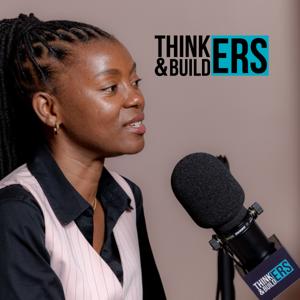


Silas Olan’g serves as NRGI’s Africa Energy Transition Advisor, bringing years of experience at the intersection of natural resource governance and energy transition across the continent.
His passion is rooted in rural Tanzania, in the 1960s and 70s, where traditional biomass and kerosene were the only sources of energy. Electricity was a luxury only a few could afford. The situation hasn’t changed much in many African villages.
In 1975, a young Silas sat waiting for a medical procedure. There was no paraffin to light the lamp. The doctor could not see. His treatment was delayed.
He has never forgotten what it means to live in the dark.
Neither has the continent. Today, 600 million Africans still live in energy poverty, not because Africa failed to develop, but because the energy that powered the world’s development was never equitably distributed.
That same energy, coal, oil, gas, drove the emissions that triggered the climate crisis Africa now suffers most from.
A continent responsible for just 3% of global emissions faces the worst of its consequences: droughts, floods, failed harvests, and displacement. And yet the world expects full transition to clean energy by 2050.
Some African nations are already leading the way. Kenya and Tanzania have made significant strides in clean energy access, proving that the continent has both the will and the capacity. In this conversation Mr. Silas expounds in details what the continent needs.
He puts it plainly: if Africa doesn’t transition, it will not change the climate. The crisis is not Africa’s making. But the urgency a just transition, is the goal with differentiated responsibilities.
Sarah Ezra, a senior management and board executive with over 18 years of experience managing multi-million dollar projects, shares her transformative approach to holistic, intentional leadership - both at work and at home.
In this profound conversation, Sarah opens up about a realization that changed everything: "Why don't I run my home as a company?"
From leading multi-million dollar community projects, to sitting on boards, Sarah has navigated male-dominated spaces while maintaining fierce integrity. But her most revolutionary leadership insight didn't come from the boardroom - it came from asking why she applied strategic planning, annual reviews, and accountability systems at work but not in her personal life.
Sarah breaks down her core leadership principles:
• Lead self first - Everything revolves around understanding yourself, your triggers, and how you show up
• Consensus building - True leadership means bringing people along, not making unilateral decisions
• Integrity as non-negotiable - Your word is everything; never taint your name with transgression
• Listen before being heard - The most productive thing a leader can do is sometimes just sit and listen
• Create space for others - Especially for women coming behind you
Her approach to life planning is remarkable: Sarah and her husband run their home with the same intentionality as a company - complete with strategic plans, annual reviews, family planning sessions, and a clear vision for 2033. They involve their children in these sessions, teaching them early about goal-setting and accountability.
On leading as a woman, Sarah shares powerful moments - from walking into a room of men during her parents' burial arrangements to demand her seat at the table, to her university awakening when a professor said "if I say anything wrong, feel free to challenge me" - the first time she'd been invited to question authority.
She tackles difficult leadership questions: How do you maintain integrity when you can't share confidential information? How do you distinguish between positional authority and true leadership? When is consensus-building a weakness versus a strength?
Sarah credits five books that shaped her leadership journey: Seven Habits of Highly Effective People (the only book she's read twice), Lean In, Women and Money, Rich Dad Poor Dad, and Daring Greatly. Each came at a different season and built her framework for holistic leadership.
Her financial mentor taught her to track everything - not just for control, but for clarity. From that lesson, she built systems that allowed her to plan five years ahead, break it into annual targets, and review quarterly. The same discipline that made her successful professionally now guides her family's future.
On the difference between true leaders and manipulative ones: "We need to strip the name 'leaders' from manipulative people. Just because someone holds a position of authority doesn't make them a leader. Leadership is qualitative, not positional."
For anyone juggling multiple roles, leading teams, or seeking to bring more intention to every area of life, Sarah offers both practical systems and the mindset shifts needed to lead holistically - without compartmentalizing the different versions of yourself.
Special moment: Sarah receives Dr. Catherine Kahabuka's book as a gift from the previous Thinkers & Builders guest - a beautiful passing of wisdom between women leaders.
ChaptersJennifer Shigoli, CEO and Founder of Arizona Vocational Training College and ELEA ProductS, shares the four transformative principles that took her businesses from startup to training over 5,000 people across Africa.
From selling beads in school at age 16 to becoming a visionary educator and impact-driven entrepreneur, Jennifer's journey about building sustainable businesses in Africa is profound.
She studied law but found herself drawn back to entrepreneurship - making detergents, riding on tricycles with jerry cans, and facing rejection from potential clients until she learned one critical lesson: you must brand yourself, not just your product.
Jennifer breaks down her four non-negotiable principles for business success:
• Start with empathy - Understand the real pain points of those you serve, not what you think they need
• Look beyond profits - Design with purpose or money alone will lead you to dangerous places
• Build systems and structures - This is what differentiates self-employment from a scalable business
• Collaborate to elevate - 40% of a watermelon is better than 100% of a grape
Her perspective on pricing is revolutionary: "Pricing doesn't just have to make sense to your customer - it has to make sense to your business. If you're only making customers happy with low prices, you're killing your business."
Jennifer shares why she trains competitors to make sanitary pads, how her retired engineer father became a cosmology expert at her company, and why she wishes she had found a mentor from day one.
Key insights include why most entrepreneurs get stuck in self-employment instead of building companies, how to attract the right collaborations, and why data systems are non-negotiable even for small businesses.
Her vision: One household, one skilled person - a 50 to 100 year plan that she's building brick by brick.
Special Offer: Get 15% discount at Arizona Vocational Training College through December 2025. Use code: Thinkers and Builders Arizona 123
For anyone building impact-driven businesses or struggling to balance profit with purpose, Jennifer's frameworks offer both practical systems and the mindset shifts needed to scale sustainably.
ChaptersDr. Catherine Kahabuka, PhD, Founder of Cremes International, shares her “Muscle to Brain Framework” - helping professionals move from trading hours for money to creating passive income through intellectual assets.
Learn how she went from early-career doctor to global board member and internationally recognized coach by overcoming perfectionism and fear of visibility. Discover the pathway to becoming a thought leader.
Stop waiting for perfect - start building your legacy today.
Watch until the end for a special offer!
Mike Mushi on turning privilege into statrup advantage in Africa
Mike Mushi shares his extraordinary journey that began when his father decided primary education was enough and pushed him into the business world as a teenager.
In this powerful conversation on Thinkers & Builders, Mike reveals how what seemed like a disadvantage - being denied secondary education - became the foundation for understanding privilege differently.
Having access to computers and internet in 1999 Tanzania wasn't just luck; it was a head start that shaped his entire entrepreneurial path.
Now one among the leading voices in Tanzania's startup ecosystem, Mike breaks down why Africa doesn't need to compete on who owns AI technology, but rather on how many people can be uplifted through it.
He challenges conventional thinking about startups, explaining why they're not just tech companies but any business with the potential to scale massively with the same inputs.
Key insights from this episode:
• Why institutionalizing privilege through startup policies can transform entire economies
• The critical difference between having resources and having the technology to extract value from them
• How Africa can leapfrog development stages just as it did with mobile banking
• Why partnerships fail more startups than bad ideas or lack of funding
• The blueprint for creating national venture funds that attract 10x private investment.
Mike's perspective on failure is refreshing - comparing building startups to going to the gym, where each failure builds the muscles needed for the next venture. He advocates for visa programs to attract global talent, arguing that human resources, not minerals or land, are Africa's most crucial asset.
For anyone building in Africa or interested in emerging market entrepreneurship, this conversation offers both practical frameworks and mindset shifts essential for navigating the startup landscape.
Mike's vision: create an environment where youth have more different options to generate income, not just one.
ChaptersFrom the publisher's feed