
Sign up to save your podcasts
Or

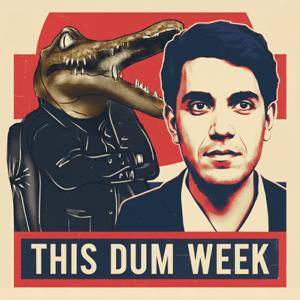

This episode of "This Dum Week," hosted by Dr. RollerGator and Alex Marinos, opens with a dramatic piece of breaking news—the killing of Nemesio "El Mencho" Oseguera Cervantes, head of the Jalisco New Generation Cartel (CJNG), in a Mexican military operation—before pivoting through a characteristically wide-ranging tour of the week's most absurd and alarming developments. The episode covers five major topic clusters: the ongoing fallout from the Epstein files release, the Supreme Court's landmark tariff ruling and Trump's immediate defiance of it, geopolitical speculation about a potential US strike on Iran, an extended technology section on computing scarcity and digital rights erosion, and a thread on COVID-era institutional behavior featuring the newly surfaced Ralph Barrick vaccine trial video.
The centerpiece of the episode, as has become a recurring feature of recent weeks, is the Epstein files update—here framed as "the song that never ends." RollerGator works through a set of newly emerging and increasingly mainstream revelations: a mortician's expert analysis of Epstein's autopsy photos casting doubt on the suicide determination; a document revealing prison officials used a decoy body to deceive press while transporting Epstein's actual remains; Epstein's apparent interest in scopolamine (a plant-derived drug that eliminates free will); a harrowing victim diary found in the released files describing forced pregnancy and infant removal under Ghislaine Maxwell's supervision; and new evidence of Stacey Plaskett's visits to Epstein's Virgin Islands office. Throughout, RollerGator connects these threads back to his established analytical framework: the massage recruitment pipeline as a eugenics funnel, with DNA testing used to select women for impregnation at Zorro Ranch.
The episode also features substantive discussions of the Supreme Court's 6-3 ruling striking down Trump's IEEPA tariffs, with a darkly comic aside about Howard Lutnick's sons having quietly purchased tariff refund rights at 20-30 cents on the dollar—essentially insider trading on the Supreme Court's decision. Alex opens the technology section by observing that the AI infrastructure boom is creating pandemic-style supply chain disruptions in hardware, with Western Digital already sold out of hard drives through all of 2026. This leads into a broader discussion about the dangers of cloud-computing dependency, Fourth Amendment erosion through third-party data storage, and California's proposed bill mandating that 3D printers include government-controllable blocking software—which Alex connects directly to the implications of a paper printer being subject to the same requirement.
Main Topic: Death of CJNG leader El Mencho in Mexican military operation
Key Quote (Alex): "Not American companies. If American companies are hurt, you know who's coming in."
Hosts' Analysis: RollerGator notes the darkly comic framing—his day is "going a little bit better than Mexico's." Alex picks up on the CNN description of El Mencho as "one of the world's most wanted traffickers," noting this implies a hierarchy of wantedness, circling back to Epstein as the implied comparison. Discussion of whether cartel and Olympic scheduling create a geopolitical complication for Mexico ahead of the 2026 World Cup.
Main Topic: Trump's promised "ET files" release and the alien narrative as managed psyop
Notable Detail: Alex's disclosure about the patent system having a "trapdoor" mechanism by which intelligence agencies can classify patents mid-review, effectively commandeering inventions with no compensation to inventors. He believes significant suppressed technology exists under this mechanism.
Key Quote (Alex): "I've been surprised because this does seem to be reviving... aliens again were involved as a prominent storyline."
Hosts' Analysis: Both hosts are skeptical of the UFO disclosure narrative. Alex frames it as potentially designed to crowd out Epstein coverage. The broader point is that powerful institutional actors use controlled information release to shape attention. RollerGator raises the absent Epstein-alien connection—Epstein had documented interest in nearly everything futuristic, so his apparent lack of interest in UFOs is itself "interesting."
Main Topic: Federal judge rules "boneless wings" are legally distinct from chicken nuggets
Key Quote (RollerGator): "There you go, Alex. That was one of the biggest items in court."
Main Topic: Supreme Court strikes down IEEPA tariffs 6-3; Trump immediately circumvents ruling
The Ruling:
Trump's Response:
The Lutnick Angle:
Key Quote (Alex, sarcastically): "Let it not be said that the Trump administration does not have experts on hand."
Key Quote (RollerGator): "Could anyone have possibly had access to inside chatter about how the Supreme Court might rule? Just saying, 30 cents on the dollar—that's a pretty good bet there."
Polling Data Discussed:
Hosts' Analysis: Alex expresses his consistent position—he was theoretically persuadable on tariffs as policy but predicted the execution would be "a train wreck." The Lutnick revelation extends the prior week's discussion of Lutnick's contradictory Epstein-related testimony. Both hosts note the poll data supports their standing prediction: if Republicans maintain congressional control in midterms, it won't be because of Trump—it will be because Democrats fail to capitalize. Discussion of third-party emergence, with Alex suggesting the current environment is "the canonical environment under which you have another party emerge." RollerGator demurs, noting structural barriers in the US system. Kamala Harris re-entry discussed; Alex confident she "won't work" electorally.
Key Quote (Alex on Kamala Harris): "She is basically like a super saturated human resources director in her communication style."
Main Topic: Two similar armed incidents in one day—one at the Capitol, one at Mar-a-Lago
Capitol Incident:
Mar-a-Lago Incident:
Key Quote (Alex): "Meh. You know me. I assume everything was under control."
Hosts' Analysis: Alex is notably blase, suggesting these events likely fall within "regular violent churn." RollerGator frames the two incidents as "two semi-similar events in a day or so," without speculating on motive beyond noting the coincidence.
Main Topic: Two clips illustrating institutional credibility collapse—one political, one scientific
Kamala Harris AI Clip:
Ralph Barrick Vaccine Video (University of North Carolina YouTube channel):
Key Quote (Alex): "He is everywhere, okay. In the pandemic. And I cannot find him being pushed—while Fauci was taking all the arrows, Barrick was sort of in the background, allowed to pretend to be neutral and just scientific about stuff. Which is wild."
Key Quote (Alex on the video): "He doesn't know if he's getting a placebo or a vaccine. And he's right there endorsing it, not knowing what he's getting... and whether it's going to work or effectively whether it's a vaccine or not."
Hosts' Analysis: RollerGator draws a parallel to staged vaccine administration events during the rollout—where officials admitted that filmed vaccination ceremonies were staged because real injections were causing fainting on camera. The broader point is that institutions staging credibility theater undermines trust in ways that fuel conspiracy thinking. "Maybe you might not want to have completely fictitious events where you stage things or evidence of your bias caught on video, contemporaneously."
Main Topic: Multiple streams of new Epstein file material entering mainstream credibility
Bernie Sanders Interlude:
Lauren the Mortician (2 million views):
Key Quote (Lauren the Mortician): "The body doesn't lie. People do."
New Yorker Now Covering "Epstein Didn't Kill Himself":
"Thwart the Press" Document:
RollerGator's Epstein Death Evidence Summary:
Key Quote (RollerGator): "Too many things don't make any sense. I mean, I could just go on and on."
Hosts' Analysis of Hanlon's Razor Abuse:
Main Topic: Alex's analysis of journalist Michael Tracy's evolving and internally inconsistent Epstein positions
Key Quote (Alex): "I cannot find a single high-profile rape case in which Michael Tracy has not taken the other side of. The Cosby one I just did—he says it was a miscarriage of justice."
Key Quote (RollerGator): "He flipped his contrarianness—at the time it was contrarian to say that there was something smelly in the Epstein situation. And now it's too popular of a take."
Main Topic: Emails and documents revealing Epstein's documented interest in a free-will eliminating drug
Key Quote (Law and Crime host Jesse Weber): "Scopolamine can cause memory loss. It can interfere with someone's free will. And... it doesn't show up on toxicology reports either—at least not on standard tests."
Key Quote (RollerGator): "If this plant was something that he was procuring and did indeed have hallucinogenic properties like that, and this woman was a victim, it could explain the visualizations that she doesn't understand that she saw, like him turning into a lizard."
Hosts' Analysis: Neither host claims to have found definitive proof Epstein used scopolamine on victims. RollerGator is careful to note "I couldn't find anything definitive in the documents." But the email pattern—active interest in acquiring trumpet plants, forwarding of a specific article on scopolamine as a free-will eliminator—is treated as significant circumstantial evidence given the context of documented sexual abuse.
Main Topic: Harrowing diary entries in released files describing forced pregnancy and infant removal under Ghislaine Maxwell
Corroborating Detail: The diarist references "Not Mr. Juan"—apparently referring to Juana Lessee, who managed Epstein's Palm Beach estate and testified in Ghislaine Maxwell's criminal trial. This insider knowledge lends credibility to the account.
Sarah Ferguson Connection: Emails from Prince Andrew's ex-wife to Epstein: "Heard from the Duke that you've had a baby boy... congratulations on your baby boy, Sarah xx." A second email: "I did not even know you were having a baby. If it was so crystal clear to me that you were only friends with me to get to Andrew."
Caller Contribution (Mighty Canoe): Claims to have heard from sources that the diary author was a 16-year-old with Down syndrome who was described as quite beautiful, possibly with autism, and that her family was "well aware of where she was and what she was doing" and receiving payments (noted in the margin of the diary as "family").
RollerGator's Synthesis:
Key Quote (RollerGator): "Everything that I've been reading that seems to be fairly solid and legitimate seems to point in that direction."
Hosts' Analysis: RollerGator acknowledges uncertainty throughout—"I'm not saying that I know that this is exactly what was happening"—while treating the diary as plausibly credible given the insider details about Epstein's staff and the broader pattern of evidence. The Steve Bannon "Epstein image rehabilitation documentary" project is noted as unfathomable given this material.
Main Topic: New Mexico legislature launches truth and reconciliation commission into Epstein's Zorro Ranch
Key Quote (RollerGator on Tracy): "There's days where he has a point or two that really, really matter. And then other days where I go, what, what are you doing. It's like, well, there's no evidence, why are they investigating? And you answer: that's how you get evidence."
Stacey Plaskett Update (Washington Free Beacon):
Key Quote (Alex): "If one person is going to go down, that woman should go. She is just absolutely awful. She's so crooked. I have some additional bad news for you... The Wire is over. They are not making any new episodes."
Main Topic: AI infrastructure boom creating supply chain disruptions; cloud dependency as Fourth Amendment threat; California's 3D printer surveillance bill
Key Quote (Alex): "I think to this day you can't really get reliable supply of Raspberry Pis, maybe they fixed it by now. But the point is there is a fundamental incompatibility between a very dynamic market and a supply chain that likes to build."
Key Quote (Alex): "Tell us again why we should be putting everything in the cloud. They just friggin turned them off right as their app was exploding. Basically they killed the entire company."
Key Quote (RollerGator): "The more and more stuff that is technically yours, that is hosted in a third party service means the government just has to issue a subpoena to those third party services. And your Fourth Amendment protections be damned."
Key Quote (Alex): "Imagine this is a paper printer. The analogy is precise. There is no difference. The government is saying: unless we can see what you are printing and you're not printing the thing that we object to, you cannot have a printer... unless it's on a government-mandated list that certifies that printer does not produce content of a certain category."
Key Quote (Alex): "The way is legal, the result is legal. But using the way to cause the result is illegal. That's what we're talking about here."
Alex's Prediction Confirmed: Alex had previously predicted this type of legislation would spread beyond New York and Washington state; RollerGator challenged him to name the next state and he said Colorado. Within 19 minutes, a search confirmed Colorado has proposed legislation to force 3D printer surveillance to prevent gun part manufacturing—including regulation of digital files.
Alex's Analysis: The "devious" part of this legislation is that the underlying principle is obviously anti-constitutional when restated plainly (the government cannot sell a category of technology unless it proves it cannot do a legal thing), but the public's eyes glaze over at "3D printer" framing. Once case law is established for 3D printers, the precedent can be extended to other categories of general-purpose manufacturing and computing devices.
Main Topic: Topics held over due to time; Iran strike intelligence; closing remarks
Items on the Cutting Room Floor:
Key Quote (Alex on the Anthropic situation): "Some moron somewhere sold a piece of software that says you can't use it to kill people and make weapons to the Department of War. And then hilarity ensues... kudos to Anthropic for standing up for their principles... But I don't know how the hell they didn't foresee that perhaps the Department of War might use their artificial intelligence for more than human resources management."
Iran Strike Intelligence:
Closing:
This episode follows the established This Dum Week architecture: a breaking news cold open (El Mencho killing), a lighter absurdist transition (Buffalo Wild Wings ruling), an extended middle section on domestic and geopolitical developments (tariffs, polling, security incidents), and a long-form investigative core (Epstein files). The technology section closes the show with what has become a recurring theme—the erosion of digital rights and the physical-world consequences of AI infrastructure growth.
The Epstein material in this episode represents a notable maturation of the thread across the run of recent episodes. Where previous weeks established the analytical framework (massage-as-funnel, DNA selection, impregnation scheme), this week's material is more visceral and harder to process: the mortician's analysis, the thwart-the-press document, the scopolamine emails, and most significantly, the victim diary entries. RollerGator handles the diary material with notable care—playing it through the Law and Crime channel's reading rather than reading it himself, providing emotional distance while still communicating the gravity of what is in the documents.
The structural arc of the episode could be described as:
The hosts in this episode demonstrate a particularly careful epistemological approach to the Epstein material. RollerGator consistently distinguishes between:
Tier 1 (Treat as established): The NYT 2019 report on Epstein's stated impregnation goals; Ghislaine Maxwell's role in recruitment; documented payments to gynecologist; email evidence of coaching minors to lie about age
Tier 2 (Plausible inference): That the massage pipeline served as a DNA-filtering system for impregnation selection; that Zorro Ranch was operational rather than merely aspirational; that scopolamine was actually used on victims (circumstantial: angel's trumpet emails, scopolamine article forwarded, victim testimonies of drugging and hallucination)
Tier 3 (Note but withhold judgment): Pizzagate code words (pizza, grape soda, Kobe Bryant connections); whether Epstein was substituted by a look-alike in prison; whether the diary writer was specifically identified as being a minor with Down syndrome (per caller Mighty Canoe, who could not provide sourcing)
Key Quote (RollerGator): "I'm not saying that I know that this is exactly what was happening, but everything that I've been reading that seems to be fairly solid and legitimate seems to point in that direction."
The hosts also model how to interpret the Pizzagate code-word controversy. Alex makes a careful distinction: finding the origination point of a term (e.g., Kobe Bryant mentioning "pepperoni pizza and grape soda") does not resolve what those terms meant when they later appeared in Epstein emails. The semantic question remains open even if the etymological question has an innocent answer.
The Mortician as Credibility Upgrade: RollerGator specifically notes that the "Epstein didn't kill himself" thesis is moving out of dark-web conspiracy forums and into credentialed channels—a mortician with a verified professional track record, the New Yorker magazine. The pattern mirrors the arc described in prior episodes: conspiracy theory to acknowledged reality on a 6-month to multi-year timeline.
Michael Tracy's Contrarian Trap: Alex's analysis of Tracy is the episode's most incisive media criticism. The function of reflexive contrarianism—taking the anti-consensus position regardless of evidence—is that it becomes indistinguishable from defending the powerful when the consensus is correct. Tracy's 2019 tweets establish that he himself saw the Epstein situation as suspicious; his current dismissiveness cannot be explained by a coherent evidentiary standard.
CNN's Bernie Sanders Clip: The choice to run Sanders—a figure associated with economic populism rather than true crime—as an Epstein commentator signals that the files have become a generalized economic justice issue in mainstream media framing, not merely a salacious celebrity scandal. RollerGator finds this framing simultaneously accurate ("the oligarchs see themselves as above the law") and insufficient ("the ability to get away with speeding"—a remarkable understatement of the documented crimes).
The Barrick Vaccine Video: Alex's excavation of the archived UNC YouTube video represents a mode of investigative journalism the hosts have pioneered: finding primary sources that have been forgotten or assumed inaccessible, surfacing them for analysis. The video is not presented as proof of wrongdoing but as evidence of institutional behavior—promotional content for an unapproved drug filmed before approval was possible, by a figure with undisclosed financial relationships to the products being promoted.
Iran Strike Window: Alex's information about the moonless-window military timing preference adds a practical intelligence dimension to what is otherwise speculative geopolitical analysis. The implication that a US military strike on Iran was considered likely on the evening of February 22, 2026, and that this window was determined by lunar calendar rather than political calculation, is a recurring theme in how the hosts analyze US military behavior—decisions driven by operational logic often operate on timelines entirely disconnected from public political discourse.
Mexico and US Strategic Interest: El Mencho's death is framed through the lens of Mexico needing to "show tangible results to the Trump administration"—the killing is as much a political product as a law enforcement outcome. The instant violence that followed (burning Costcos, airport siege, suspended air travel to a US tourist destination) illustrates the fragility of the post-capture environment and raises implicit questions about what actually changes when cartel leadership is removed versus disrupted.
The Virgin Islands as Epstein's Captured Territory: The Plaskett update reinforces a theme from prior weeks: Epstein achieved something approaching total political capture of a US territory. He controlled its congressional representative, used the territory's Economic Development Authority to defraud the government through his own shell companies, and had access to its legal infrastructure through Epstein attorney Erica Keller Halls. The addition of Plaskett's office visits to the St. Thomas Southern Trust office—a 10-minute helicopter ride from Little St. James—tightens the geographic and operational picture.
The Hardware Scarcity Signal: Alex frames the Western Digital sold-out-through-2026 news not as a supply-chain curiosity but as a macroeconomic signal—the AI infrastructure boom is distorting hardware markets in ways analogous to COVID-era supply chain disruptions, with cascading effects across RAM, flash storage, and traditional hard drives. The practical implication for consumers and small developers: the economics are shifting toward cloud dependency by default, not by preference.
The Parler Precedent as Doctrine: Alex returns to Parler's deplatforming as the clearest example of what "cloud dependency" means in practice. Amazon terminated Parler's AWS contract with 30 days' notice at the moment of peak demand, on politically motivated grounds, and the company had essentially no recourse. This is the actual operating condition of cloud computing: you do not own your infrastructure, and the entities that do reserve the right to terminate your existence as a business for reasons unrelated to your contract.
3D Printer Bill as Precedent-Setting: Alex articulates why this California bill matters beyond guns: the legislative principle being established is that the government can condition the legality of a category of general-purpose manufacturing technology on its inability to produce a specific legal output. Once that principle is encoded in case law for 3D printers—which are niche enough that there is no organized opposition—it creates a template applicable to any manufacturing or computing device.
Was scopolamine operationally used by Epstein? The email chain showing active interest in angel's trumpet plants and forwarding of an article on scopolamine as a "free will eliminator" is circumstantial but striking. Several victims' accounts of hallucinatory experiences during abuse are consistent with anticholinergic compounds. No document in the released files has been cited as definitive proof of use.
What happened to the children? Multiple diary entries describe infants being removed immediately after birth. The Sarah Ferguson messages suggest Epstein had at least one child that Prince Andrew's household knew about. No accounting of these children has emerged in any released document.
Who was the diary writer? The diary contains specific insider knowledge (reference to "Mr. Juan," specific Palm Beach locations, Jean-Luc Brunel) consistent with genuine proximity to Epstein's operation. Her identity has not been established publicly. The caller Mighty Canoe provided additional claimed details (age, disability) without citable sources.
What will the Zorro Ranch investigation reveal? The New Mexico commission is investigating both documented abuse and rumors of buried bodies. If physical evidence of deaths is found on the property, it would represent the most significant material escalation of the Epstein story since the document release.
What did the US actually use Claude for in Venezuela? The Anthropic/Pentagon story raises questions about the scope of AI use in military operations and the degree to which AI companies can meaningfully enforce usage policies against government clients. The Hegseth threat to designate Anthropic a "supply chain risk" suggests the Pentagon views Anthropic's compliance demands as an operational problem rather than a legal one.
Did the US strike Iran on the night of February 22? Alex's sources indicated the moonless window closes tonight. The episode ends without knowing the answer. This thread presumably continues in subsequent weeks.
What is the full extent of Lutnick family tariff arbitrage? The revelation that Lutnick's sons purchased tariff refund rights at 20-30 cents on the dollar before the Supreme Court ruling raises questions about the source of their information and whether this constitutes actionable insider trading. The Trump administration was not asked about this publicly as of air time.
 View all episodes
 By drrollergator
This episode of "This Dum Week," hosted by Dr. RollerGator and Alex Marinos, opens with a dramatic piece of breaking news—the killing of Nemesio "El Mencho" Oseguera Cervantes, head of the Jalisco New Generation Cartel (CJNG), in a Mexican military operation—before pivoting through a characteristically wide-ranging tour of the week's most absurd and alarming developments. The episode covers five major topic clusters: the ongoing fallout from the Epstein files release, the Supreme Court's landmark tariff ruling and Trump's immediate defiance of it, geopolitical speculation about a potential US strike on Iran, an extended technology section on computing scarcity and digital rights erosion, and a thread on COVID-era institutional behavior featuring the newly surfaced Ralph Barrick vaccine trial video.
The centerpiece of the episode, as has become a recurring feature of recent weeks, is the Epstein files update—here framed as "the song that never ends." RollerGator works through a set of newly emerging and increasingly mainstream revelations: a mortician's expert analysis of Epstein's autopsy photos casting doubt on the suicide determination; a document revealing prison officials used a decoy body to deceive press while transporting Epstein's actual remains; Epstein's apparent interest in scopolamine (a plant-derived drug that eliminates free will); a harrowing victim diary found in the released files describing forced pregnancy and infant removal under Ghislaine Maxwell's supervision; and new evidence of Stacey Plaskett's visits to Epstein's Virgin Islands office. Throughout, RollerGator connects these threads back to his established analytical framework: the massage recruitment pipeline as a eugenics funnel, with DNA testing used to select women for impregnation at Zorro Ranch.
The episode also features substantive discussions of the Supreme Court's 6-3 ruling striking down Trump's IEEPA tariffs, with a darkly comic aside about Howard Lutnick's sons having quietly purchased tariff refund rights at 20-30 cents on the dollar—essentially insider trading on the Supreme Court's decision. Alex opens the technology section by observing that the AI infrastructure boom is creating pandemic-style supply chain disruptions in hardware, with Western Digital already sold out of hard drives through all of 2026. This leads into a broader discussion about the dangers of cloud-computing dependency, Fourth Amendment erosion through third-party data storage, and California's proposed bill mandating that 3D printers include government-controllable blocking software—which Alex connects directly to the implications of a paper printer being subject to the same requirement.
Main Topic: Death of CJNG leader El Mencho in Mexican military operation
Key Quote (Alex): "Not American companies. If American companies are hurt, you know who's coming in."
Hosts' Analysis: RollerGator notes the darkly comic framing—his day is "going a little bit better than Mexico's." Alex picks up on the CNN description of El Mencho as "one of the world's most wanted traffickers," noting this implies a hierarchy of wantedness, circling back to Epstein as the implied comparison. Discussion of whether cartel and Olympic scheduling create a geopolitical complication for Mexico ahead of the 2026 World Cup.
Main Topic: Trump's promised "ET files" release and the alien narrative as managed psyop
Notable Detail: Alex's disclosure about the patent system having a "trapdoor" mechanism by which intelligence agencies can classify patents mid-review, effectively commandeering inventions with no compensation to inventors. He believes significant suppressed technology exists under this mechanism.
Key Quote (Alex): "I've been surprised because this does seem to be reviving... aliens again were involved as a prominent storyline."
Hosts' Analysis: Both hosts are skeptical of the UFO disclosure narrative. Alex frames it as potentially designed to crowd out Epstein coverage. The broader point is that powerful institutional actors use controlled information release to shape attention. RollerGator raises the absent Epstein-alien connection—Epstein had documented interest in nearly everything futuristic, so his apparent lack of interest in UFOs is itself "interesting."
Main Topic: Federal judge rules "boneless wings" are legally distinct from chicken nuggets
Key Quote (RollerGator): "There you go, Alex. That was one of the biggest items in court."
Main Topic: Supreme Court strikes down IEEPA tariffs 6-3; Trump immediately circumvents ruling
The Ruling:
Trump's Response:
The Lutnick Angle:
Key Quote (Alex, sarcastically): "Let it not be said that the Trump administration does not have experts on hand."
Key Quote (RollerGator): "Could anyone have possibly had access to inside chatter about how the Supreme Court might rule? Just saying, 30 cents on the dollar—that's a pretty good bet there."
Polling Data Discussed:
Hosts' Analysis: Alex expresses his consistent position—he was theoretically persuadable on tariffs as policy but predicted the execution would be "a train wreck." The Lutnick revelation extends the prior week's discussion of Lutnick's contradictory Epstein-related testimony. Both hosts note the poll data supports their standing prediction: if Republicans maintain congressional control in midterms, it won't be because of Trump—it will be because Democrats fail to capitalize. Discussion of third-party emergence, with Alex suggesting the current environment is "the canonical environment under which you have another party emerge." RollerGator demurs, noting structural barriers in the US system. Kamala Harris re-entry discussed; Alex confident she "won't work" electorally.
Key Quote (Alex on Kamala Harris): "She is basically like a super saturated human resources director in her communication style."
Main Topic: Two similar armed incidents in one day—one at the Capitol, one at Mar-a-Lago
Capitol Incident:
Mar-a-Lago Incident:
Key Quote (Alex): "Meh. You know me. I assume everything was under control."
Hosts' Analysis: Alex is notably blase, suggesting these events likely fall within "regular violent churn." RollerGator frames the two incidents as "two semi-similar events in a day or so," without speculating on motive beyond noting the coincidence.
Main Topic: Two clips illustrating institutional credibility collapse—one political, one scientific
Kamala Harris AI Clip:
Ralph Barrick Vaccine Video (University of North Carolina YouTube channel):
Key Quote (Alex): "He is everywhere, okay. In the pandemic. And I cannot find him being pushed—while Fauci was taking all the arrows, Barrick was sort of in the background, allowed to pretend to be neutral and just scientific about stuff. Which is wild."
Key Quote (Alex on the video): "He doesn't know if he's getting a placebo or a vaccine. And he's right there endorsing it, not knowing what he's getting... and whether it's going to work or effectively whether it's a vaccine or not."
Hosts' Analysis: RollerGator draws a parallel to staged vaccine administration events during the rollout—where officials admitted that filmed vaccination ceremonies were staged because real injections were causing fainting on camera. The broader point is that institutions staging credibility theater undermines trust in ways that fuel conspiracy thinking. "Maybe you might not want to have completely fictitious events where you stage things or evidence of your bias caught on video, contemporaneously."
Main Topic: Multiple streams of new Epstein file material entering mainstream credibility
Bernie Sanders Interlude:
Lauren the Mortician (2 million views):
Key Quote (Lauren the Mortician): "The body doesn't lie. People do."
New Yorker Now Covering "Epstein Didn't Kill Himself":
"Thwart the Press" Document:
RollerGator's Epstein Death Evidence Summary:
Key Quote (RollerGator): "Too many things don't make any sense. I mean, I could just go on and on."
Hosts' Analysis of Hanlon's Razor Abuse:
Main Topic: Alex's analysis of journalist Michael Tracy's evolving and internally inconsistent Epstein positions
Key Quote (Alex): "I cannot find a single high-profile rape case in which Michael Tracy has not taken the other side of. The Cosby one I just did—he says it was a miscarriage of justice."
Key Quote (RollerGator): "He flipped his contrarianness—at the time it was contrarian to say that there was something smelly in the Epstein situation. And now it's too popular of a take."
Main Topic: Emails and documents revealing Epstein's documented interest in a free-will eliminating drug
Key Quote (Law and Crime host Jesse Weber): "Scopolamine can cause memory loss. It can interfere with someone's free will. And... it doesn't show up on toxicology reports either—at least not on standard tests."
Key Quote (RollerGator): "If this plant was something that he was procuring and did indeed have hallucinogenic properties like that, and this woman was a victim, it could explain the visualizations that she doesn't understand that she saw, like him turning into a lizard."
Hosts' Analysis: Neither host claims to have found definitive proof Epstein used scopolamine on victims. RollerGator is careful to note "I couldn't find anything definitive in the documents." But the email pattern—active interest in acquiring trumpet plants, forwarding of a specific article on scopolamine as a free-will eliminator—is treated as significant circumstantial evidence given the context of documented sexual abuse.
Main Topic: Harrowing diary entries in released files describing forced pregnancy and infant removal under Ghislaine Maxwell
Corroborating Detail: The diarist references "Not Mr. Juan"—apparently referring to Juana Lessee, who managed Epstein's Palm Beach estate and testified in Ghislaine Maxwell's criminal trial. This insider knowledge lends credibility to the account.
Sarah Ferguson Connection: Emails from Prince Andrew's ex-wife to Epstein: "Heard from the Duke that you've had a baby boy... congratulations on your baby boy, Sarah xx." A second email: "I did not even know you were having a baby. If it was so crystal clear to me that you were only friends with me to get to Andrew."
Caller Contribution (Mighty Canoe): Claims to have heard from sources that the diary author was a 16-year-old with Down syndrome who was described as quite beautiful, possibly with autism, and that her family was "well aware of where she was and what she was doing" and receiving payments (noted in the margin of the diary as "family").
RollerGator's Synthesis:
Key Quote (RollerGator): "Everything that I've been reading that seems to be fairly solid and legitimate seems to point in that direction."
Hosts' Analysis: RollerGator acknowledges uncertainty throughout—"I'm not saying that I know that this is exactly what was happening"—while treating the diary as plausibly credible given the insider details about Epstein's staff and the broader pattern of evidence. The Steve Bannon "Epstein image rehabilitation documentary" project is noted as unfathomable given this material.
Main Topic: New Mexico legislature launches truth and reconciliation commission into Epstein's Zorro Ranch
Key Quote (RollerGator on Tracy): "There's days where he has a point or two that really, really matter. And then other days where I go, what, what are you doing. It's like, well, there's no evidence, why are they investigating? And you answer: that's how you get evidence."
Stacey Plaskett Update (Washington Free Beacon):
Key Quote (Alex): "If one person is going to go down, that woman should go. She is just absolutely awful. She's so crooked. I have some additional bad news for you... The Wire is over. They are not making any new episodes."
Main Topic: AI infrastructure boom creating supply chain disruptions; cloud dependency as Fourth Amendment threat; California's 3D printer surveillance bill
Key Quote (Alex): "I think to this day you can't really get reliable supply of Raspberry Pis, maybe they fixed it by now. But the point is there is a fundamental incompatibility between a very dynamic market and a supply chain that likes to build."
Key Quote (Alex): "Tell us again why we should be putting everything in the cloud. They just friggin turned them off right as their app was exploding. Basically they killed the entire company."
Key Quote (RollerGator): "The more and more stuff that is technically yours, that is hosted in a third party service means the government just has to issue a subpoena to those third party services. And your Fourth Amendment protections be damned."
Key Quote (Alex): "Imagine this is a paper printer. The analogy is precise. There is no difference. The government is saying: unless we can see what you are printing and you're not printing the thing that we object to, you cannot have a printer... unless it's on a government-mandated list that certifies that printer does not produce content of a certain category."
Key Quote (Alex): "The way is legal, the result is legal. But using the way to cause the result is illegal. That's what we're talking about here."
Alex's Prediction Confirmed: Alex had previously predicted this type of legislation would spread beyond New York and Washington state; RollerGator challenged him to name the next state and he said Colorado. Within 19 minutes, a search confirmed Colorado has proposed legislation to force 3D printer surveillance to prevent gun part manufacturing—including regulation of digital files.
Alex's Analysis: The "devious" part of this legislation is that the underlying principle is obviously anti-constitutional when restated plainly (the government cannot sell a category of technology unless it proves it cannot do a legal thing), but the public's eyes glaze over at "3D printer" framing. Once case law is established for 3D printers, the precedent can be extended to other categories of general-purpose manufacturing and computing devices.
Main Topic: Topics held over due to time; Iran strike intelligence; closing remarks
Items on the Cutting Room Floor:
Key Quote (Alex on the Anthropic situation): "Some moron somewhere sold a piece of software that says you can't use it to kill people and make weapons to the Department of War. And then hilarity ensues... kudos to Anthropic for standing up for their principles... But I don't know how the hell they didn't foresee that perhaps the Department of War might use their artificial intelligence for more than human resources management."
Iran Strike Intelligence:
Closing:
This episode follows the established This Dum Week architecture: a breaking news cold open (El Mencho killing), a lighter absurdist transition (Buffalo Wild Wings ruling), an extended middle section on domestic and geopolitical developments (tariffs, polling, security incidents), and a long-form investigative core (Epstein files). The technology section closes the show with what has become a recurring theme—the erosion of digital rights and the physical-world consequences of AI infrastructure growth.
The Epstein material in this episode represents a notable maturation of the thread across the run of recent episodes. Where previous weeks established the analytical framework (massage-as-funnel, DNA selection, impregnation scheme), this week's material is more visceral and harder to process: the mortician's analysis, the thwart-the-press document, the scopolamine emails, and most significantly, the victim diary entries. RollerGator handles the diary material with notable care—playing it through the Law and Crime channel's reading rather than reading it himself, providing emotional distance while still communicating the gravity of what is in the documents.
The structural arc of the episode could be described as:
The hosts in this episode demonstrate a particularly careful epistemological approach to the Epstein material. RollerGator consistently distinguishes between:
Tier 1 (Treat as established): The NYT 2019 report on Epstein's stated impregnation goals; Ghislaine Maxwell's role in recruitment; documented payments to gynecologist; email evidence of coaching minors to lie about age
Tier 2 (Plausible inference): That the massage pipeline served as a DNA-filtering system for impregnation selection; that Zorro Ranch was operational rather than merely aspirational; that scopolamine was actually used on victims (circumstantial: angel's trumpet emails, scopolamine article forwarded, victim testimonies of drugging and hallucination)
Tier 3 (Note but withhold judgment): Pizzagate code words (pizza, grape soda, Kobe Bryant connections); whether Epstein was substituted by a look-alike in prison; whether the diary writer was specifically identified as being a minor with Down syndrome (per caller Mighty Canoe, who could not provide sourcing)
Key Quote (RollerGator): "I'm not saying that I know that this is exactly what was happening, but everything that I've been reading that seems to be fairly solid and legitimate seems to point in that direction."
The hosts also model how to interpret the Pizzagate code-word controversy. Alex makes a careful distinction: finding the origination point of a term (e.g., Kobe Bryant mentioning "pepperoni pizza and grape soda") does not resolve what those terms meant when they later appeared in Epstein emails. The semantic question remains open even if the etymological question has an innocent answer.
The Mortician as Credibility Upgrade: RollerGator specifically notes that the "Epstein didn't kill himself" thesis is moving out of dark-web conspiracy forums and into credentialed channels—a mortician with a verified professional track record, the New Yorker magazine. The pattern mirrors the arc described in prior episodes: conspiracy theory to acknowledged reality on a 6-month to multi-year timeline.
Michael Tracy's Contrarian Trap: Alex's analysis of Tracy is the episode's most incisive media criticism. The function of reflexive contrarianism—taking the anti-consensus position regardless of evidence—is that it becomes indistinguishable from defending the powerful when the consensus is correct. Tracy's 2019 tweets establish that he himself saw the Epstein situation as suspicious; his current dismissiveness cannot be explained by a coherent evidentiary standard.
CNN's Bernie Sanders Clip: The choice to run Sanders—a figure associated with economic populism rather than true crime—as an Epstein commentator signals that the files have become a generalized economic justice issue in mainstream media framing, not merely a salacious celebrity scandal. RollerGator finds this framing simultaneously accurate ("the oligarchs see themselves as above the law") and insufficient ("the ability to get away with speeding"—a remarkable understatement of the documented crimes).
The Barrick Vaccine Video: Alex's excavation of the archived UNC YouTube video represents a mode of investigative journalism the hosts have pioneered: finding primary sources that have been forgotten or assumed inaccessible, surfacing them for analysis. The video is not presented as proof of wrongdoing but as evidence of institutional behavior—promotional content for an unapproved drug filmed before approval was possible, by a figure with undisclosed financial relationships to the products being promoted.
Iran Strike Window: Alex's information about the moonless-window military timing preference adds a practical intelligence dimension to what is otherwise speculative geopolitical analysis. The implication that a US military strike on Iran was considered likely on the evening of February 22, 2026, and that this window was determined by lunar calendar rather than political calculation, is a recurring theme in how the hosts analyze US military behavior—decisions driven by operational logic often operate on timelines entirely disconnected from public political discourse.
Mexico and US Strategic Interest: El Mencho's death is framed through the lens of Mexico needing to "show tangible results to the Trump administration"—the killing is as much a political product as a law enforcement outcome. The instant violence that followed (burning Costcos, airport siege, suspended air travel to a US tourist destination) illustrates the fragility of the post-capture environment and raises implicit questions about what actually changes when cartel leadership is removed versus disrupted.
The Virgin Islands as Epstein's Captured Territory: The Plaskett update reinforces a theme from prior weeks: Epstein achieved something approaching total political capture of a US territory. He controlled its congressional representative, used the territory's Economic Development Authority to defraud the government through his own shell companies, and had access to its legal infrastructure through Epstein attorney Erica Keller Halls. The addition of Plaskett's office visits to the St. Thomas Southern Trust office—a 10-minute helicopter ride from Little St. James—tightens the geographic and operational picture.
The Hardware Scarcity Signal: Alex frames the Western Digital sold-out-through-2026 news not as a supply-chain curiosity but as a macroeconomic signal—the AI infrastructure boom is distorting hardware markets in ways analogous to COVID-era supply chain disruptions, with cascading effects across RAM, flash storage, and traditional hard drives. The practical implication for consumers and small developers: the economics are shifting toward cloud dependency by default, not by preference.
The Parler Precedent as Doctrine: Alex returns to Parler's deplatforming as the clearest example of what "cloud dependency" means in practice. Amazon terminated Parler's AWS contract with 30 days' notice at the moment of peak demand, on politically motivated grounds, and the company had essentially no recourse. This is the actual operating condition of cloud computing: you do not own your infrastructure, and the entities that do reserve the right to terminate your existence as a business for reasons unrelated to your contract.
3D Printer Bill as Precedent-Setting: Alex articulates why this California bill matters beyond guns: the legislative principle being established is that the government can condition the legality of a category of general-purpose manufacturing technology on its inability to produce a specific legal output. Once that principle is encoded in case law for 3D printers—which are niche enough that there is no organized opposition—it creates a template applicable to any manufacturing or computing device.
Was scopolamine operationally used by Epstein? The email chain showing active interest in angel's trumpet plants and forwarding of an article on scopolamine as a "free will eliminator" is circumstantial but striking. Several victims' accounts of hallucinatory experiences during abuse are consistent with anticholinergic compounds. No document in the released files has been cited as definitive proof of use.
What happened to the children? Multiple diary entries describe infants being removed immediately after birth. The Sarah Ferguson messages suggest Epstein had at least one child that Prince Andrew's household knew about. No accounting of these children has emerged in any released document.
Who was the diary writer? The diary contains specific insider knowledge (reference to "Mr. Juan," specific Palm Beach locations, Jean-Luc Brunel) consistent with genuine proximity to Epstein's operation. Her identity has not been established publicly. The caller Mighty Canoe provided additional claimed details (age, disability) without citable sources.
What will the Zorro Ranch investigation reveal? The New Mexico commission is investigating both documented abuse and rumors of buried bodies. If physical evidence of deaths is found on the property, it would represent the most significant material escalation of the Epstein story since the document release.
What did the US actually use Claude for in Venezuela? The Anthropic/Pentagon story raises questions about the scope of AI use in military operations and the degree to which AI companies can meaningfully enforce usage policies against government clients. The Hegseth threat to designate Anthropic a "supply chain risk" suggests the Pentagon views Anthropic's compliance demands as an operational problem rather than a legal one.
Did the US strike Iran on the night of February 22? Alex's sources indicated the moonless window closes tonight. The episode ends without knowing the answer. This thread presumably continues in subsequent weeks.
What is the full extent of Lutnick family tariff arbitrage? The revelation that Lutnick's sons purchased tariff refund rights at 20-30 cents on the dollar before the Supreme Court ruling raises questions about the source of their information and whether this constitutes actionable insider trading. The Trump administration was not asked about this publicly as of air time.