
Sign up to save your podcasts
Or

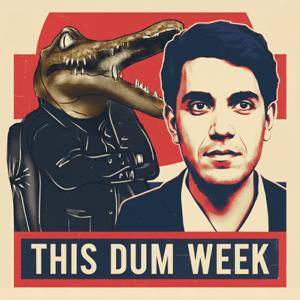

This episode of "This Dum Week" opens with a pair of housekeeping items — Dr. RollerGator recounting his successful deferral of jury duty (complete with a jury duty hotline call and a judge's intervention) and an explanation for the missed previous week's episode due to a regional power outage. From there the episode launches into a dense and wide-ranging set of stories spanning celebrity PR corruption, UFO disclosure theater, investor fraud jurisprudence, the suppression of abuse allegations within activist movements, and a centerpiece deep-dive into the Afroman lawsuit against the Adams County Sheriff's Office that delivered one of the most remarkable courtroom outcomes in recent memory.
The Afroman story occupies nearly an hour of the episode and is treated as a genuine victory for civil accountability and creative resistance. Hosts walk through the full chronology: the 2022 SWAT raid on Joseph Foreman's Ohio home based on an anonymous tip about a "dungeon" that didn't exist, the seizure and partial theft of $5,031 in cash, the retaliatory defamation lawsuit from deputies after Afroman turned the surveillance footage into viral songs and even a congressional campaign, the dramatic courtroom moment in which "Lick 'Em Low Lisa" — all thirteen minutes of it — was played before the jury while the plaintiff cried on the stand, and the jury's unanimous finding of no liability. The hosts treat this outcome as a model for fighting back against police overreach through art and litigation, and express unambiguous support. The episode also features a substantial Cuba segment tied to breaking news about Marco Rubio's secret negotiations with Raul Castro's son, nationwide blackouts, and the release of 51 political prisoners, along with a deep "Uncle Jeffy" segment covering the Tova Noel summons, the Alexander brothers' trafficking conviction, the Epstein FBI tip-line document, and the progressive media's increasingly conspiratorial posture on Epstein.
The episode's final third is dominated by a sustained and at times heated analytical debate between Alex and RollerGator — joined by listener Mighty Canoe — about the Iran war, the significance of Joe Kent's resignation and public statements, whether the term "hijacking" is an appropriate description of Israel's relationship to US foreign policy, and the epistemological standards one should apply to former counterterrorism officials who make claims against the interests of their former employers. RollerGator stakes out a cautious, evidence-weighting position; Alex argues that the convergent "surround sound" of insider accounts now reaches the threshold of meaningful evidence; and Mighty Canoe closes the loop by pointing to the specific abnormality of a foreign country's intelligence apparently operating inside the Oval Office while Senate-confirmed officials like Tulsi Gabbard and Joe Kent were excluded from Iran war planning rooms.
Main Topic: Jury duty deferral and explanation for missed previous episode
Main Topic: Leaked audio of PR agents plotting to link Amanda Ghost to sex trafficking as a defamation strategy
Key Quote: [from PR audio] Agents discuss creating a false public association between Amanda Ghost and sex trafficking as a deliberate PR strategy
Hosts' Analysis: The audio reveals a transactional PR world in which fabricating serious criminal associations is presented as a standard strategic tool. The hosts note this type of operation — manufacturing a sex-trafficking-adjacent smear — is particularly alarming because it exploits public sensitivity around trafficking to destroy reputations with no evidentiary basis.
Main Topic: Trump executive order on UAP file release; Christopher Mellon claims; host skepticism
Notable Detail: Mellon's claims about satellite imagery are treated as potentially significant but unverified; hosts resist being drawn into excitement about UAP disclosure as a category without specific, documentable evidence.
Hosts' Analysis: The UAP/UFO space is treated as a domain where legitimate anomalies, government secrecy, and coordinated media spectacle are deeply entangled. The hosts' default is epistemic caution, and they push back on the tendency of disclosure advocates to treat any government acknowledgment as confirmation.
Main Topic: Jury finds Musk liable for misleading investors but not intentional fraud; discussion of market manipulation standards
Hosts' Analysis: The hosts treat this as a window into how murky the line between reckless communication and calculated fraud remains in securities law, particularly for executives who communicate directly with markets via social media rather than through formal disclosure channels.
Main Topic: NYT investigation into abuse by Cesar Chavez; Dolores Huerta coming forward; pattern of movements suppressing allegations
Key Quote: Hosts identify the pattern as structural: movements built on moral authority are particularly incentivized to suppress abuse findings because the reputational stakes are existential.
Notable Detail: Dolores Huerta coming forward is treated as significant — she is one of the most historically credible figures in the labor movement, and her willingness to speak adds unusual weight to what might otherwise be a contested he-said/she-said account involving a deceased figure.
Hosts' Analysis: The Chavez story is not framed as an attack on labor organizing but as a demonstration that protective institutional dynamics operate across ideological lines. The hosts are critical of hagiographic treatment that makes accountability impossible.
Main Topic: Brief update on pending trial; scheduling confirmation
Main Topic: Full chronology of Afroman's lawsuit following a SWAT raid on his home; jury verdict of no liability; triumph of creative resistance
Background: The Raid (August 2022)
Afroman's Response: The Songs
The Lawsuit: Deputies Sue Afroman
The Trial
Listener Call-In: Mighty Canoe
Key Quote: Hosts note the structural absurdity: deputies who seized money, returned it short by 400,andblameda"miscount"—thenturnedaroundandsuedthemantheyraidedfor400,andblameda"miscount"—thenturnedaroundandsuedthemantheyraidedfor4 million because he made songs about it.
Notable Detail: The songs themselves are treated as genuine creative works, not just protest art. The hosts express appreciation for Afroman using the legal and cultural system against those who used it against him. "Lick 'Em Low Lisa" being played in full during trial — while the named plaintiff cried — is presented as one of the more extraordinary courtroom moments in recent memory.
Hosts' Analysis: The verdict is framed as a meaningful accountability event. Police officers who abuse their power routinely face no formal consequences; in this case, an artist used creativity and litigation to impose social and legal costs on officers who not only violated his rights but then tried to punish him for documenting it. The hosts express unambiguous support for the outcome and for Afroman's approach. The missing $400 — ruled an internal "miscount" — is repeatedly cited as a symbol of how impunity works.
Main Topic: Rubio's secret negotiations with Raul Castro's son; nationwide blackouts; prisoner releases; Trump's Cuba statements; Rubio family corruption background
Rubio's Secret Channel
Cuba's Domestic Crisis
Trump's Cuba Rhetoric
Rubio Background: Tiger King Connection
Hasan Piker / Code Pink in Cuba
Notable Detail: The prisoner release of 51 is presented as the concrete outcome of the secret talks — a real diplomatic result embedded in an otherwise chaotic and theatrical situation. The Rubio family corruption background is treated as legitimate political context, not tabloid gossip.
Hosts' Analysis: The Cuba segment is treated as a case study in how US foreign policy toward Latin America is driven by ethnic constituency politics, family corruption, and personal history as much as strategic calculation. Rubio's transformation from hardline Cuba hawk to secret negotiator is read as pragmatic opportunism. Trump's "take it" language is flagged as dangerous.
Main Topic: Tova Noel summoned by House Oversight; Alexander brothers convicted; Epstein FBI tip-line document; progressive media's conspiratorial drift; "we're all Pizzagaters now"
Segment Introduction
Tova Noel: House Oversight Summons
Alexander Brothers Conviction
Epstein FBI Tip-Line Document
Majority Report / Emma Veigeland Clip
Moot / 4chan / QAnon / Bannon "Limited Hangout" Theory
Key Quote: "We're all Pizzagaters now" — hosts' conclusion after surveying the progressive media's newfound interest in elite trafficking conspiracy theories; the phrase acknowledges the irony that theories once dismissed as right-wing lunacy are now being embraced in slightly different form across the political spectrum.
Notable Detail: The Tova Noel Zelle payments detail is flagged as the single most unexplained piece of evidence in the Epstein death story. The deferred prosecution agreement suggests she has information the government wanted — but what she has provided, and to whom, remains unknown.
Hosts' Analysis: The Uncle Jeffy segment reflects the show's consistent position that Epstein accountability has been systematically sabotaged by institutional actors across partisan lines, and that the current moment — in which both sides are now mining the story for partisan advantage — represents a degraded form of accountability rather than genuine reckoning. The "we're all Pizzagaters now" line is delivered as diagnosis, not celebration.
Main Topic: RollerGator's NOTAWAR acronym; Persian numbers station; Joe Kent's resignation and statements; epistemological debate about insider testimony
NOTAWAR Acronym
Persian Numbers Station
Joe Kent — Resignation and Statements
Joe Wilson / Valerie Plame Analogy
Epistemological Debate: Alex vs. RollerGator
Key Quote: Alex — "We are now getting surround sound. And for me, Joe Kent is another data point of that surround sound that paints an unusually clearer picture of what happened."
Key Quote: RollerGator — "Being propaganda doesn't mean it's false. So I always need to consider what he's saying and always consider aspects of the details he gives me that I might be able to use to confirm or disconfirm what he's saying."
Hosts' Analysis: The disagreement is genuine and productive. Alex's "surround sound" framing — the idea that when multiple independent sources converge on the same narrative, the evidential weight compounds — is a meaningful analytical tool. RollerGator's concern is that surround sound can itself be manufactured, and that the history of intelligence community media management should produce consistent rather than directional skepticism. Neither host dismisses the other's concern.
Main Topic: Whether "hijacking" is the right frame for Israel's manipulation of US Iran policy; Miriam Adelson/Golan Heights; Rubio's hallway statement; Mighty Canoe's closing point
RollerGator's Objection to "Hijacking"
Alex's "Hijacking" Case
Marco Rubio's Hallway Statement
The "Friend Who Gets You Into Bar Fights" Analogy
US Options: The F-35 Point
Charlie Kirk Flip / Fox News Alteration
Mighty Canoe's Closing Contribution
Key Quote: Mighty Canoe — "It's not normal to have the intelligence agencies of another country operating inside the Oval Office. That's the thing that needs to be considered here."
Key Quote: Alex on the Rubio statement — "What Marco Rubio said is that Israel basically said, look, we're going to attack them anyway. And they surmise that if Israel attacks Iran, Iran is going to attack American bases. And therefore they attacked Iran preemptively but defensively. That is what Marco Rubio said. I kid you not."
Hosts' Analysis: The conversation reaches a tentative synthesis: whether one calls it "hijacking" or not, the structural situation described by Rubio — in which a nominally allied foreign state presented the US with a fait accompli and the US complied rather than use its considerable leverage — represents a profound subordination of US strategic interests to Israeli ones. RollerGator concedes the "really dick thing for a supposed ally to do" characterization; Alex concedes that "hijacking" may overclaim on the question of Trump's agency. The episode ends without full resolution — the hosts frame this as an ongoing story.
Main Topic: Sign-off
This episode is structured in three rough movements. The first hour (roughly 00:00 - 01:39) is a rapid-fire sequence of self-contained stories — jury duty, PR smear audio, UFO disclosure, Musk verdict, Chavez abuse allegations — building to the extended Afroman centerpiece. The middle movement (01:39 - 02:41) handles the Cuba geopolitics and the long Uncle Jeffy segment, both of which involve layered institutional failures and ongoing storylines. The final third (02:41 - 03:40) is the most analytically demanding section: a single extended, contested conversation about Iran, Joe Kent, Israeli influence, and the epistemology of insider testimony that does not resolve so much as reach a productive resting point.
The Afroman story functions as the episode's emotional center of gravity — it is the longest single topic, receives the most granular detail, and provides the one unambiguous win the hosts are willing to celebrate without qualification. The Iran discussion provides the intellectual ballast: it is the segment in which the hosts disagree most substantively and work hardest to earn their conclusions.
The episode is approximately three hours and forty minutes in total runtime.
The episode demonstrates the show's consistent two-track approach to epistemology: personal accountability stories (Afroman, Chavez, Alexander brothers) are handled empirically — specific facts, verified outcomes, named individuals with documented records. Geopolitical stories (Iran, Cuba, UFO disclosure) are handled with layered skepticism, distinguishing between what is known, what is asserted by motivated parties, and what remains structurally obscured. The Joe Kent discussion is notable for making this methodological tension explicit: Alex's "surround sound" model and RollerGator's "specific verifiable claims" model are both defensible, and the hosts acknowledge this rather than forcing artificial consensus.
Several media criticism threads run through the episode:
The hosts implicitly present the Afroman case as a model: document everything, use available creative and legal channels, impose reputational and financial costs on officers who abuse power. The fact that the deputies' lawsuit failed — and failed after a 13-minute song was played in their presence in open court — is treated as evidence that creative resistance, combined with good legal representation, can produce real accountability outcomes even when internal police mechanisms have failed.
 View all episodes
 By drrollergator
This episode of "This Dum Week" opens with a pair of housekeeping items — Dr. RollerGator recounting his successful deferral of jury duty (complete with a jury duty hotline call and a judge's intervention) and an explanation for the missed previous week's episode due to a regional power outage. From there the episode launches into a dense and wide-ranging set of stories spanning celebrity PR corruption, UFO disclosure theater, investor fraud jurisprudence, the suppression of abuse allegations within activist movements, and a centerpiece deep-dive into the Afroman lawsuit against the Adams County Sheriff's Office that delivered one of the most remarkable courtroom outcomes in recent memory.
The Afroman story occupies nearly an hour of the episode and is treated as a genuine victory for civil accountability and creative resistance. Hosts walk through the full chronology: the 2022 SWAT raid on Joseph Foreman's Ohio home based on an anonymous tip about a "dungeon" that didn't exist, the seizure and partial theft of $5,031 in cash, the retaliatory defamation lawsuit from deputies after Afroman turned the surveillance footage into viral songs and even a congressional campaign, the dramatic courtroom moment in which "Lick 'Em Low Lisa" — all thirteen minutes of it — was played before the jury while the plaintiff cried on the stand, and the jury's unanimous finding of no liability. The hosts treat this outcome as a model for fighting back against police overreach through art and litigation, and express unambiguous support. The episode also features a substantial Cuba segment tied to breaking news about Marco Rubio's secret negotiations with Raul Castro's son, nationwide blackouts, and the release of 51 political prisoners, along with a deep "Uncle Jeffy" segment covering the Tova Noel summons, the Alexander brothers' trafficking conviction, the Epstein FBI tip-line document, and the progressive media's increasingly conspiratorial posture on Epstein.
The episode's final third is dominated by a sustained and at times heated analytical debate between Alex and RollerGator — joined by listener Mighty Canoe — about the Iran war, the significance of Joe Kent's resignation and public statements, whether the term "hijacking" is an appropriate description of Israel's relationship to US foreign policy, and the epistemological standards one should apply to former counterterrorism officials who make claims against the interests of their former employers. RollerGator stakes out a cautious, evidence-weighting position; Alex argues that the convergent "surround sound" of insider accounts now reaches the threshold of meaningful evidence; and Mighty Canoe closes the loop by pointing to the specific abnormality of a foreign country's intelligence apparently operating inside the Oval Office while Senate-confirmed officials like Tulsi Gabbard and Joe Kent were excluded from Iran war planning rooms.
Main Topic: Jury duty deferral and explanation for missed previous episode
Main Topic: Leaked audio of PR agents plotting to link Amanda Ghost to sex trafficking as a defamation strategy
Key Quote: [from PR audio] Agents discuss creating a false public association between Amanda Ghost and sex trafficking as a deliberate PR strategy
Hosts' Analysis: The audio reveals a transactional PR world in which fabricating serious criminal associations is presented as a standard strategic tool. The hosts note this type of operation — manufacturing a sex-trafficking-adjacent smear — is particularly alarming because it exploits public sensitivity around trafficking to destroy reputations with no evidentiary basis.
Main Topic: Trump executive order on UAP file release; Christopher Mellon claims; host skepticism
Notable Detail: Mellon's claims about satellite imagery are treated as potentially significant but unverified; hosts resist being drawn into excitement about UAP disclosure as a category without specific, documentable evidence.
Hosts' Analysis: The UAP/UFO space is treated as a domain where legitimate anomalies, government secrecy, and coordinated media spectacle are deeply entangled. The hosts' default is epistemic caution, and they push back on the tendency of disclosure advocates to treat any government acknowledgment as confirmation.
Main Topic: Jury finds Musk liable for misleading investors but not intentional fraud; discussion of market manipulation standards
Hosts' Analysis: The hosts treat this as a window into how murky the line between reckless communication and calculated fraud remains in securities law, particularly for executives who communicate directly with markets via social media rather than through formal disclosure channels.
Main Topic: NYT investigation into abuse by Cesar Chavez; Dolores Huerta coming forward; pattern of movements suppressing allegations
Key Quote: Hosts identify the pattern as structural: movements built on moral authority are particularly incentivized to suppress abuse findings because the reputational stakes are existential.
Notable Detail: Dolores Huerta coming forward is treated as significant — she is one of the most historically credible figures in the labor movement, and her willingness to speak adds unusual weight to what might otherwise be a contested he-said/she-said account involving a deceased figure.
Hosts' Analysis: The Chavez story is not framed as an attack on labor organizing but as a demonstration that protective institutional dynamics operate across ideological lines. The hosts are critical of hagiographic treatment that makes accountability impossible.
Main Topic: Brief update on pending trial; scheduling confirmation
Main Topic: Full chronology of Afroman's lawsuit following a SWAT raid on his home; jury verdict of no liability; triumph of creative resistance
Background: The Raid (August 2022)
Afroman's Response: The Songs
The Lawsuit: Deputies Sue Afroman
The Trial
Listener Call-In: Mighty Canoe
Key Quote: Hosts note the structural absurdity: deputies who seized money, returned it short by 400,andblameda"miscount"—thenturnedaroundandsuedthemantheyraidedfor400,andblameda"miscount"—thenturnedaroundandsuedthemantheyraidedfor4 million because he made songs about it.
Notable Detail: The songs themselves are treated as genuine creative works, not just protest art. The hosts express appreciation for Afroman using the legal and cultural system against those who used it against him. "Lick 'Em Low Lisa" being played in full during trial — while the named plaintiff cried — is presented as one of the more extraordinary courtroom moments in recent memory.
Hosts' Analysis: The verdict is framed as a meaningful accountability event. Police officers who abuse their power routinely face no formal consequences; in this case, an artist used creativity and litigation to impose social and legal costs on officers who not only violated his rights but then tried to punish him for documenting it. The hosts express unambiguous support for the outcome and for Afroman's approach. The missing $400 — ruled an internal "miscount" — is repeatedly cited as a symbol of how impunity works.
Main Topic: Rubio's secret negotiations with Raul Castro's son; nationwide blackouts; prisoner releases; Trump's Cuba statements; Rubio family corruption background
Rubio's Secret Channel
Cuba's Domestic Crisis
Trump's Cuba Rhetoric
Rubio Background: Tiger King Connection
Hasan Piker / Code Pink in Cuba
Notable Detail: The prisoner release of 51 is presented as the concrete outcome of the secret talks — a real diplomatic result embedded in an otherwise chaotic and theatrical situation. The Rubio family corruption background is treated as legitimate political context, not tabloid gossip.
Hosts' Analysis: The Cuba segment is treated as a case study in how US foreign policy toward Latin America is driven by ethnic constituency politics, family corruption, and personal history as much as strategic calculation. Rubio's transformation from hardline Cuba hawk to secret negotiator is read as pragmatic opportunism. Trump's "take it" language is flagged as dangerous.
Main Topic: Tova Noel summoned by House Oversight; Alexander brothers convicted; Epstein FBI tip-line document; progressive media's conspiratorial drift; "we're all Pizzagaters now"
Segment Introduction
Tova Noel: House Oversight Summons
Alexander Brothers Conviction
Epstein FBI Tip-Line Document
Majority Report / Emma Veigeland Clip
Moot / 4chan / QAnon / Bannon "Limited Hangout" Theory
Key Quote: "We're all Pizzagaters now" — hosts' conclusion after surveying the progressive media's newfound interest in elite trafficking conspiracy theories; the phrase acknowledges the irony that theories once dismissed as right-wing lunacy are now being embraced in slightly different form across the political spectrum.
Notable Detail: The Tova Noel Zelle payments detail is flagged as the single most unexplained piece of evidence in the Epstein death story. The deferred prosecution agreement suggests she has information the government wanted — but what she has provided, and to whom, remains unknown.
Hosts' Analysis: The Uncle Jeffy segment reflects the show's consistent position that Epstein accountability has been systematically sabotaged by institutional actors across partisan lines, and that the current moment — in which both sides are now mining the story for partisan advantage — represents a degraded form of accountability rather than genuine reckoning. The "we're all Pizzagaters now" line is delivered as diagnosis, not celebration.
Main Topic: RollerGator's NOTAWAR acronym; Persian numbers station; Joe Kent's resignation and statements; epistemological debate about insider testimony
NOTAWAR Acronym
Persian Numbers Station
Joe Kent — Resignation and Statements
Joe Wilson / Valerie Plame Analogy
Epistemological Debate: Alex vs. RollerGator
Key Quote: Alex — "We are now getting surround sound. And for me, Joe Kent is another data point of that surround sound that paints an unusually clearer picture of what happened."
Key Quote: RollerGator — "Being propaganda doesn't mean it's false. So I always need to consider what he's saying and always consider aspects of the details he gives me that I might be able to use to confirm or disconfirm what he's saying."
Hosts' Analysis: The disagreement is genuine and productive. Alex's "surround sound" framing — the idea that when multiple independent sources converge on the same narrative, the evidential weight compounds — is a meaningful analytical tool. RollerGator's concern is that surround sound can itself be manufactured, and that the history of intelligence community media management should produce consistent rather than directional skepticism. Neither host dismisses the other's concern.
Main Topic: Whether "hijacking" is the right frame for Israel's manipulation of US Iran policy; Miriam Adelson/Golan Heights; Rubio's hallway statement; Mighty Canoe's closing point
RollerGator's Objection to "Hijacking"
Alex's "Hijacking" Case
Marco Rubio's Hallway Statement
The "Friend Who Gets You Into Bar Fights" Analogy
US Options: The F-35 Point
Charlie Kirk Flip / Fox News Alteration
Mighty Canoe's Closing Contribution
Key Quote: Mighty Canoe — "It's not normal to have the intelligence agencies of another country operating inside the Oval Office. That's the thing that needs to be considered here."
Key Quote: Alex on the Rubio statement — "What Marco Rubio said is that Israel basically said, look, we're going to attack them anyway. And they surmise that if Israel attacks Iran, Iran is going to attack American bases. And therefore they attacked Iran preemptively but defensively. That is what Marco Rubio said. I kid you not."
Hosts' Analysis: The conversation reaches a tentative synthesis: whether one calls it "hijacking" or not, the structural situation described by Rubio — in which a nominally allied foreign state presented the US with a fait accompli and the US complied rather than use its considerable leverage — represents a profound subordination of US strategic interests to Israeli ones. RollerGator concedes the "really dick thing for a supposed ally to do" characterization; Alex concedes that "hijacking" may overclaim on the question of Trump's agency. The episode ends without full resolution — the hosts frame this as an ongoing story.
Main Topic: Sign-off
This episode is structured in three rough movements. The first hour (roughly 00:00 - 01:39) is a rapid-fire sequence of self-contained stories — jury duty, PR smear audio, UFO disclosure, Musk verdict, Chavez abuse allegations — building to the extended Afroman centerpiece. The middle movement (01:39 - 02:41) handles the Cuba geopolitics and the long Uncle Jeffy segment, both of which involve layered institutional failures and ongoing storylines. The final third (02:41 - 03:40) is the most analytically demanding section: a single extended, contested conversation about Iran, Joe Kent, Israeli influence, and the epistemology of insider testimony that does not resolve so much as reach a productive resting point.
The Afroman story functions as the episode's emotional center of gravity — it is the longest single topic, receives the most granular detail, and provides the one unambiguous win the hosts are willing to celebrate without qualification. The Iran discussion provides the intellectual ballast: it is the segment in which the hosts disagree most substantively and work hardest to earn their conclusions.
The episode is approximately three hours and forty minutes in total runtime.
The episode demonstrates the show's consistent two-track approach to epistemology: personal accountability stories (Afroman, Chavez, Alexander brothers) are handled empirically — specific facts, verified outcomes, named individuals with documented records. Geopolitical stories (Iran, Cuba, UFO disclosure) are handled with layered skepticism, distinguishing between what is known, what is asserted by motivated parties, and what remains structurally obscured. The Joe Kent discussion is notable for making this methodological tension explicit: Alex's "surround sound" model and RollerGator's "specific verifiable claims" model are both defensible, and the hosts acknowledge this rather than forcing artificial consensus.
Several media criticism threads run through the episode:
The hosts implicitly present the Afroman case as a model: document everything, use available creative and legal channels, impose reputational and financial costs on officers who abuse power. The fact that the deputies' lawsuit failed — and failed after a 13-minute song was played in their presence in open court — is treated as evidence that creative resistance, combined with good legal representation, can produce real accountability outcomes even when internal police mechanisms have failed.