
Sign up to save your podcasts
Or

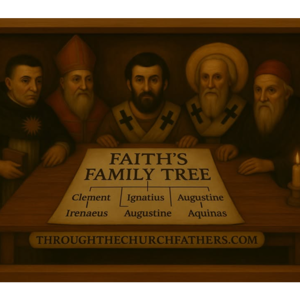

Justin Martyr reminds the Roman world that Christianity is not a secret cult but a life shaped directly by the teachings of Christ. In these chapters of The First Apology, Justin gathers Jesus’ own words—about purity of heart, love for enemies, generosity, patience under injustice, and truthful speech—to show that Christians are not rebels but people trying to live under a radically demanding moral vision (Matt. 5:28, Matt. 5:44, Matt. 5:34–37). The real test of Christianity, Justin says, is not what someone claims but whether their life reflects these teachings (Matt. 7:21). Augustine then turns the lens inward and confesses how easily our hearts chase empty glory. Watching a carefree beggar in Milan, he realized that his own ambitious pursuit of honor left him more restless than the poor man he envied—because joy detached from God is always unstable and fleeting (Eccl. 2:11). Aquinas finally lifts the discussion into the realm of angelic nature. Angels, he explains, possess intellect and therefore possess will; yet unlike humans they do not struggle through passions or slow reasoning. They see the good clearly and choose it immediately, their will following their intellect in a simple act of freedom. Taken together, these readings move from Christ’s ethical teaching, to Augustine’s examination of the restless human heart, to Aquinas’s reflection on the clarity of angelic choice—reminding us that true joy and true obedience begin not with outward appearance but with the orientation of the will toward the good.
Explore the Project:
Through the Church Fathers – https://www.throughthechurchfathers.com
Patreon – https://www.patreon.com/cmichaelpatton
Credo Courses – https://www.credocourses.com
Credo Ministries – https://www.credoministries.org
 View all episodes
 By C. Michael Patton
Justin Martyr reminds the Roman world that Christianity is not a secret cult but a life shaped directly by the teachings of Christ. In these chapters of The First Apology, Justin gathers Jesus’ own words—about purity of heart, love for enemies, generosity, patience under injustice, and truthful speech—to show that Christians are not rebels but people trying to live under a radically demanding moral vision (Matt. 5:28, Matt. 5:44, Matt. 5:34–37). The real test of Christianity, Justin says, is not what someone claims but whether their life reflects these teachings (Matt. 7:21). Augustine then turns the lens inward and confesses how easily our hearts chase empty glory. Watching a carefree beggar in Milan, he realized that his own ambitious pursuit of honor left him more restless than the poor man he envied—because joy detached from God is always unstable and fleeting (Eccl. 2:11). Aquinas finally lifts the discussion into the realm of angelic nature. Angels, he explains, possess intellect and therefore possess will; yet unlike humans they do not struggle through passions or slow reasoning. They see the good clearly and choose it immediately, their will following their intellect in a simple act of freedom. Taken together, these readings move from Christ’s ethical teaching, to Augustine’s examination of the restless human heart, to Aquinas’s reflection on the clarity of angelic choice—reminding us that true joy and true obedience begin not with outward appearance but with the orientation of the will toward the good.
Explore the Project:
Through the Church Fathers – https://www.throughthechurchfathers.com
Patreon – https://www.patreon.com/cmichaelpatton
Credo Courses – https://www.credocourses.com
Credo Ministries – https://www.credoministries.org