
Sign up to save your podcasts
Or

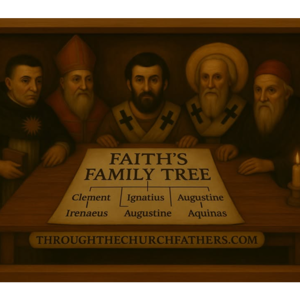

Ancient prophecy, a moment of injustice, and a profound question about the nature of the soul all converge in today’s readings. Justin Martyr argues that the life of Christ was not an accident of history but the fulfillment of centuries of prophecy—from Moses and Isaiah to Micah and David—showing that Jesus’ birth, suffering, and kingship were foretold long before they occurred (Genesis 49:10; Isaiah 7:14; Micah 5:2; Psalm 22:16). Augustine then recounts a striking episode from the life of his friend Alypius, who was mistakenly arrested as a thief, teaching an early lesson about the danger of rash judgment and the quiet ways God prepares a person through unexpected trials. Finally, Thomas Aquinas turns to the nature of the human soul, arguing that the soul is not a body but the form that gives life to the body, and that the human soul uniquely subsists because the act of understanding transcends bodily organs, unlike the powers of animals.
Readings:
Justin Martyr — First Apology, Chapters 32–35 Augustine of Hippo — Confessions, Book 6, Chapter 9 (Section 14) Thomas Aquinas — Summa Theologica, Part 1, Question 75 (Articles 1–3 Combined)
Explore the Project:
Through the Church Fathers – https://www.throughthechurchfathers.com
Patreon – https://www.patreon.com/cmichaelpatton
Credo Courses – https://www.credocourses.com
Credo Ministries – https://www.credoministries.org
#ThroughTheChurchFathers #ChurchFathers #JustinMartyr #Augustine #ThomasAquinas #Patristics #ChurchHistory #ChristianTheology
 View all episodes
 By C. Michael Patton
Ancient prophecy, a moment of injustice, and a profound question about the nature of the soul all converge in today’s readings. Justin Martyr argues that the life of Christ was not an accident of history but the fulfillment of centuries of prophecy—from Moses and Isaiah to Micah and David—showing that Jesus’ birth, suffering, and kingship were foretold long before they occurred (Genesis 49:10; Isaiah 7:14; Micah 5:2; Psalm 22:16). Augustine then recounts a striking episode from the life of his friend Alypius, who was mistakenly arrested as a thief, teaching an early lesson about the danger of rash judgment and the quiet ways God prepares a person through unexpected trials. Finally, Thomas Aquinas turns to the nature of the human soul, arguing that the soul is not a body but the form that gives life to the body, and that the human soul uniquely subsists because the act of understanding transcends bodily organs, unlike the powers of animals.
Readings:
Justin Martyr — First Apology, Chapters 32–35 Augustine of Hippo — Confessions, Book 6, Chapter 9 (Section 14) Thomas Aquinas — Summa Theologica, Part 1, Question 75 (Articles 1–3 Combined)
Explore the Project:
Through the Church Fathers – https://www.throughthechurchfathers.com
Patreon – https://www.patreon.com/cmichaelpatton
Credo Courses – https://www.credocourses.com
Credo Ministries – https://www.credoministries.org
#ThroughTheChurchFathers #ChurchFathers #JustinMartyr #Augustine #ThomasAquinas #Patristics #ChurchHistory #ChristianTheology