
Sign up to save your podcasts
Or

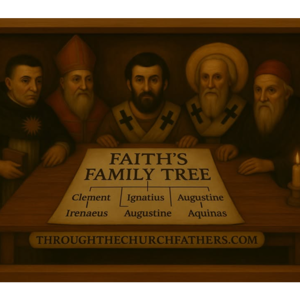

Restlessness, repentance, and divine knowledge converge today as we move from pastoral command, to personal anguish, to the eternal clarity of God Himself. Hermas confronts the costliness of repentance and the gravity of chastity, insisting that repentance is real, but not cheap or endlessly repeatable. Augustine then opens his wounded soul, describing the unbearable weight of grief and restlessness that drove him from home, revealing what the human heart becomes when it tries to carry itself apart from God. Finally, Aquinas lifts our eyes above human instability altogether, arguing that God’s knowledge does not change, does not grow, and does not depend on human propositions—yet fully encompasses all truth, all time, and all things as their cause. Together, these readings trace a single arc: from human moral struggle, through interior collapse, to the unshakable constancy of divine knowledge and grace.
Readings:
The Shepherd of Hermas — Commandment 4
Augustine, The Confessions — Book 4, Chapter 7 (Sections 12–13)
Thomas Aquinas, Summa Theologica — Part 1, Question 14 (Articles 14–16 Combined)
Explore the Project:
Through the Church Fathers – https://www.throughthechurchfathers.com
Patreon – https://www.patreon.com/cmichaelpatton
Credo Courses – https://www.credocourses.com
Credo Ministries – https://www.credoministries.org
#ChurchFathers #Hermas #Augustine #Aquinas #ChristianTheology #Repentance #DivineKnowledge #Confessions #SummaTheologi
 View all episodes
 By C. Michael Patton
Restlessness, repentance, and divine knowledge converge today as we move from pastoral command, to personal anguish, to the eternal clarity of God Himself. Hermas confronts the costliness of repentance and the gravity of chastity, insisting that repentance is real, but not cheap or endlessly repeatable. Augustine then opens his wounded soul, describing the unbearable weight of grief and restlessness that drove him from home, revealing what the human heart becomes when it tries to carry itself apart from God. Finally, Aquinas lifts our eyes above human instability altogether, arguing that God’s knowledge does not change, does not grow, and does not depend on human propositions—yet fully encompasses all truth, all time, and all things as their cause. Together, these readings trace a single arc: from human moral struggle, through interior collapse, to the unshakable constancy of divine knowledge and grace.
Readings:
The Shepherd of Hermas — Commandment 4
Augustine, The Confessions — Book 4, Chapter 7 (Sections 12–13)
Thomas Aquinas, Summa Theologica — Part 1, Question 14 (Articles 14–16 Combined)
Explore the Project:
Through the Church Fathers – https://www.throughthechurchfathers.com
Patreon – https://www.patreon.com/cmichaelpatton
Credo Courses – https://www.credocourses.com
Credo Ministries – https://www.credoministries.org
#ChurchFathers #Hermas #Augustine #Aquinas #ChristianTheology #Repentance #DivineKnowledge #Confessions #SummaTheologi