
Sign up to save your podcasts
Or

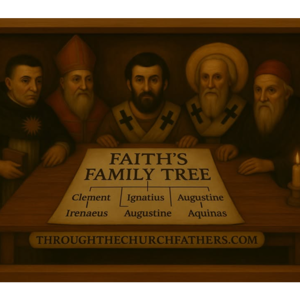

Early Christianity does not ease its way into doctrine—it draws lines. In this episode, we hear that sharpness from three very different voices brought into conversation. The Epistle of Barnabas opens by redefining obedience, sacrifice, fasting, and covenant identity, insisting that God’s commands were never about ritual performance but about transformed hearts shaped by the Spirit. Augustine then steps back and reflects on the deeper logic behind this claim, arguing that divine righteousness itself never changes even as God’s commands adapt to times, places, and people. Aquinas brings the discussion to its metaphysical edge, clarifying that even the highest vision of God remains finite—true sight without comprehension—guarding us from confusing divine revelation with human mastery. Together, these readings force us to reckon with a God who is constant, righteous, and knowable, yet never reducible to custom, law, or intellect.
Readings:
The Epistle of Barnabas Chapters 1–3
Augustine of Hippo The Confessions Book 3, Chapter 7 (Section 13)
Thomas Aquinas Summa Theologica Part 1, Question 12 — The Limits and Degrees of the Beatific Vision (Articles 6–8 Combined)
Explore the Project:
Through the Church Fathers – https://www.throughthechurchfathers.com
Patreon – https://www.patreon.com/cmichaelpatton
Credo Courses – https://www.credocourses.com
Credo Ministries – https://www.credoministries.org
 View all episodes
 By C. Michael Patton
Early Christianity does not ease its way into doctrine—it draws lines. In this episode, we hear that sharpness from three very different voices brought into conversation. The Epistle of Barnabas opens by redefining obedience, sacrifice, fasting, and covenant identity, insisting that God’s commands were never about ritual performance but about transformed hearts shaped by the Spirit. Augustine then steps back and reflects on the deeper logic behind this claim, arguing that divine righteousness itself never changes even as God’s commands adapt to times, places, and people. Aquinas brings the discussion to its metaphysical edge, clarifying that even the highest vision of God remains finite—true sight without comprehension—guarding us from confusing divine revelation with human mastery. Together, these readings force us to reckon with a God who is constant, righteous, and knowable, yet never reducible to custom, law, or intellect.
Readings:
The Epistle of Barnabas Chapters 1–3
Augustine of Hippo The Confessions Book 3, Chapter 7 (Section 13)
Thomas Aquinas Summa Theologica Part 1, Question 12 — The Limits and Degrees of the Beatific Vision (Articles 6–8 Combined)
Explore the Project:
Through the Church Fathers – https://www.throughthechurchfathers.com
Patreon – https://www.patreon.com/cmichaelpatton
Credo Courses – https://www.credocourses.com
Credo Ministries – https://www.credoministries.org