
Sign up to save your podcasts
Or

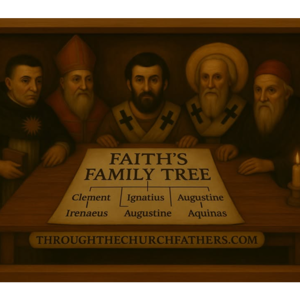

In these readings, the Church presses us to learn how God reveals Himself without ever being reduced to our categories. Barnabas reads Israel’s rituals with bold confidence, arguing that Christ was always the substance behind the signs—whether in sacrifice, circumcision, or the cleansing of the heart through hearing and obedience. Augustine then turns inward, tracing the violence, pride, and disordered loves that arise when the soul abandons God, showing that sin is never merely against others but always against ourselves. Aquinas completes the arc by asking how we can name God at all, insisting that our language about Him is neither empty nor exhaustive—true by analogy, grounded in His perfections, yet always surpassing the limits of human speech. Together, these texts teach us how to read Scripture spiritually, examine ourselves honestly, and speak about God reverently without pretending to comprehend Him fully.
Readings:
Barnabas The Epistle of Barnabas Chapters 8–9
Augustine of Hippo The Confessions Book 2, Chapter 8 (Section 16)
Thomas Aquinas Summa Theologica Part 1, Question 13 (Articles 2–4 Combined)
Explore the Project:
Through the Church Fathers – https://www.throughthechurchfathers.com
Patreon – https://www.patreon.com/cmichaelpatton
Credo Courses – https://www.credocourses.com
Credo Ministries – https://www.credoministries.org
#ChurchFathers #Barnabas #Augustine #Aquinas #SummaTheologica #TheConfessions #ChristianTheology
 View all episodes
 By C. Michael Patton
In these readings, the Church presses us to learn how God reveals Himself without ever being reduced to our categories. Barnabas reads Israel’s rituals with bold confidence, arguing that Christ was always the substance behind the signs—whether in sacrifice, circumcision, or the cleansing of the heart through hearing and obedience. Augustine then turns inward, tracing the violence, pride, and disordered loves that arise when the soul abandons God, showing that sin is never merely against others but always against ourselves. Aquinas completes the arc by asking how we can name God at all, insisting that our language about Him is neither empty nor exhaustive—true by analogy, grounded in His perfections, yet always surpassing the limits of human speech. Together, these texts teach us how to read Scripture spiritually, examine ourselves honestly, and speak about God reverently without pretending to comprehend Him fully.
Readings:
Barnabas The Epistle of Barnabas Chapters 8–9
Augustine of Hippo The Confessions Book 2, Chapter 8 (Section 16)
Thomas Aquinas Summa Theologica Part 1, Question 13 (Articles 2–4 Combined)
Explore the Project:
Through the Church Fathers – https://www.throughthechurchfathers.com
Patreon – https://www.patreon.com/cmichaelpatton
Credo Courses – https://www.credocourses.com
Credo Ministries – https://www.credoministries.org
#ChurchFathers #Barnabas #Augustine #Aquinas #SummaTheologica #TheConfessions #ChristianTheology