
Sign up to save your podcasts
Or

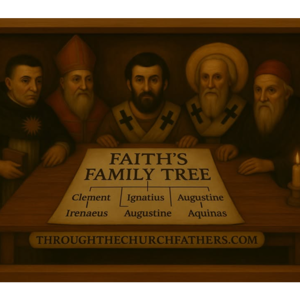

Today’s readings press us to face reality without illusion—about Christ, about our hearts, and about God Himself. Ignatius thunders against docetic evasions, insisting that Christ was truly born, truly suffered, and truly rose, because only a real cross can save real sinners; anything less empties both martyrdom and hope. Augustine then turns the knife inward, exposing the strange sickness of enjoying sorrow itself—how false compassion can delight in grief, while true mercy would rather see no misery at all, teaching us to distrust emotions that flatter sin. Aquinas finally lifts our gaze beyond time, showing that eternity belongs to God alone: creatures endure by succession, but God possesses life all at once, without change, without before or after. Together, these readings confront our temptations to soften Christ, romanticize sin, or domesticate God—and instead call us to truth that wounds, heals, and endures.
Ignatius of Antioch – The Epistle of Ignatius to the Trallians, Chapters 11–13
Augustine of Hippo – The Confessions, Book 3, Chapter 2 (Section 3)
Thomas Aquinas – Summa Theologica, Part 1, Question 10, Article 3
Explore the Project:
Through the Church Fathers – https://www.throughthechurchfathers.com
Patreon – https://www.patreon.com/cmichaelpatton
Credo Courses – https://www.credocourses.com
Credo Ministries – https://www.credoministries.org
 View all episodes
 By C. Michael Patton
Today’s readings press us to face reality without illusion—about Christ, about our hearts, and about God Himself. Ignatius thunders against docetic evasions, insisting that Christ was truly born, truly suffered, and truly rose, because only a real cross can save real sinners; anything less empties both martyrdom and hope. Augustine then turns the knife inward, exposing the strange sickness of enjoying sorrow itself—how false compassion can delight in grief, while true mercy would rather see no misery at all, teaching us to distrust emotions that flatter sin. Aquinas finally lifts our gaze beyond time, showing that eternity belongs to God alone: creatures endure by succession, but God possesses life all at once, without change, without before or after. Together, these readings confront our temptations to soften Christ, romanticize sin, or domesticate God—and instead call us to truth that wounds, heals, and endures.
Ignatius of Antioch – The Epistle of Ignatius to the Trallians, Chapters 11–13
Augustine of Hippo – The Confessions, Book 3, Chapter 2 (Section 3)
Thomas Aquinas – Summa Theologica, Part 1, Question 10, Article 3
Explore the Project:
Through the Church Fathers – https://www.throughthechurchfathers.com
Patreon – https://www.patreon.com/cmichaelpatton
Credo Courses – https://www.credocourses.com
Credo Ministries – https://www.credoministries.org