
Sign up to save your podcasts
Or

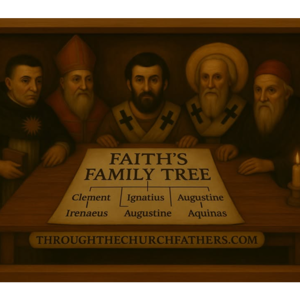

Ignatius of Antioch writes to the Romans not as a theologian in abstraction but as a man already facing death, insisting that true Christian love must not rescue him from martyrdom but allow him to be united to Christ through suffering, reminding us that Christianity is not mere confession but embodied faith proven when nothing visible remains.
Augustine, reflecting on his youth, exposes the sickness of loving sorrow for its own sake, confessing how he once delighted in staged grief that never healed but only inflamed the soul, until he learned that true mercy does not enjoy pain—even compassion longs for the end of suffering, not its spectacle.
Aquinas then clarifies what stands beneath both martyrdom and repentance by distinguishing time, aeviternity, and eternity, showing that God alone possesses life without succession, while all creatures—whether bound to moments or enduring without decay—still receive their being in sequence and therefore cannot share in eternity itself.
Explore the Project:
Through the Church Fathers – https://www.throughthechurchfathers.com
Patreon – https://www.patreon.com/cmichaelpatton
Credo Courses – https://www.credocourses.com
Credo Ministries – https://www.credoministries.org
 View all episodes
 By C. Michael Patton
Ignatius of Antioch writes to the Romans not as a theologian in abstraction but as a man already facing death, insisting that true Christian love must not rescue him from martyrdom but allow him to be united to Christ through suffering, reminding us that Christianity is not mere confession but embodied faith proven when nothing visible remains.
Augustine, reflecting on his youth, exposes the sickness of loving sorrow for its own sake, confessing how he once delighted in staged grief that never healed but only inflamed the soul, until he learned that true mercy does not enjoy pain—even compassion longs for the end of suffering, not its spectacle.
Aquinas then clarifies what stands beneath both martyrdom and repentance by distinguishing time, aeviternity, and eternity, showing that God alone possesses life without succession, while all creatures—whether bound to moments or enduring without decay—still receive their being in sequence and therefore cannot share in eternity itself.
Explore the Project:
Through the Church Fathers – https://www.throughthechurchfathers.com
Patreon – https://www.patreon.com/cmichaelpatton
Credo Courses – https://www.credocourses.com
Credo Ministries – https://www.credoministries.org