
Sign up to save your podcasts
Or

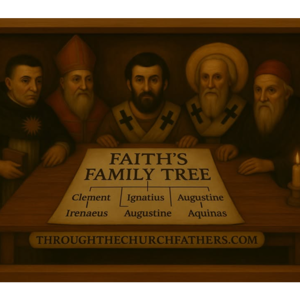

Christ calls us out of nothingness into real life, and today’s readings press the same point from three angles: honor Him as God, follow His commands in costly obedience, and trust the hidden hand that guides even our wandering. In Second Clement (Chapters 1–5), the preacher insists that “confessing Christ” is not mainly saying “Lord,” but living it—fleeing envy, lust, greed, and fear of men, and treating this world as a brief lodging on the way to the kingdom (Isaiah 54:1; Matthew 9:13; 10:16; 10:28). In The Confessions (Book 5, Chapter 8, Section 15), Augustine admits that even his deception of his mother and his restless ambition could not outrun God’s providence; the Lord heard Monica’s tears, not by stopping the ship, but by steering Augustine toward the only answer she ultimately wanted—his belonging to God. And in Summa Theologica (Part 1, Question 31, Articles 1–4 Combined), Aquinas clarifies how we can confess the Trinity without dividing God: the divine persons are distinguished by relations of origin, not by a split essence, and even our words—like “alone”—must be handled precisely so we exclude creatures without denying Father, Son, and Spirit.
Readings:
Second Clement, Second Clement Chapter 1–5
Augustine of Hippo, The Confessions Book 5, Chapter 8 (Section 15)
Thomas Aquinas, Summa Theologica Part 1, Question 31 — Of What Belongs to the Unity or Plurality in God (Articles 1–4 Combined)
Explore the Project:
Through the Church Fathers – https://www.throughthechurchfathers.com
Patreon – https://www.patreon.com/cmichaelpatton
Credo Courses – https://www.credocourses.com
Credo Ministries – https://www.credoministries.org
#ThroughTheChurchFathers #EarlyChurch #Augustine #ThomasAquinas #2Clement #Trinity
 View all episodes
 By C. Michael Patton
Christ calls us out of nothingness into real life, and today’s readings press the same point from three angles: honor Him as God, follow His commands in costly obedience, and trust the hidden hand that guides even our wandering. In Second Clement (Chapters 1–5), the preacher insists that “confessing Christ” is not mainly saying “Lord,” but living it—fleeing envy, lust, greed, and fear of men, and treating this world as a brief lodging on the way to the kingdom (Isaiah 54:1; Matthew 9:13; 10:16; 10:28). In The Confessions (Book 5, Chapter 8, Section 15), Augustine admits that even his deception of his mother and his restless ambition could not outrun God’s providence; the Lord heard Monica’s tears, not by stopping the ship, but by steering Augustine toward the only answer she ultimately wanted—his belonging to God. And in Summa Theologica (Part 1, Question 31, Articles 1–4 Combined), Aquinas clarifies how we can confess the Trinity without dividing God: the divine persons are distinguished by relations of origin, not by a split essence, and even our words—like “alone”—must be handled precisely so we exclude creatures without denying Father, Son, and Spirit.
Readings:
Second Clement, Second Clement Chapter 1–5
Augustine of Hippo, The Confessions Book 5, Chapter 8 (Section 15)
Thomas Aquinas, Summa Theologica Part 1, Question 31 — Of What Belongs to the Unity or Plurality in God (Articles 1–4 Combined)
Explore the Project:
Through the Church Fathers – https://www.throughthechurchfathers.com
Patreon – https://www.patreon.com/cmichaelpatton
Credo Courses – https://www.credocourses.com
Credo Ministries – https://www.credoministries.org
#ThroughTheChurchFathers #EarlyChurch #Augustine #ThomasAquinas #2Clement #Trinity