
Sign up to save your podcasts
Or

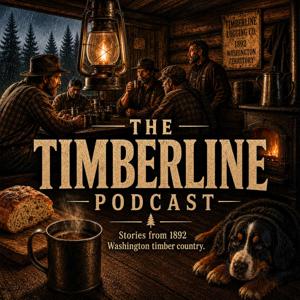


Welcome to Timberline’s first Podcast
You’re not late.
You haven’t missed the beginning.
And you don’t need to know anybody here before you sit down.
There’s room.
I keep coming back to that idea.
Room.
Maybe because I know what it feels like to walk into a place and wonder whether you belong there.
I think most of us do.
You walk into a room where everybody seems to know everybody else.
They’ve got history.
Inside jokes.
Old conversations.
And you’re standing there thinking...
Does the invitation include me too?
I never want Timberline to feel like that.
Maybe because I’ve needed that chair a few times myself.
So when I say there’s room...
I mean it.
Room to tell a story.
Room to think.
Room to change your mind.
Room to say, “I don’t know.”
Room to laugh at something completely inappropriate...
and spend the next few seconds wondering whether you should apologize.
I have some experience with that one.
Room to be unfinished.
We don’t live in a world that gives us much of that anymore.
Everything wants our attention.
Right now.
Your phone wants it.
Your email wants it.
The news wants it.
Somebody you’ve never met has apparently posted something so urgent that an algorithm believes you need to see it before you finish breakfast.
We are all extremely important now.
It’s exhausting.
And I didn’t want Timberline to become another place shouting...
Look at me.
I wanted somewhere we could stay for a little while.
Somewhere a story could take the time it needs.
Somewhere a poem doesn’t have to shout.
Somewhere a conversation can wander off the trail...
and nobody immediately tries to drag it back.
Somewhere we can be curious instead of certain.
Because I’ve spent a lot of my life being curious about people.
I watch them.
I listen to what they say.
And probably even more to what they don’t say.
I notice the extra pause before an answer.
The little change in somebody’s voice.
The laugh that doesn’t sound quite like the other laughs.
The person who says, “I’m fine,” just a little too fast.
That moment when somebody starts telling you one story...
and you realize there’s another one underneath it.
I wish I could tell you I always know what to do with what I notice.
I don’t.
I’ve missed things.
I’ve misunderstood people.
I’ve answered things they weren’t really asking.
I’ve tried to help when...
well...
what I was doing probably didn’t feel very helpful at all.
I’ve said the wrong thing.
And I’ve hurt people without meaning to.
I wish I’d understood some things sooner.
For somebody who writes this much about human connection...
I haven’t always been especially good at it.
Maybe that’s part of why I keep writing about it.
I’m still trying to understand people.
And, if I’m being truthful...
I’m still trying to understand myself.
Why do we love the people we love?
Why do some people make us feel safe almost immediately?
Why do other people make us put our guard up before they’ve even done anything wrong?
Why can one person ask...
“How are you?”
and get...
“Fine.”
But somebody else asks those exact same words...
and somehow gets the truth?
What makes the difference?
I don’t know.
I really don’t.
But I’ve spent an unreasonable amount of my life wondering about it.
And eventually...
I started putting those questions into stories.
I’ve been telling stories for as long as I can remember.
Long before I knew there was such a thing as being a writer.
Long before I knew about structure.
Voice.
Character arcs.
Any of it.
There were just things that happened.
People I remembered.
Moments I didn’t want to lose.
And this strange urge to hold onto them by turning them into stories.
I suppose I’m still doing that.
Now I’m a novelist.
I write historical fiction.
My novel is called Tahoma’s Shadow.
It takes place in 1892, in a logging camp beneath Mount Rainier.
Tahoma.
The mountain.
And I’ve spent so much time mentally living there that some days I know exactly where one of my fictional characters is standing...
and absolutely no idea where I left my glasses.
Apparently this counts as professional development.
When I started the book, I thought I was writing about history.
Logging camps.
Railroads.
Crosscut saws.
Steam donkeys.
Trestles.
Axes.
Springboards.
The machinery of an industry that could bring down trees that had been standing for centuries.
And I love that world.
I really do.
But put yourself there for a second.
You’re standing six feet above the forest floor on a narrow springboard driven into the side of a Douglas-fir.
The tree is older than anyone you know.
Its trunk is wider than the table your family eats dinner around.
Another man is working beside you.
He’s depending on you to read the tree correctly.
You smell fresh-cut wood.
Pitch.
Wet earth.
You hear steel moving through fibers that have been growing for hundreds of years.
The saw bites.
Pull and breathe.
Pull again.
Above you, the crown moves in the wind.
Below you...
the ground looks a whole lot farther away than it did before you climbed up there.
And you know something every faller knew.
If you make the wrong decision...
the tree wins.
That fascinated me.
It still does.
But somewhere in the writing, I realized something.
The tree wasn’t what I was really writing about.
The people were.
And that surprised me.
I thought I was building a historical world.
Instead, I kept writing about brothers.
Fathers.
Women trying to build lives inside circumstances they didn’t choose.
Men who loved people and had absolutely no idea how to say it.
People carrying grief to work because work still had to be done.
People trying to protect each other.
People failing at it.
People trying again.
Apparently I can travel all the way back to 1892...
and still end up writing about the same questions that follow me around now.
Some things are hard to escape.
Because that man on the springboard had somebody waiting for him.
Or maybe he didn’t.
Maybe he wished somebody was.
Maybe he’d argued with his brother that morning.
Maybe he owed money.
Maybe his daughter was sick.
Maybe he was worried about winter.
Maybe he’d fallen in love with somebody he had absolutely no business falling in love with.
Some problems seem to have survived industrialization.
And once I saw that...
history changed for me.
History gets very tidy when we look backward.
We build timelines.
This happened.
Then this happened.
The railroad came.
The town grew.
A president was elected.
A war began.
An invention changed everything.
We put dates beside events...
and eventually history starts looking inevitable.
But it wasn’t inevitable to the people living it.
They didn’t know what happened next.
They woke up Tuesday morning without knowing what Wednesday would bring.
They worried about money.
They worried about their children.
They lost people.
Made plans that failed.
Trusted people who disappointed them.
Said things they wanted to take back.
Laughed at terrible times.
Fell in love with inconvenient people.
And somehow...
kept going.
They were us.
Different clothes.
Different tools.
Different world.
Same human heart.
That realization changed the novel.
And somewhere along the way...
it changed Timberline too.
There’s a line in Tahoma’s Shadow I keep coming back to.
The mountain keeps count.
I don’t mean that literally.
Although if Mount Rainier has spent the last several thousand years keeping detailed records, I sincerely hope somebody else is handling the filing.
What I mean is...
things leave marks.
People leave marks.
Choices leave marks.
What we build matters.
What we damage matters.
What we repair matters.
Love leaves something behind.
So does loss.
So does kindness.
So does cruelty.
We remember.
The teacher who believed in us.
The friend who showed up.
The friend who didn’t.
The person who remembered something small.
The sentence somebody said twenty years ago that never quite left us.
The apology.
The apology that never came.
The hand on our shoulder.
The door closing.
The person who stayed.
We carry each other.
And I think that’s part of why Timberline became something different from what I expected.
I started it as a place for my writing.
Stories.
Essays.
Poetry.
The world of Tahoma’s Shadow.
Then one day...
it really hit me that something had changed.
I opened Timberline and people were…
You pausebefore your next question.
There’s mischiefbehind your smile,curiosity leaning closerto see what I’ll do with it.
At first,there are only small things—
a laugh that comes back softer,a thought left between usafter it could have been taken back.
I notice where you soften.Where you tease.Where a word meant lightlystays between usafter the sentence ends.
And I begin to understandthe differencebetween being near youand being invited nearer.
Barely a step—
and somehowI know the difference.
Maybe that’s whyI don’t want to hurry.
I want the distance between usto close slowly enoughthat neither of us has to wonderwhether the othermeant to move.
So we leave room.
For another question.Another laugh.Another momentthat could disappearbut doesn’t.
Until silence itselfbegins to feelless like distanceand more like somewherewe both know how to stay.
And somewhere along the way,your warmth became somethingI could recognizewithout seeing it—
like cedar after sunset,cool at the surface,still holding daylightbeneath the grain.
What surprised mewasn’t that the warmth remained.
It was resting my handagainst the cedar
and realizingthe second warmthwasn’t the wood.
Among the Nisqually and Puyallup, courtship and marriage were not simply matters of a man choosing a woman. A young woman’s preference could matter from the beginning, and she might make clear which man interested her or whom she favored. But marriage also joined families, not only two individuals. Parents and relatives weighed the match, the standing and character of the prospective spouse, and the relationships the marriage would create. In many cases, the woman’s preference helped begin the process, but the final decision rested with the families.*
*Marian W. Smith, The Puyallup-Nisqually (Columbia University Press, 1940). Smith conducted fieldwork in 1935–36, recording Puyallup-Nisqually traditions covering roughly 1790–1890; Yale’s eHRAF rates it as “excellent primary data.”*Nisqually entry in Encyclopedia.com, which similarly states that parents arranged marriages and that the groom’s family formally approached the bride’s family, followed by gift exchange and ceremony.
Among the Puyallup-Nisqually, premarital sexual relationships did occur, including between young people who hoped to secure a marriage their families might otherwise oppose. But premarital intercourse was not universal, and virginity at marriage could carry considerable social prestige for a young woman.
If something you’ve read here made you stop, think, laugh, remember, or see something a little differently, I’d love for you to stay.
Timberline is more than a place for my stories. It’s a growing community of writers, readers, and curious people who believe there’s always something new to learn—and something we can help one another improve.
We talk about writing, creativity, life, storytelling, and the messy process of developing the skills and talents we’ve been given. We celebrate each other’s successes, offer honest and thoughtful feedback, share what we’re learning, and make room for different voices and experiences.
You don’t have to arrive with everything figured out. None of us do.
Pull up a chair. Bring your stories, your questions, your ideas, and whatever you’re working on.
There’s always room for another chair around this fire. 🌲🔥
Subscribe and join us.
SCRIPT DOES NOT MATCH PODCAST WORD FOR WORD
The river was louder on Sundays.
Mae Thompson knew it was not literally true. The Nisqually did not care about the Sabbath. But without chains dragging, axes ringing, men calling across clearings, and Ol’ Skookum coughing somewhere beyond the ridge, the water seemed to take the valley back.
Mae sat on a weathered cedar log above a crescent of pale gravel and let it.
The morning was cool beside the river. Wet stone, cedar bark, and black earth scented the air. Sunlight moved through the firs in broken pieces, brightening one stretch of current while the next stayed dark beneath the branches. A breeze came downstream, lifted the loose edge of Mae’s skirt, and tried to turn a page of the drawing pad across her knees.
She caught it with one hand.
“You and I are not friends.”
The river offered no opinion.
Mae went back to the fish.
Scritch. Scritch. Scritch.
It held behind a submerged rock perhaps twenty feet from shore, almost motionless until she watched closely enough to see the work of staying there. The current pressed. The tail corrected. For a heartbeat the fish turned and flashed silver beneath the surface.
Mae drew quickly.
Not every scale. Not every fin. She wanted the shape of the thing—the way it could appear still while working constantly to remain where it had chosen to be.
A kingfisher cut low across the water and vanished downstream. The breeze returned, cooler this time, carrying the smell of damp gravel and crushed fern. It lifted a strand of hair across Mae’s cheek and worried the corner of the page again.
She pinned the paper beneath her palm until it passed.
Behind her, Timberline existed mostly as suggestion. A cabin door shut. A child called for somebody. Farther off came a burst of laughter and the faint clink of porcelain. Sunday had softened the camp without putting it entirely to sleep.
Church would gather them soon enough.
Clara had made certain Mae remembered that before she left.
“Church.”
“I know.”
“Before church.”
“I know that too.”
Mae had escaped before knowledge became supervision.
Her pencil had gone blunt.
“Naturally.”
She opened the little knife beside her and shaved the cedar casing back until the graphite came sharp again. One curl of wood landed on her skirt. Another stuck to the page.
Mae blew it away.
“Better.”
She folded the knife and set it beside her.
The fish was gone.
Mae leaned forward, searching the water.
Nothing.
Then a larger fish broke the surface upstream with a sudden slap. Mae’s pencil jumped half an inch off the page. A dark back rolled, water flashed, and the fish disappeared before she could see more than the wet curve of it.
Mae watched the rings flatten into the current.
There were worse ways to spend a Sunday morning.
She had just lowered her pencil when something changed behind her.
Not a voice.
A missing sound.
The small bird working through the salal went still.
Then came the crunch of one boot on gravel.
Mae’s pencil stopped.
Another step.
Then nothing.
She did not turn.
Nearly two months earlier, a quiet visit to the river had somehow acquired Jack Mercer, Sam Mercer, cedar kindling, one badly judged backward step, and Pete Hawkins standing in the Nisqually with water pouring off him while attempting to retain whatever dignity the river had left him.
Mae pressed her lips together.
She had drawn the wet hat afterward.
She had also drawn the ears.
The ears had not been necessary.
Mae remained satisfied with them.
Behind her, the person on the gravel still had not moved.
That narrowed the possibilities considerably.
Mae finally looked over her shoulder.
Pete Hawkins stood at the edge of the trees.
Far back.
Not politely far.
Not cautiously far.
Far enough that Mae briefly wondered whether he intended to conduct the entire conversation by shouting across the county.
He had washed.
That was the first thing she noticed, which irritated her immediately.
His hair was still damp at the temples, though one section had already escaped whatever comb had attempted to discipline it. He wore a clean shirt, brushed trousers, and boots polished well enough to prove effort if not success. When the breeze shifted, Mae caught the faint smell of soap.
His cap was in his hand.
Pete looked less like a man who had come to the river looking for Mae than one who had discovered her there and was now trying very hard not to make that discovery her problem.
“Morning, Mae.”
“Morning, Pete.”
He stayed where he was.
The river filled the space he left between them.
Pete looked toward the river.
Mae looked back at the drawing pad and waited for the nervous grin, the explanation, or some spectacular piece of reasoning involving weather, church, a missing tool, or a wandering mule.
Nothing came.
Mae drew one short line on the page.
Scritch.
Pete remained among the trees.
She drew another.
Scritch.
The absurdity of it began to build.
Finally Mae looked back at him.
“You lost?”
“No.”
“You waiting for somebody?”
“No.”
Mae glanced around at several acres of perfectly serviceable outdoors.
“Then why are you standing all the way up there?”
Pete looked at the distance between them.
For the first time, some of the uncertainty Mae remembered from June moved across his face.
But he did not step forward.
“Wasn’t sure how close you wanted me.”
The river seemed suddenly louder.
Pete shifted his cap from one hand to the other, but his boots remained exactly where they were.
Of everything he might have carried away from June, he had carried her words.
Mae lowered her eyes to the drawing pad.
The unfinished fish waited beneath her pencil.
She made herself add another line.
“You don’t have to stand there.”
The invitation sounded larger once she heard it aloud.
Pete did not move immediately.
“No?”
“Pete, if I wanted you back in camp, I’d have said so.”
His mouth twitched.
There he was.
Not much.
But there.
“All right.”
He came down from the tree line slowly, as if giving her time to change her mind. Gravel shifted beneath his boots; fern brushed his trouser leg.
Mae watched him choose where to stop.
There was room beside her on the cedar log.
Pete did not take it.
Farther along the cedar was another place to sit, close enough for conversation but leaving room between them.
Pete looked at it, then at Mae.
She gave the smallest nod.
He sat at the farther end anyway.
More room than she had asked for.
Pete set his cap beside one thigh. From his pocket he took a worn work glove, a short length of thread, and a needle already stuck carefully through the leather near the cuff.
The glove was darkened at the palm from work. When Pete flexed it open, the dry hide creaked.
Mae stared.
Pete noticed.
“What?”
“Nothing.”
“You’re looking at my glove.”
“I’m looking at the fact that you apparently came prepared to sit quietly.”
Pete considered the glove.
“Thought I might need something to do with my hands.”
Mae looked down before the smile could become too obvious.
“That may be the wisest thing you’ve done all summer.”
Pete threaded the needle through a worn seam.
The needle made almost no sound going in. The thread did—a tiny, fibrous rasp as he drew it through the old leather.
“Been a slow summer for wisdom.”
A laugh escaped through Mae’s nose before she could stop it.
Pete’s face brightened, then he seemed to remember himself and looked down at the glove.
Mae had liked the grin before he put it away.
She turned back to the river.
The fish she had been drawing was still gone.
The page remained.
So did Pete.
Mae set the pencil to paper again.
Scritch. Scritch.
Beside her, leather creaked faintly as Pete drew the thread through.
The Nisqually moved around stone, indifferent to both of them.
For several minutes, neither of them spoke.
Mae had expected the silence to become awkward.
It did not.
Mae drew.
Scritch. Scritch.
Pete worked the needle through the glove.
The leather resisted him once. He pushed harder, frowned, then stopped before the needle slipped. Mae watched him turn the glove, study the worn seam, and try again from a different angle.
The point went through.
Pete pulled the thread after it with a slow rasp.
He did not swear.
Mae looked down quickly at her page.
The old Pete might have blamed the glove.
This Pete turned it over and tried again.
Mae drew another line beneath the fish.
The fish—or another like it—had returned to the quieter seam behind the submerged rock. Its tail made one small correction, and silver-green flashed beneath the surface.
Mae shaded the water around it.
Pete glanced toward the fish but said nothing.
That silence began to irritate her.
Not because she wanted him talking.
Because she was beginning to notice that she did.
Mae shifted the drawing pad against her knees.
Pete drew the thread through another stitch.
She waited.
Nothing.
She drew half a dozen lines that did not improve the fish.
A gust moved through the firs and reached the riverbank cool off the water. Mae put one palm over the top edge of the pad.
The breeze lifted a strand of hair across her cheek.
She ignored it.
It tickled the corner of her mouth.
She tried to blow it away.
It came back.
Mae made an annoyed sound and tucked it behind her ear.
Pete looked over.
She caught him.
He looked immediately back at the glove.
Mae stared at him.
Pete concentrated on the leather with the solemnity of a surgeon.
“You can look at me, Pete.”
The needle stopped.
He lifted his eyes.
“I know.”
“Do you?”
“Pretty sure.”
Mae waited.
Pete’s mouth twitched.
There he was again.
“You’re acting like I told you never to turn your head in my direction.”
“Didn’t want to overdo anything.”
“Looking is overdoing it?”
Pete considered that with more seriousness than the question deserved.
“Depends what a man’s looking at.”
Mae felt the answer land somewhere lower than she wanted it to.
Pete seemed to realize what he had said at exactly the same moment.
His ears colored.
Mae looked back at the river before her face gave him anything useful.
“That sounded better in your head, didn’t it?”
“Most things do.”
Mae laughed.
Pete looked pleased enough with himself that she almost regretted giving it to him.
Almost.
He went back to the glove, and the silence returned easier than before.
Mae let herself draw for a while.
The fish shifted into stronger current, worked its tail twice, then slipped back toward the quieter seam. Mae followed it with quick graphite marks.
A soft gray smudge had appeared along the outside of her little finger.
She rubbed at it with her thumb.
It spread.
“Well, that helped.”
Pete looked over again.
Mae held up the gray side of her hand.
“Artist’s mark?”
“Artist’s incompetence.”
“Looks official.”
“You would know.”
“About incompetence?”
Mae glanced at him.
“You said it.”
Pete nodded solemnly.
“Been studying.”
That made her smile again.
Mae had expected being alone with Pete again to require management.
Instead, he repaired a glove, left her room, and somehow she was enjoying herself.
She looked down at the fish and realized she had stopped drawing again.
Pete noticed.
“Lose him?”
Mae looked toward the water.
The fish had vanished beneath glare.
“Maybe.”
Pete leaned forward slightly, forearms against his thighs, but did not move his boots.
“There.”
Mae followed his gaze.
The fish was farther downstream now, holding in another patch of softer water beneath a darker shelf of current.
“You have better eyes than I thought.”
Pete looked mildly wounded.
“I work around falling trees.”
“That does seem like a profession where seeing would be useful.”
“They encourage it.”
Mae’s pencil found the page again.
“How’s it going?”
“The seeing?”
“The work.”
Pete looked at her, then back at the glove.
“Better.”
“That sounded convincing.”
“It is better.”
“Mm.”
He threaded another stitch.
Mae waited.
Pete finally added:
“I don’t get yelled at near as much.”
“A glowing recommendation.”
“I measure progress where I find it.”
Mae smiled down at the page.
“Who yells at you most?”
“Depends what I did.”
“That wasn’t what I asked.”
“I know.”
“Pete.”
He laughed softly, quieter than the laughter Mae usually heard from him in camp.
“Jack if it can kill me. Olav if I’m near iron. Sam if he thinks I ought to know better.”
Mae considered that.
“And if you don’t know better?”
Pete pulled the thread tight.
“Then Sam tells me twice.”
“Does that help?”
“Usually.”
“You mind it?”
“Being told?”
“Being corrected.”
He looked down at the glove in his hands.
For a moment, Mae thought he might joke.
He did not.
“I mind being wrong.”
The answer came plain.
He worked the needle through another hole.
“Don’t mind somebody keeping me from staying that way.”
Mae’s pencil stopped.
Pete seemed unaware of what the sentence had done.
Or perhaps he knew and had learned not to rush in behind his own words.
Mae looked at his work-roughened hands. His fingers were not elegant with the needle. They were careful.
She looked back at the river.
“That’s a useful habit.”
“Getting things wrong?”
“Learning before it kills you.”
“Jack says similar things with fewer words.”
Mae could imagine.
“Feet. Now.”
Pete’s head came up.
“You’ve heard him.”
“Everyone has heard him.”
That got them both laughing.
A kingfisher cut low across the water and vanished downstream.
Pete watched it go.
“Show-off.”
“Better at fishing than you?”
“Almost certainly.”
“Can you fish?”
“Enough to disappoint a fish.”
Mae laughed again.
The wind came back lightly, not enough to disturb the drawing pad this time. It moved through the grass at their feet, bending the seed heads in one direction. Mae felt cool air slide under the loose edge of her sleeve. Beside her, the repaired glove gave a faint leather creak as Pete flexed his fingers.
Mae became aware of the distance between them again.
Still there.
More than enough room for another person.
She looked at Pete.
He was tying off the stitch now, brow lowered in concentration.
“You’re awfully quiet today.”
Pete looked up.
Mae let the words hang between them.
He glanced toward the river.
“Last time I figured talking was helping.”
Mae’s mouth threatened a smile.
“And now?”
Pete rubbed the knot flat beneath his thumb.
Then he looked out at the current.
“Now I figure listening might.”
Pete flexed the repaired seam once and inspected his work.
Mae lowered her eyes.
The pencil touched the page.
Scritch.
For a while after that, they let the morning be ordinary.
Mae drew. Pete tightened one stitch.
From camp, a man called that he could not find his collar, and a woman answered with enough volume to suggest it was exactly where she had already told him it was.
Pete’s shoulders shook once.
“Sunday.”
“Apparently.”
“Dangerous day.”
“For collars?”
“For men who don’t listen.”
Mae looked over.
Pete was smiling at the glove.
This time she let herself smile back.
The wind moved through the treetops again and lifted the loose hair at Mae’s temple.
She pressed a palm to the top edge of the drawing pad. Pete noticed and looked away before the pages could show him anything they had not been invited to show.
A gust came down the river. Grass bowed. Ferns dipped. Mae put one hand across the pad.
“Here we go.”
Pete looked up.
“What?”
“Nothing you can help with.”
That earned her the smallest lift of one eyebrow.
Mae ignored him and held the page flat.
The first gust passed.
Then a stronger one caught her skirt, her hair, and finally the pages.
“Oh, come on.”
Fffft—ffft—ffft.
Several sheets flipped backward before Mae trapped them under her forearm.
“Pete—”
He turned toward her because half the riverbank appeared to be trying to leave.
Then he stopped.
Not physically.
His body was already still.
His face stopped.
Mae caught the pages against her forearm.
The wind moved on.
Fabric settled against her legs. The loose strands of hair clung to her cheek for another heartbeat before falling away. The drawing pad lay quiet again beneath her palm.
Mae gathered the lifted sheets and pressed them flat.
Then she looked at Pete.
Pete was studying the opposite bank with great concentration.
Mae followed his gaze to a perfectly ordinary gray rock half in the water.
Apparently geology had become urgent.
Mae looked down at the pages she had caught.
Her stomach dropped half an inch.
There.
Not the fish.
Not the river.
Not the wet hat with the unnecessary ears.
Pete.
The drawing was several pages back, made from memory after Mae had watched him helping Olav near the iron shed. Pete had stood listening to a lesson about a shackle and chain—no grin, no interruption, no glance around to see who was watching.
Mae had drawn the concentration around his eyes and the set of one shoulder.
She had drawn him steadier than he usually believed himself to be.
Apparently Pete had seen it.
His eyes had widened, his mouth had opened, and now the rock across the river had become the most important object in Pierce County.
Mae pressed the pages together.
Pete continued studying the rock.
Mae put the pencil back to the page.
Scritch.
Pete’s jaw tightened while the rock remained under examination.
Mae let him suffer for one more breath.
“Pete.”
“Mae.”
“You saw it.”
The river went on moving.
Pete’s eyes closed briefly.
Then he turned his head.
“Wasn’t trying to.”
Mae’s grip on the pad loosened.
“I know.”
Pete looked at her then, no longer braced for punishment.
Mae straightened the top edge of the pad with her thumb.
Pete glanced down once.
Then away.
He picked up the repaired glove and ran his thumb along the seam as if checking it for the fifth time might produce new information.
He did not ask.
The old Pete would have been halfway through a question before the page settled.
Mae waited until she could no longer tell whether she was testing him or herself.
“You aren’t going to ask?”
“Ask what?”
Mae narrowed her eyes.
Pete’s mouth twitched.
“That one didn’t count. I know what.”
“Good.”
He looked at the pad again.
Then at the river.
“Didn’t reckon it was mine to ask for.”
Mae’s thumb stopped against the edge of the page.
Pete looked back toward the river and left the answer where he had put it.
The portrait lay hidden again beneath the fish and river studies.
She could leave it there.
Instead, Mae rubbed the graphite smear along her hand with her thumb and turned back three pages.
Pete heard the paper move.
He did not look.
Mae found the portrait.
There he was—Olav’s post in rough lines behind him, the rope at his hip only suggested, his sleeve unfinished.
But his face was complete.
Mae looked at it longer than she meant to.
Then she turned the pad toward him.
Pete still did not look down.
He looked at Mae.
She gave the smallest nod.
Only then did he lower his eyes.
The river filled the silence between them.
Pete said nothing for several breaths.
Embarrassment gave way to something quieter as his gaze moved carefully over the rope, the post, the angle of his own shoulder.
Pete swallowed.
“That’s me.”
Mae glanced at him.
“I had gathered.”
He ignored that.
His eyes remained on the paper.
“When’d you draw it?”
“A while ago.”
“Where?”
“Near the iron shed.”
Pete frowned faintly.
Then recognition arrived.
“Olav was showing me the new shackle.”
Mae nodded.
“You were listening.”
Pete looked up.
The words seemed to surprise him more than the portrait had.
“Well. Yeah.”
Mae nearly smiled.
“I know.”
Pete looked back at the page.
His voice, when it came, was quieter.
“Didn’t know I looked like that.”
Mae’s fingers tightened slightly around the edge of the pad.
There it was.
The place she could retreat from.
She could joke.
She could tell him she had improved him for artistic purposes.
She could say the light had been flattering.
She could take the page back and bury the whole thing beneath a discussion of fish.
Instead Mae looked at the drawing again.
“You don’t.”
Pete turned toward her.
“What?”
Mae could feel warmth beginning at the base of her neck.
She disliked that he might see it.
She disliked more that she was going to say the thing anyway.
“Not to everybody.”
Pete did not move.
The repaired glove rested forgotten in his lap.
Mae looked back at the portrait because looking at Pete himself had become abruptly more difficult.
For a moment, only the current remained, and the empty stretch of cedar between them seemed much smaller.
Pete let out a breath.
Mae turned the pad back toward herself.
Neither of them spoke.
She felt exposed, but not unsafe.
Mae lowered the top pages over the portrait.
The fish returned to the front.
Pete picked up the glove again.
He did not begin sewing.
For several breaths he simply held it.
Then he said, carefully, “Fish still there?”
Mae looked toward the current.
The seam behind the rock was empty.
“No.”
Pete nodded.
“Probably got tired of being studied.”
Mae looked at him.
Pete’s eyes widened a fraction.
“That wasn’t—”
Mae laughed.
The tension broke so cleanly that Pete laughed too, head dropping toward the glove.
“I swear, I ought to be allowed to hear myself before I say things.”
“That would give you an unfair advantage.”
“Against who?”
“Mostly yourself.”
He considered that.
“Fair.”
The warmth between them settled into something easier.
Mae found the fish again farther down the seam and added two lines to the page.
Scritch. Scritch.
Pete ran the needle beneath the last stitch and pulled the thread tight.
For a while they spoke about nothing important.
Pete claimed Maggie’s Sunday meal would taste better after church because hunger had time to become righteous.
Mae told him hunger had never needed religious instruction.
Somewhere behind them, a child shouted triumphantly about finding a shoe.
Pete lifted one finger. “See? Miracle.”
Mae laughed.
The conversation wandered nowhere in particular, and she let it.
Mae shaded the underside of the submerged rock.
Pete tied off the thread and bit the end clean.
Mae’s attention caught briefly on his mouth.
Annoying.
She looked back at the page.
Pete flexed the glove.
The repaired seam held.
“There.”
Mae looked at it.
“Useful?”
“Almost dangerous.”
“Don’t let Jack hear you say that.”
Pete slipped the glove over one hand and opened and closed his fingers twice.
“Jack hears things nobody says.”
“That is because most of you are loud enough to think in public.”
Pete smiled.
Then Mae saw the smile fade a little.
The river encounter in June sat between them again as unfinished business.
She put the pencil across the top of the pad.
“Pete.”
“Yeah?”
“I told you something last time.”
Pete’s expression settled.
“I know.”
“And?”
He looked down at the glove on his hand.
His thumb worked once across the repaired seam.
Mae waited.
Pete took the glove off again.
“Figured you’d already done your part.”
Mae turned toward him a little more.
“What part?”
Pete folded the glove slowly, once at the cuff.
“Telling me.”
The answer rested between them.
Mae did not speak.
Pete glanced toward her, then away again.
“Didn’t seem right making you tell me twice.”
Mae’s fingers loosened around the pencil.
She looked at the empty cedar between them.
“Why’d you stay away, Pete?”
Pete stared at the river for a moment.
“Figured you meant what you said.”
“I did.”
“Then I figured I ought to leave you enough room that you didn’t have to ask for it again.”
Mae picked up the pencil and added one small line along the fish’s back.
Scritch.
Pete waited.
She liked that more than she wanted to.
“All right.”
“All right what?”
Mae kept her eyes on the page.
“You listened.”
Pete looked faintly confused by the seriousness of the statement.
“Tried to.”
“Most men say that after they’ve already explained why they didn’t.”
Pete thought about it.
“Seems a waste of breath.”
Mae laughed softly.
“It is.”
Mae let the conversation breathe.
She worked at the darker line beneath the fish’s belly while Pete sat with the mended glove folded in both hands.
After a while, she said:
“There was something else you didn’t understand last time.”
Pete looked over. “All right.”
“You liking me wasn’t the problem.”
His ears went pink. “I gathered that. Eventually.”
Mae almost smiled. “You could afford to be foolish that day in a way I couldn’t. You could fall in the river and come back a fool. If people made a story out of why I was alone with you, or what I’d allowed, I could come back a different kind of woman in their eyes.”
Pete’s humor disappeared.
“That story wouldn’t have belonged to me anymore.”
He looked down at the glove.
“I didn’t think about that before.”
“I know.”
“I have since.”
He frowned at the river. “A man can be stupid and mostly folks say he’s stupid. A woman does the same thing and folks start asking what kind of woman she is.”
“That’s part of it.”
“Seems crooked.”
“It is.”
Mae let the quiet stand.
“If we’re going to spend time together, you need to understand something. Me asking you to be careful isn’t the same as me saying I don’t want your company.”
“All right.”
“And I need to know I’m not the only one thinking past the next ten minutes.”
Pete looked up. “You asking whether I do?”
“I am now.”
“Sounds like a trap.”
“Only if the answer is no.”
Pete gave a helpless little shake of his head.
“What do you want, Pete?”
“Right now?”
“Eventually. From your life.”
“Oh.”
He looked at the river and searched for an answer.
“Work, I reckon.”
Mae waited.
Pete glanced over.
“That’s not enough, is it?”
“That tells me nearly nothing.”
He laughed once.
“All right.”
He thought again.
“I want to be good at something.”
“That surprised you,” Pete said.
“A little.”
“I don’t mean anybody-knows-my-name good. I mean useful. The kind where a man can tell me to do a thing and not come back wondering if I’m under it, tangled in it, or arguing with it.”
Mae hid a smile. “You’re describing staying alive and getting paid for it.”
“That too.”
Mae picked up the pencil again.
“You still like the woods?”
Pete looked toward the trees.
“Some days.”
Mae drew one line.
“That wasn’t what I asked.”
Pete sighed.
“You do that a lot.”
“Ask what I mean?”
“Make me answer it.”
“It’s a terrible habit.”
“I’m noticing.”
Mae waited.
Pete leaned forward, elbows on his thighs.
“Yeah. I do.”
“Why?”
He frowned.
Mae almost told him he did not have to answer.
Then Pete said:
“Because there’s something honest about it. Tree doesn’t care what you meant to do. Rope doesn’t care if you were tired. You saw it right or you didn’t.”
“And if you didn’t?”
“Jack. Feet. Now.”
Mae laughed.
“You reckon you’ll stick with it?”
Pete glanced at her.
“Reckon I’m finally getting useful.”
Mae lifted one eyebrow.
Pete closed his eyes.
“That wasn’t what you asked.”
“No.”
“You enjoy this too much.”
“A little.”
Pete sat back.
The cedar gave a faint dry creak beneath his weight.
Then he nodded.
“Yeah.”
Mae waited.
He looked directly at her.
“I mean to stay. Long as they’ll have me.”
“And if they don’t?”
“Find another crew.”
“Still logging?”
“If I can. I think I can get good at it.”
Mae looked down at her sketchbook.
The portrait beneath the top pages seemed to have become heavier simply because Pete now knew it was there.
She turned the pencil between her fingers.
“Do you want a house?”
Pete nearly dropped the glove. “You jumped from rope to a house.”
“Life moves quickly.”
He recovered. “One that don’t leak. Stove. Table. Porch might be nice.”
For one instant Mae saw a porch under trees, boots by a door, evening light on rough boards.
She put the picture away.
“Anything else?”
“Enough work to keep it.”
Mae nodded slowly.
Her pencil rested motionless across the page.
She drew another line on the fish.
Scritch.
Pete watched her hand.
“Your turn,” Pete said. “What do you want?”
“Work I’m good at. Time to draw.”
“You already have both.”
Mae looked at him.
“What?”
“Your baking. The drawings.”
“I want people to understand the drawing counts too.”
Pete nodded once.
“And I want choices.”
“Seems fair.”
“It should be.”
“I know.”
The silence sat easier now.
A faint smell of cooking drifted from camp, and Mae’s stomach noticed before she did.
Pete noticed too.
“Hungry?”
Mae frowned at him.
“No.”
Her stomach made a small, treacherous complaint.
Pete looked toward the river.
Mae stared at him.
His mouth compressed.
“Go ahead.”
“I didn’t say anything.”
“Your face did.”
Pete turned back toward her.
“Apparently I possess one of those.”
Mae laughed so suddenly she had to catch the drawing pad before it slid from her knees.
Pete laughed too.
Still smiling, Mae looked at him.
“What is it you like about me, Pete?”
Everything in Pete stopped.
The glove.
His hands.
His face.
Mae had the distinct impression he had just discovered the bridge beneath him ended three feet sooner than expected.
Mae waited.
Pete looked at the river.
Then at the trees.
Then, incredibly, toward the same rock across the river that had nearly saved him from the portrait.
Mae followed his gaze.
“It cannot help you twice.”
Pete shut his eyes.
Mae smiled.
“Well?”
He looked at her.
“You’re pretty.”
Mae let one eyebrow rise.
Pete winced.
“I know that ain’t all of it.”
“Good.”
“I just started with the obvious.”
“You certainly did.”
Pete rubbed both palms over his knees.
Mae waited.
“And you’re funny.”
“Am I?”
“Mostly when you’re being mean to me.”
“That seems unfortunate.”
“For me, yes.”
Mae smiled.
Pete looked down at his hands. “And you don’t rattle easy.”
“You have seen me rattled.”
“Usually because of me.”
“There is a pattern.”
“I’m working on it.”
Mae looked back at him. “Keep going.”
“There’s more?”
“I certainly hope so.”
He laughed nervously.
Then he went quiet.
His gaze dropped to the drawing pad.
“You can do that.”
“Draw?”
“Yeah.”
“You noticed.”
Pete gave her a look.
“There is a picture of me in there.”
Mae’s face warmed.
“That is not the point.”
“It is from where I’m sitting.”
Mae tried not to smile.
Pete continued.
“You see things.”
The words came slower now.
“Not just drawing-things.”
Mae waited.
Pete rubbed one thumb across the other palm.
“People.”
“That is extremely specific.”
“I’m getting there.”
Mae let him.
Pete looked toward the river, then back at her.
“You know when somebody’s pretending they’re all right. You notice who needs help, and you don’t make a big show of helping.”
Mae said nothing.
“You’re smart. You work hard.”
“You have been watching.”
Pete looked briefly alarmed.
Mae spared him. “Continue.”
“And you’re kind.”
Mae’s pencil stopped turning between her fingers.
Pete kept his eyes on his hands.
“Not nice all the time.”
Mae’s mouth opened.
“That came out wrong,” he said quickly. “I mean you’ll tell somebody when they’re being foolish. But you don’t embarrass people just because you can.”
Mae went still.
“You could’ve,” Pete said.
“I drew the ears.”
“Nobody’s perfect.”
Mae laughed.
His voice stayed gentle. “You could’ve made me feel smaller than I already did. You didn’t.”
Mae looked at the empty space between them.
For the first time all morning, it seemed excessive.
Pete had not finished.
“And…”
Mae waited.
Pete looked at her, then away.
“You make me want to be less of a fool.”
Mae stared at him.
The river moved around the submerged rock.
The fish held behind it.
“Less?”
Pete looked back at her.
His expression was completely serious for perhaps half a heartbeat.
Then the old Pete surfaced.
“I’m trying not to promise miracles.”
Mae laughed so hard the pencil nearly slipped from her hand.
Pete laughed too.
When it faded, she found herself still looking at him.
The empty stretch of cedar between them no longer seemed quite so necessary.
Mae looked back at the page and added two strokes beneath the fish’s belly.
Scritch. Scritch.
The smell from camp came stronger now—woodsmoke and something savory warming in iron.
Pete’s stomach made a small sound.
Mae looked over.
Pete looked offended.
“That wasn’t me.”
“Of course not.”
“River.”
Mae looked at the Nisqually.
“The river is hungry?”
“Big country.”
Mae shook her head, still smiling.
She rested the pencil across the pad.
“Suppose we did keep company.”
Pete stopped breathing.
Mae did not look at him immediately.
She watched the fish.
The silence beside her grew so complete that even Pete’s stomach seemed to understand the situation and behave itself.
Finally Mae turned her head.
Pete was staring at her.
His face had gone carefully blank.
“Suppose?”
“Suppose.”
Pete looked down at the glove.
Then at the river.
Then, apparently deciding no rock in Washington Territory was qualified to save him from this question, back at Mae.
“All right.”
“What would you reckon changed?”
“Changed?”
“Between us.”
His ears colored.
Mae let him work.
Pete rubbed the folded edge of the glove against his palm.
“Reckon I’d get to ask if you wanted to spend some time with me.”
Mae tilted her head.
“You can ask that now.”
Pete frowned.
“That’s true.”
Mae waited.
He glanced toward her.
“You’re going to make me keep going.”
“Probably.”
Pete sighed, but there was no resistance in it.
He thought again.
“Reckon the difference is we’d both know what we meant by it.”
Mae’s fingers stilled on the pencil.
Pete looked at the river as he continued.
“Not why we were sitting by the river.”
“That was clear enough.”
“Eventually.”
Mae smiled.
Pete’s mouth moved too.
Then he became serious again.
“We’d both know it might be going somewhere.”
Mae looked down at the drawing pad.
“And what would you expect from me?”
Pete answered too quickly.
“Nothing.”
Mae looked at him.
Pete winced.
“That sounded wrong.”
“A little.”
“I mean not nothing.”
Mae waited.
Pete rubbed both hands over his knees.
“I’d hope you wanted to spend time with me.”
Mae nodded once.
“That seems reasonable.”
“And I’d hope…”
He stopped.
Mae watched him.
Pete looked almost embarrassed by what he was about to say.
“I’d hope if something bothered you, you’d say so.”
Mae’s expression changed.
Pete noticed.
“So I don’t have to guess.”
“Men everywhere thank you.”
Pete smiled faintly.
Then he rubbed the folded edge of the glove against his knee.
“And I don’t reckon keeping company means I get to start deciding things for you.”
Mae watched him.
“You’d still…”
He frowned at the glove.
“You’d still be you.”
“That is encouraging.”
Pete looked up.
“I’m doing poorly again, ain’t I?”
“You’re wandering.”
“Right.”
He tried again.
“I’d still have to ask, Mae.”
Mae looked at him fully.
“And if you asked and I said no?”
Pete met her eyes.
“Then you said no.”
Mae held his gaze for a moment longer than she had meant to.
“All right.”
Pete’s eyebrows lifted.
“That one was all right?”
“Don’t become impossible.”
“Trying not to.”
Mae’s mouth twitched.
Voices carried more clearly from camp now. Sunday was moving.
Mae found the outline of the submerged rock again with her pencil.
“Would you mind people knowing?”
“Knowing what?”
Mae did not rescue him.
His eyes widened slightly.
“Oh.”
Mae waited.
Pete looked toward camp.
“That I was keeping company with you?”
“Yes.”
He considered.
“Wouldn’t mind.”
Mae looked at him, suspicious of how quickly the answer had come.
Pete added:
“Might mind what Sam does with the information.”
There he was.
Mae smiled.
“And Jack?”
Pete became still.
Very still.
Mae waited.
Pete looked toward the trees as though Jack Mercer might materialize from them merely because his name had been used irresponsibly.
“I reckon I can mind Jack a little.”
Mae laughed.
Pete grinned.
Then the grin faded.
His eyes returned to Mae.
“But no.”
“No what?”
“I wouldn’t mind people knowing.”
Mae stopped drawing.
Pete turned the glove over in his hands once.
“If I mean it, Mae…”
The river filled the pause for him.
“I don’t reckon you ought to carry all the risk of folks knowing.”
Mae looked at him.
The empty cedar between them now felt almost ridiculous.
She rested the pencil across the pad.
“Pete.”
“Yeah?”
“I told you to give me room.”
His expression tightened slightly.
“I know.”
Mae looked at the cedar between them.
Then at him.
“I didn’t tell you to go away.”
Pete did not move.
The river struck the submerged stone with a soft, continuous hiss.
A leaf turned slowly in an eddy near shore.
Pete looked at the empty stretch of log.
Then at Mae.
She shifted slightly and touched the cedar beside her with two fingers—not beside enough to crowd her, but nearer than he had been.
“You can come a little closer.”
Pete looked at the place.
Then at Mae again.
“You sure?”
Mae’s smile came before she meant it to.
“I wouldn’t have said it if I wasn’t.”
Pete stood and moved to the place she had indicated.
No nearer.
There was still room between them, but now Mae could hear him breathe beneath the river and smell the faint soap on his clean shirt.
Pete did not move toward her again.
He saw the smile.
His mouth started to do the same thing.
Then he caught it.
Mae laughed softly.
“You can smile too.”
Pete released the grin.
“Still learning the rules.”
“There are fewer than you think.”
“That’s what worries me.”
Mae shook her head.
For a while, neither spoke.
This silence required nothing from either of them.
Mae could imagine sitting this way again.
Then she closed the drawing pad.
The soft whuff of paper meeting paper sounded strangely final.
Pete looked at it.
Then at Mae.
Mae rested both hands on the closed cover.
“Pete.”
“Yeah?”
“Ask me.”
Pete stared at her.
Mae waited.
His brows drew together.
“Ask you what?”
Mae closed her eyes.
Of course.
Of course he had made it this far.
She opened them again.
“You were doing reasonably well this morning.”
Pete looked alarmed.
Mae tilted her head.
“Don’t ruin it now.”
Recognition arrived, followed quickly by panic and joy.
Pete picked up his cap, realized holding it made him look as though he were about to petition a judge, and put it down again.
Mae bit the inside of her cheek.
Pete drew one breath.
“Mae Thompson…”
He stopped.
Mae waited.
Pete looked at her.
This time there was no rock.
No glove.
No joke.
Only Pete.
“Would you let me keep company with you?”
Mae had known her answer before she told him to ask.
Still, hearing the question changed something.
She let Pete wait one heartbeat longer, then smiled.
“I believe I would.”
Pete did not move.
For one remarkable instant, Mae wondered whether she had broken him.
Then his face opened into a grin—something warmer beneath it.
He looked down at his hands as though they had become untrustworthy.
No one touched. The space between them remained, but it no longer felt empty.
Pete looked toward the river.
Then back at Mae.
“You mean it?”
Mae raised an eyebrow.
Pete nodded quickly.
“Right. You said it. Once.”
“You are learning.”
“Slowly.”
“I noticed.”
Pete laughed beneath his breath.
Mae let him have another few seconds.
“Maggie will know.”
Pete’s grin weakened.
“Maggie knows things before God does.”
Mae laughed.
“Clara will know.”
“Figured.”
“Sam will know.”
Pete groaned.
“Mae.”
“I’m only making sure you understand the consequences.”
“I understood until Sam.”
Mae smiled sweetly.
“And Jack.”
Pete went still.
The river continued.
Mae watched him.
Pete stared at the gravel.
Then he inhaled through his nose.
“That’s all right.”
Mae’s smile faded a little.
“Is it?”
Pete looked at her.
The humor settled out of his face.
“If we’re doing it proper, I don’t reckon it ought to be something I hide.”
The sun had shifted, and voices from camp had gathered into the sound of people moving toward church.
Pete heard it first. He listened, then looked back at the river once.
“We ought to go.”
Mae said nothing.
Pete glanced at her.
“Church.”
“I know.”
“Didn’t want you getting back late.”
Mae slid the pencil into the pad, gathered the little knife, and brushed cedar dust from her skirt.
Pete stood first without offering a hand. Mae stood on her own and smoothed the back of her skirt.
Pete picked up his cap.
For a moment they stood beside the cedar with the whole morning between them.
Mae looked toward the trail.
“You should probably go first.”
Pete’s face fell so quickly that she nearly laughed.
“Why?”
“Because if we arrive together looking like that, Maggie will know before God and Clara will know before Maggie.”
Pete tried to arrange his face.
It did not improve.
Mae laughed.
“Go.”
Pete put on his cap.
He took three steps.
Mae looked at him.
“Pete?”
He turned at once.
Mae held the drawing pad against her skirt.
“You can come back.”
Pete tried to contain his face.
Poorly.
“All right.”
Mae smiled.
Pete hesitated.
Then, because restraint had limits even on a successful Sunday morning:
“Same distance?”
Mae looked toward the cedar.
Then at him.
Her smile got loose.
“We’ll see.”
Pete stood there for one beat too long.
Then he seemed to remember he had legs.
He turned toward camp.
Mae watched him go.
He was trying very hard to walk normally.
The effort made him less normal with every step.
By the time he reached the edge of the trees, Mae had to look down so he would not turn around and catch her laughing.
The brush swallowed him.
Gravel crunched once.
Then twice.
Then the forest folded around the sound.
Mae remained beside the river one minute more.
She opened the drawing pad to Pete’s portrait, then turned to another small study of him laughing with Sam—and, tucked near the back, the wet hat.
With the ears.
Mae smiled and returned to the unfinished fish.
Mae looked toward the river.
A fish held in the seam behind the submerged rock, its body making tiny corrections against the current.
Mae watched longer this time.
The tail moved.
The body corrected.
The current pressed.
The fish held.
Mae lowered her eyes to the page.
For the first time that morning, she knew where the line should go.
Her pencil touched paper.
Scritch.
She followed the curve beneath the body.
Scritch. Scritch.
The river continued downstream.
It had heard everything.
This time, it told no one.
If you’d like to help Timberline keep growing,
your donation supports the stories, artwork,
research, podcasts, and the technical work
of bringing Tacoma Shadow to publication.
HELP BUILD TIMBERLINE
Narration Script
The rain stopped sometime before dawn.
Nobody in Timberline heard the precise moment it happened. There was no great clearing of clouds, no final theatrical drumming against the cookhouse roof. The weather simply exhausted itself during the night, leaving water hanging from every cedar bough and the camp beneath a washed blue sky.
By breakfast, sunlight had reached the cookhouse windows.
Maggie O’Donnell regarded it suspiciously.
“Don’t get used to it.”
Sam Mercer looked toward the window with half a biscuit in his mouth.
“To what?”
“That.”
“Sunshine?”
“Exactly.”
Sam swallowed. “You against sunshine now?”
“I’m against anything that gets men hopeful before they’ve finished their coffee.”
Across the table, Ned Avery lifted his mug.
“I’m willing to risk it.”
“You’re willing to risk most things that don’t require thinking,” Tom Grady said.
Ned considered that.
“Saved me considerable effort.”
A few men laughed.
Maggie came down the length of the table carrying another pan of biscuits and slapped Sam’s hand away before he could reach it.
“You’ve had three.”
“I’ve had two.”
“You’ve taken three.”
“That’s different.”
“It’ll become very different if I break your fingers.”
Sam withdrew his hand.
While Maggie was looking at him, Ned reached across from the opposite side and took one.
Pete Hawkins saw him.
Ned looked at Pete.
Pete looked at Ned.
Neither said anything.
Ned tore the biscuit open and slid half across the table.
Pete accepted the bribe.
At the end of the table, Jack Mercer drank his coffee and pretended not to have noticed any of it.
Morning moved through the cookhouse in its usual disorder.
Tin cups struck wood. Chairs scraped. Somebody complained about a wet blanket. Somebody else said that if Danny Walker snored any louder, the camp could sell the sound to the railroad as a warning signal.
Danny told him what he could do with the railroad.
Maggie informed both men that breakfast would improve considerably if they ate it instead of describing one another’s defects.
The room smelled of coffee, bacon grease, woodsmoke, damp wool, and biscuits still hot enough to soften butter on contact.
Outside, water fell steadily from the eaves.
Not rain anymore.
Just what the rain had left behind.
Jack finished his coffee and stood.
The room settled by degrees.
Not silence exactly. Timberline rarely achieved that before the men had gone to work. Conversations shortened instead. Cups emptied. Men began listening with one ear while finishing whatever remained on their plates.
“North crew stays where they were yesterday,” Jack said. “Ground’s still soft above the road, so watch your footing. Tom, you’re with them until noon.”
Tom nodded.
“Lower road gets cleared before another team goes through. Olav wants the rut at the bend filled before we put more weight over it.”
Someone near the middle groaned.
Jack looked toward the sound.
“Good. You volunteered.”
Laughter moved down the table.
“No heroes,” Jack continued. “No bodies. If the ground looks wrong, stop. If a line looks wrong, stop. If the man beside you looks like he’s about to do something stupid—”
“Stop Sam?” Ned offered.
Sam pointed across the table.
“I know where you sleep.”
“Everybody knows where I sleep. You can hear me from Tacoma.”
Another laugh.
Jack let it pass.
“If something’s wrong, call it. I don’t care who you are or how long you’ve been here.”
He picked up his coat.
“Move.”
Benches scraped backward.
The cookhouse emptied.
Ned finished the last bite of the biscuit he had stolen and nearly collided with Maggie carrying a stack of plates.
She caught the top one before it slid.
“Avery.”
“Morning, Maggie.”
“You’ve already said morning.”
“Still seems to be one.”
“Get out.”
“Yes, ma’am.”
He went.
Pete passed behind Maggie a moment later.
“Wasn’t me.”
“I know.”
“How?”
“You look guilty before you steal something.”
Pete considered that.
“That seems unfair.”
“So does washing dishes.”
Pete left quickly.
Maggie smiled despite herself and started clearing the table.
The world beyond the cookhouse smelled new.
Rain had washed dust from the road and loosened the sharp sweetness of pitch from freshly cut wood. Ferns crowded the ditches, heavy with water. Salal leaves shone. Every hoofstep brought the dark smell of wet earth up from beneath the road.
Tahoma stood beyond the trees.
Clear.
Not completely—the lower slopes disappeared behind ridges and timber—but the white upper mountain held the morning light as though the weather had polished it overnight.
A few men stopped long enough to look.
Then work carried them away.
Axes rode shoulders.
Crosscuts flashed dull silver.
Teams shifted in their harness.
Farther down the works, Ol’ Skookum waited with steam feathering faintly above it, iron dark with damp and morning shade.
Jack walked the road with Sam.
Neither hurried.
Jack rarely hurried when he was looking at ground.
Yesterday’s rain had softened the shoulders of the road and left brown water standing in hollows where wagon wheels, horses, and dragged timber had beaten the earth hard.
Sam nudged a loose stone with his boot.
“Could’ve used another day.”
“For what?”
“Drying.”
Jack looked uphill.
“Could’ve used another week.”
“Elias got one?”
“No.”
“Then I suppose we’ll work with today.”
Jack glanced at him.
“That was almost intelligent.”
“Don’t tell anybody.”
They passed Ned Avery and Tom Grady carrying peaveys toward the lower landing. Ned had his balanced across one shoulder.
“You two planning to walk all morning?”
Sam answered without turning.
“Management.”
“That what they call it?”
“That’s what we call it.”
Ned looked at Tom.
“What do we call it?”
“Lazy.”
“Good. Wanted to make sure.”
Jack kept walking.
“Lower landing first. Then you can insult us.”
“We can do both.”
“I know.”
The road narrowed.
Work separated them.
By midmorning, Timberline had found its rhythm.
From a distance, logging sounded like violence.
Axes struck timber.
Crosscuts whispered through kerfs.
Wedges rang beneath steel.
Chains dragged.
Teamsters called.
Peaveys bit bark.
Men shouted distances, instructions, warnings, insults.
Logs hit skids hard enough to send the sound through a man’s boots.
But inside all that noise there was order.
Almost a dance.
One sound answered another—steel, wood, leather, hooves, voices. Men who worked together long enough learned the rhythm until they knew almost without looking where everyone around them ought to be.
One man drove a wedge while another watched the crown. One pulled while another gave. Teamsters heard changes in harness. Fallers heard changes in the saw. Men on a landing knew from the sound of a shout whether somebody wanted another hand or everybody needed to move.
Noise meant work was moving.
What a woodsman learned to notice was the interruption.
A saw stopping halfway through a stroke.
A teamster suddenly going quiet.
A chain that should have been dragging and wasn’t.
Three men talking one moment and none of them talking the next.
In the woods, silence did not always mean peace.
Sometimes it meant somebody had noticed something.
Then everybody else had better notice too.
At the lower landing, Ned and Tom worked a Douglas fir onto the skids.
The tree had been down long enough that its cut end had begun drying lighter than the bark. Mud streaked one side from the haul.
Tom set his peavey.
Ned did the same.
“Ready?”
“Been ready.”
“You say that every time.”
“Still true.”
“Lift.”
They leaned.
The hooks bit.
The log rolled a quarter turn and settled.
Ned shifted his peavey farther down.
“Again.”
They moved it another few inches.
Pete came around the end carrying a chain.
“Jack wants the next one held until this is clear.”
Tom nodded.
Ned glanced toward Pete’s boots.
“You planning on growing into those?”
Pete looked down.
“What?”
“Your feet appear to be losing an argument.”
The leather around Pete’s right sole had begun separating near the toe.
Pete kicked at the dirt.
“Still work.”
“Until they don’t.”
“You buying me new ones?”
“No.”
“Then your concern feels less useful.”
Tom snorted.
Ned grinned.
“Lunch, you give me your apple and I’ll stop talking about them.”
“You already ate your apple yesterday.”
“Exactly why I need yours.”
Pete shook his head and carried…
Write Both
Henry Returns
DUKE:
Evening, friends.
Pull your chair close.
This is our last supper together.
Last time, we finally named the scarred hand.
Owen Marsh attacked Amos Bell.
He took Henry Harper.
He rode Walter Finch’s horse.
But Marsh did not write the false shift that put his name where Finch’s should have been.
Another hand moved the ledger.
Walter Finch knew whose.
And Finch was still missing with Henry Harper’s brown notebook—the book that could turn suspicion into proof.
Tonight, we follow that notebook.
Tonight, Henry Harper finally gets his supper.
And before we close the ledger, Timberline has to decide what to do when the same hand has done something wrong...
and something good.
This is Episode Ten.
Write Both.
NARRATOR:
Henry Harper came through Maggie O’Donnell’s door bruised, wet, and walking mostly under his own power.
The dining hall rose around him.
Clara Harper reached him first.
She put both hands against his face.
HENRY:
Evening.
CLARA:
That is what you have to say?
HENRY:
I had a longer speech.
CLARA:
What happened to it?
HENRY:
Olav made me walk uphill.
OLAV:
Downhill.
HENRY:
That explains why I am still conscious.
NARRATOR:
Joseph pulled his father’s chair out.
Henry looked at the cold bowl waiting there.
Maggie picked it up.
HENRY:
I was going to eat that.
MAGGIE:
No.
HENRY:
I have eaten worse.
MAGGIE:
Not in my dining hall.
NARRATOR:
Jack set Maggie’s yellow lamp on the table.
She looked at it.
Then at him.
MAGGIE:
One.
JACK:
I know.
MAGGIE:
Bring me the other man too.
HENRY:
Finch took the upper company road. Said if anybody watched the main track, he would use the old survey line above the switchback.
JACK:
Why?
HENRY:
To get my notebook to Elias.
HENRY:
Jack.
Finch looked at that false shift before he left.
Said he knew the hand.
NARRATOR:
Jack and Olav found Finch’s trail above the switchback.
Horse prints.
Blood on a young fir.
Then two sets of boot marks in the churned mud.
Finch’s uneven prints came in from above and continued uphill.
A shorter, heavier stride climbed from below and ended beside the horse.
Whoever made those prints had ridden back toward Timberline.
They found Walter Finch in an abandoned survey shack.
JACK:
Finch.
FINCH:
Mercer.
JACK:
Can you stand?
FINCH:
Is that the first question everybody asks tonight?
JACK:
Henry says complaining comes first.
FINCH:
Henry’s alive?
JACK:
Yes.
FINCH:
Good.
JACK:
Notebook.
FINCH:
Marsh never had it.
OLAV:
Where?
FINCH:
Split cedar below the switchback.
I heard Marsh coming.
Put the book inside before he reached me.
JACK:
What did you tell him?
FINCH:
That Elias already had it.
OLAV:
He believed you?
FINCH:
Long enough to hit me and steal my horse.
JACK:
When your horse came home, the stirrups had been shortened.
FINCH:
Marsh rode him once last winter.
Said my stirrups hung too long for his legs.
Pulled them up two holes.
JACK:
Then it was Marsh.
FINCH:
Yes.
NARRATOR:
They were thirty yards from the cedar when another lantern appeared.
Low.
Searching.
Jack stepped onto the trail.
JACK:
Owen.
NARRATOR:
Marsh came out of the trees.
His left hand was bare.
The scar crossed the palm and stiffened the thumb.
JACK:
Hands.
MARSH:
You don’t know what you think you know.
JACK:
No.
That is why you are coming back.
JACK:
Don’t.
OLAV:
Both hands.
NARRATOR:
Marsh raised them.
The notebook was recovered dry inside the split cedar.
And this time, the evidence came back to Timberline with the men who could explain it.
NARRATOR:
Marsh was placed under guard in the company office until Sheriff Price could take charge.
He was not paraded through Maggie’s hall.
Jack brought the notebook.
Finch brought the answer.
On the long table lay Henry’s notebook, the false shift, and three lower-store slips.
JACK:
You said you knew the hand.
FINCH:
Look at the F.
EMMA:
The lower stroke?
FINCH:
That hook.
FINCH:
Now the store slip.
Same hook.
He leaves it whenever he copies another man’s name.
JACK:
Whose?
FINCH:
The man at the window.
NARRATOR:
Jack turned.
The man who had carried Amos Bell’s supper for six weeks stood slowly.
JACK:
What is your name?
MAN BY WINDOW:
Eli Hale.
JACK:
Did you write the false shift?
ELI:
Yes.
JACK:
The kitchen slips?
ELI:
Yes.
JACK:
Why?
ELI:
First Thursday, Marsh said Jensen needed slips copied before Cal came through.
Food.
Lamp oil.
Jensen never asked me for anything.
I learned that later.
Marsh used his name because I would not question it.
He paid me fifty cents.
Next week there were more.
Then powder.
I told him I was done.
JACK:
What happened?
ELI:
He showed me Amos Bell’s tally knife.
There was blood on it.
ELI:
Said Amos had left Timberline.
Then said I could leave the same way.
AMOS:
But you found me.
ELI:
Next morning.
Near the drainage cut.
JACK:
You hid Amos above the old cut.
ELI:
Yes.
JACK:
Fed him every Thursday.
ELI:
Yes.
JACK:
Then yesterday Marsh told you to put his name where Finch’s belonged.
ELI:
He said if I did not...
he would finish Amos.
JACK:
So you wrote it.
ELI:
Yes.
JACK:
You saw Marsh beside Finch’s horse.
ELI:
Yes.
JACK:
And said nothing.
ELI:
Yes.
JACK:
You do not get to erase that because you fed Amos.
ELI:
I know.
JACK:
You do not get to call fear innocence.
ELI:
I know.
JACK:
But I do not get to erase what you did for Amos either.
ELIAS:
Then tell me something.
How do I write this?
A man falsifies records.
Takes money.
Helps another man steal from us.
Then he finds Amos alive.
Hides him.
Feeds him for six weeks.
Then fear takes him again and he falsifies another record.
How do I write the man?
EMMA:
Both.
ELIAS:
Both?
EMMA:
Write what he did wrong.
And write what he did right.
One does not erase the other.
MAGGIE:
That sounds inconvenient.
EMMA:
Truth generally is.
ELIAS:
Both, then.
NARRATOR:
Maggie returned from the kitchen carrying two hot bowls.
One went before Walter Finch.
The other before Henry Harper.
HENRY:
What happened to my first supper?
MAGGIE:
Died waiting.
HENRY:
Seems wasteful.
MAGGIE:
Miss supper again and I’ll serve it to you wherever you’re hiding.
NARRATOR:
Henry lifted his spoon.
Then saw Eli Hale still standing beside the window.
Waiting to answer for what he had done.
Henry looked at Maggie.
Maggie looked at Henry.
NARRATOR:
A third bowl appeared.
Maggie placed it before Eli.
ELI:
I don’t deserve—
MAGGIE:
This is supper.
Not absolution.
Sit.
NARRATOR:
Then Maggie opened the little ledger beside her pantry.
For ten suppers, it had counted Timberline.
Who was present.
Who was working.
Who was sick.
Who was gone.
And one empty chair had started everything.
She found Henry Harper’s name.
HENRY:
What are you writing?
MAGGIE:
Late.
HENRY:
And that?
MAGGIE:
Fed.
DUKE:
Let’s set the ledger straight.
For the last time.
In ink:
Henry Harper came home.
Walter Finch is alive.
Henry’s notebook was recovered.
Owen Marsh attacked Amos Bell, abducted Henry, attacked Finch, stole his horse, and used false records to hide what he was doing.
He will answer to the law.
In ink:
The second hand belonged to Eli Hale.
Eli falsified the kitchen slips.
He falsified the shift record and put Marsh’s name where Finch’s belonged.
He stayed silent when speaking might have brought Henry home sooner.
Those things are true.
Also in ink:
Eli Hale found Amos Bell alive.
He hid him.
He fed him.
For six weeks, while fear told him to look away, he kept one man breathing.
That is true too.
One truth does not cancel the other.
Friends, a good record is not mercy.
And it is not vengeance.
It is a promise that when the truth becomes inconvenient, we do not tear out the page.
For ten suppers we’ve followed an empty chair.
An extra ration.
A bent spoon.
A planted lantern.
A scarred hand.
A brown notebook.
And a lie written where another man’s name belonged.
That is what this ledger has been asking us from the beginning.
Not whether ink can lie.
Whether, when the truth finally reaches the table, we are brave enough to write all of it.
The Supper Ledger closes here.
Timberline does not.
There will always be another story.
Another fire.
Another chair pulled close.
And if Maggie O’Donnell has anything to say about it, nobody in that chair is leaving hungry.
This is Duke, from Timberline.
Keep your lantern trimmed.
Leave room for the truth.
And when the ledger asks you what a person was—
write both.
END OF THE SUPPER LEDGER SERIES
Series like The Supper Ledger—and the larger world of Timberline—take more …
Sam announced the expedition over Sunday breakfast.
“We’re going to Tacoma.”
Jack continued cutting his ham. “Are we?”
“We are. You, me, and Rusty. One full day without rain gear, crosscut saws or anybody shouting about a fouled line.”
Jack looked through the dining-hall window. Fog moved between the bunkhouses, and the Mountain had disappeared behind it.
“Trees don’t drop themselves,” he said.
“That is the beauty of trees. They’ll still be standing tomorrow.”
Rusty lay beneath the table with his chin across Jack’s boot. At the sound of his name, his tail struck the floor once.
Sam pointed beneath the table. “Motion carried.”
Jack’s deep-set eyes settled on him. “You’re twenty-six.”
“Old enough to recognize a lawful vote.”
Elias Everett passed behind them with a cup of coffee. He stopped only long enough to glance from Sam to Jack and then down at the dog.
“The supply wagon leaves in forty minutes,” he said. “Go with him, Jack. Bring all three of you back before tomorrow’s first whistle.”
Sam grinned. “Mr. Everett, I have always admired your judgment.”
Elias kept walking. “That makes one of us.”
Jack looked down at Rusty. The dog’s tail struck the floor once more.
“Traitor,” Jack said.
The company wagon carried them through the dripping forest to the rail junction. From there, they boarded the morning passenger train for Tacoma.
The conductor would not allow Rusty in the passenger coach, so Jack and Sam rode with him in the baggage car among mail sacks, traveling trunks, and three wicker crates of offended chickens.
For the first hour, Rusty behaved with flawless dignity. Then a rooster thrust its head through the wicker and pecked him on the nose.
Rusty barked once.
The chickens answered together.
CLATTER.
The baggage master threw open the door from the next car. Jack sat on an upturned crate, one hand resting calmly on Rusty’s collar. Sam was attempting to hold three chicken crates steady with two arms.
“Everything under control?” the baggage master demanded.
“Fine,” Jack said.
A hen escaped through a broken slat and landed on Sam’s shoulder.
Jack’s mouth moved at one corner.
“Don’t,” Sam warned him.
Jack looked out the window.
By the time the train reached Tacoma, the hen had been recovered, the rooster had declared victory, and Sam had found several feathers inside his coat.
The city rose around them in wet brick, timber, smoke and noise. Wagons rattled over muddy streets. Ship masts crowded the gray waterfront. Men called from loading platforms while gulls wheeled above the warehouses.
Rusty stayed close to Jack’s leg. He was accustomed to falling timber, steam whistles and the rattle of donkey engines, but Tacoma seemed to make a different noise every few steps.
Sam drew a deep breath.
“Civilization.”
Jack looked at a drunk asleep beneath an awning. “Appears so.”
They walked toward the waterfront, where the air smelled of salt, coal smoke, horse manure and fish. Sam bought hot rolls from a street vendor. Jack shared half of his with Rusty, who accepted it carefully and appeared to reconsider his opinion of cities.
The trouble began at the fish market.
A vendor was carrying a basket of salmon across the walk when Rusty caught the scent. He did not bolt, but his sudden turn drew Sam sideways. Sam’s boots slipped on the wet boards. He collided with a second basket, and both went over.
Jack caught one against his chest.
The other landed upright, though several fish slid beneath the vendor’s table.
Before anyone could reach them, a yellow-eyed dock cat shot from beneath the stall, seized a salmon head and vanished between two barrels.
The fishmonger stared after it.
Sam, still holding Rusty’s lead, straightened his coat. “I believe that animal planned the entire affair.”
“You paying for the damage?” the fishmonger asked.
Jack set the rescued basket down. “We are.”
Rusty sat beside him, looking innocent.
The fishmonger studied the dog, then handed Jack a strip of smoked herring.
“For keeping the rest in the basket.”
Rusty accepted the tribute with solemn gratitude.
Sam brushed mud from his trousers. “The dog causes a public disturbance and receives a prize.”
Jack looked at him. “Dog stayed on his feet.”
They found Bellamy’s Photographic Rooms on the second floor above a milliner’s shop.
Sam stopped at the foot of the stairs.
A display case beside the door held cabinet photographs of newlyweds, infants, soldiers, businessmen, and one severe family whose children looked as if smiling had been forbidden by law.
“We ought to have our likeness taken,” Sam said.
“No.”
“For Maggie and Emma.”
“No.”
“For posterity.”
Jack started past the shop.
Sam caught his sleeve. “When we are respected old men, people will want proof we once possessed youth and beauty.”
“They’ll have to take your word for it.”
Rusty paused at the bottom stair and looked up.
“Rusty wants one,” Sam said.
Jack glanced down at him. “Leave him out of this.”
Rusty’s tail struck the floor once.
Ten minutes later, Mrs. Bellamy was arranging them beneath the broad north-facing windows of her studio.
She was a small, brisk woman with silver spectacles and the fearless manner of someone accustomed to ordering strangers into unnatural positions. Painted backdrops hung along one wall: a garden terrace, a grand library, distant mountains and a wilderness waterfall that appeared to run uphill.
For the respectable portrait, she placed Jack in a carved chair with Sam standing beside him. Rusty was instructed to sit at their feet.
Rusty sat.
Mrs. Bellamy ducked beneath the black focusing cloth.
Rusty rose.
Jack quietly returned him to position.
Mrs. Bellamy emerged, adjusted the lens and disappeared beneath the cloth again.
Rusty rose once more, watching the black shape swallow her.
“She’s still in there,” Sam assured him.
Mrs. Bellamy emerged and fitted the plate holder into the camera. The wooden frame made a sharp click.
Rusty stepped backward into a potted fern.
Sam reached for the fern. His elbow struck a plaster column. Jack caught the column before it fell, but Rusty’s lead wound around the painted mountain backdrop.
The backdrop lurched sideways.
A rack of prop hats followed it.
CRASH.
When everything stopped moving, Sam stood beneath half of the painted mountains wearing a woman’s feathered hat. Jack held the plaster column against one shoulder. Rusty sat among the fallen ferns with a bowler hat balanced across his back.
Mrs. Bellamy stared at them.
Then she began to laugh.
She laughed so hard she had to remove her spectacles.
Jack set the column upright. “We’ll pay for it.”
“Nonsense.” She wiped her eyes. “That is the most life this room has seen in years.”
She knelt beside Rusty and allowed him to inspect the camera, the tripod and the black cloth. He sniffed each one carefully. Mrs. Bellamy lifted the cloth so he could watch her step beneath it and emerge again.
Once the mystery had been settled, Rusty returned to the portrait platform and sat without moving.
Sam examined the fallen props.
“What else have you got?”
Mrs. Bellamy’s costume cupboard supplied Sam with a black velvet coat, a patterned waistcoat, a string tie and a pack of worn playing cards. The coat was too tight across his shoulders, but he declared the effect distinguished.
“You look like a riverboat gambler,” Mrs. Bellamy told him.
“I feel I have missed my calling.”
Jack emerged from behind the changing screen in a long canvas duster, a leather vest and a broad-brimmed hat. A dark neckerchief covered the collar of his clean wool shirt. Mrs. Bellamy had also given him a coiled prop rope.
Jack tested the rope between his hands.
“This wouldn’t hold a calf.”
“It only has to hold still,” she said.
The hat threw his scarred face into shadow and made his already immense shoulders seem wider.
Sam considered him critically. “Frontier scout. Perhaps a notorious guide wanted in three territories.”
Jack looked at Sam’s cards.
“You look like Maggie refused you pie.”
Mrs. Bellamy tied a dark kerchief around Rusty’s neck and placed the carved chair at the center of the wilderness backdrop.
Rusty climbed into it before either man could sit down.
…
Every journey begins with a single spark.
The best stories are rarely written alone.
Every chair holds a different story.
Sometimes one question changes everything.
Great conversations begin with curiosity.
The fire grows warmer every time someone joins the circle.
No idea is too small to become the beginning of a journey.
Leave one spark for the next traveler.
The story belongs to all of us now.
We'll save you a seat.
The Last Dry Log
By the sixth night of rain, Timberline had three pieces of seasoned fir left.
The camp was not short of trees. Douglas-fir stood by the thousands beyond the dining-hall windows, and windfall choked half the roads. But green wood hissed, smoked, and spent its first heat drying itself.
What Timberline lacked was wood that would burn now.
Pete crouched before the cast-iron stove, watching a damp split struggle above the coals.
Rain hammered the roof. Water poured from the eaves and ran black between the buildings. The River had climbed past the lower stones before supper. The Mountain had been gone behind the weather for three days.
“Shut that door,” Maggie said. “You’re warming the stovepipe.”
Pete pushed the split deeper and closed the iron door.
Jack looked toward the wood box.
One dry piece for the evening.
One to hold coals through the night.
One to wake the green wood in the morning.
Before dawn, men would close cold hands around ax handles and saw grips. A numb hand seated a wedge badly. A stiff leg stole the first step when a tree began to turn.
The dining-hall door flew open.
Rusk stood in the doorway, rain streaming from his hat and coat.
“Jack.”
Something in his voice brought Jack to his feet.
“What is it?”
“Man down by the washhouse.”
Rusk was back in the rain before Jack reached the door.
They crossed the yard at a run. The lantern in Rusk’s hand swung over mud, wagon ruts, and rushing runoff.
Jack nearly missed the hand beside the path.
A man lay facedown, one arm trapped beneath him, the other buried to the wrist in mud. His coat had twisted around his legs. One boot was gone.
Rusk dropped beside him.
“Breathing.”
Jack found a faint pulse in the man’s neck.
“Cal!” he shouted toward the dining hall. “Blankets!”
Rusk slid an arm beneath the stranger’s shoulders.
“Take his legs.”
Together they lifted him.
Mud filled his hair and covered one side of his face. Water streamed from his clothes. The River clung to him in smell and cold.
Cal and Pete were waiting when they reached the hall.
They laid the man beside the stove.
Maggie came with blankets.
“Get those wet clothes off him.”
“He’s covered in mud,” Pete said.
“He’s freezing first and dirty second.”
Jack and Cal pulled away the man’s coat and soaked outer clothes while Maggie cleared the mud from his mouth and nose. Beneath it, his skin was gray.
“I need warm water,” she said. “Enough to see what else the River did.”
Pete looked toward the wood box.
Three pieces.
Rusk looked too.
“We can warm him without washing all of him.”
“Mud in a wound becomes fever.”
“We don’t know there’s a wound.”
“That’s why I need enough off to find out.”
Rusk removed his dripping hat.
“My children slept in their coats last night.”
Jack knew.
Rusk had spent the afternoon patching his cabin roof. His youngest girl had been coughing for two days. At breakfast, all three children had crowded close enough to their little stove that their shoulders touched.
“If the lower road holds, Cal can take him to Eatonville tomorrow,” Maggie said. “I won’t send him wearing half the River.”
“And if the road washes out?”
“Then he stays.”
“One man comes out of the rain,” Rusk said, “and now we feed him, heat him, wash him, and carry him to town.”
“Yes.”
“That wood belongs to the camp.”
“So does the responsibility.”
Jack raised one hand.
“That’s enough.”
The stranger shuddered beneath the blankets. His teeth struck together, though his eyes remained closed.
Jack crossed to the wood box.
He lifted one seasoned piece and put it in the stove.
“Heat the water.”
Rusk stared at the two pieces left behind.
“And morning?”
“We’ll meet morning when it comes.”
“That’s easy to say from a dry cabin.”
The room went still.
A hard answer rose in Jack’s throat.
He let it die there.
“You’re right.”
Rusk’s jaw loosened a fraction.
“My roof holds,” Jack said. “Yours doesn’t. I’m spending wood your family may need.”
“But you’re spending it anyway.”
“Yes.”
“I still think it’s too much.”
“I know.”
Maggie lifted the iron kettle.
Rusk stepped forward and took the heavier handle.
“I didn’t say to spill it.”
Together they set the water over the heat.
When it warmed, Jack, Cal, and Olav carried the stranger behind the canvas screen near the kitchen. Maggie passed them cloths and a basin.
They kept him covered and cleaned only what they needed to inspect. Beneath the mud, they found bruised ribs, a cut above one eye, and a deep scrape along his shin.
Nothing appeared broken.
The man woke while Jack cleaned his temple.
His eyes opened wide. He struck weakly at Jack’s arm.
“Easy.”
The blanket slipped from one shoulder. The stranger caught it quickly.
“You’re in Timberline,” Jack said. “Rusk found you outside.”
The man looked at the basin of brown water.
“My clothes.”
“Drying.”
“My boot?”
“Gone.”
His eyes closed.
“Everything was in it.”
“What was?”
“My money.”
“How much?”
“Enough to get home.”
Jack waited.
The man turned his face toward the canvas.
From beyond it, Maggie called, “Stew’s ready.”
He opened his eyes again.
“I can work.”
The words came too quickly.
“You can eat first.”
“I’m not asking charity.”
“No,” Jack said. “You haven’t asked for anything.”
Olav returned with a dry shirt and trousers.
“Borrowed,” he said. “Return them when yours are dry.”
The stranger’s grip loosened on the blanket.
“All right.”
They left him to dress.
When he emerged, Emma had placed a chair beside the stove. She stood behind it with one hand resting on the back.
“That place is yours.”
He sat.
Maggie brought him a full bowl of stew and bread.
His name was Amos Bell.
He had lost his job at a mill upriver and was walking toward Eatonville when the road shoulder gave way beneath him. The current carried him far enough that he no longer knew where he had climbed out.
He remembered seeing a light.
He did not remember reaching it.
“Someone waiting for you in Eatonville?” Jack asked.
Amos stopped with the spoon halfway to his mouth.
“My girl.”
“How old?”
“Seven.”
He looked toward the empty place where his boot should have been.
“I told her I’d come.”
The new log shifted in the stove. Fire moved along the split grain, its light trembling in the basin of muddy water.
Amos looked toward the far table.
“Thank you.”
Rusk held both hands around his cup.
“You were facedown. Didn’t seem a useful place to leave you.”
A few men smiled.
Amos lowered his eyes to the bowl.
“I’ll repay what I use.”
“Start by eating it hot,” Maggie said.
Pete found spare socks. Olav returned from the bunkhouse with a pair of used boots near enough to fit.
When Maggie needed the kettle moved, Rusk carried it. When Amos’s coat went onto the drying rail, Rusk shifted it nearer the stove.
After his second bowl, Amos looked toward the fire.
“What can I do?”
Maggie handed him a bundle of damp cedar strips.
“Keep these turning. We’ll need them by morning.”
Amos drew his chair closer and laid the first strips along the warm edge of the stove.
Near midnight, Jack placed the second seasoned piece into the fire.
One remained.
Amos still sat beside the stove, turning the cedar one strip at a time.
Jack lifted the final log, tucked it beneath his coat, and stepped into the rain.
Rusk followed him across the yard.
“Where are you taking that?”
“Your cabin.”
Rusk stopped.
“No.”
“Your girl’s coughing.”
“And the morning crew needs coals.”
“I’ll open the repair shed before dawn.”
“You’ll burn dressed timber worth ten times that log.”
“I know.”
Rusk stepped in front of him.
“You don’t settle every disagreement by taking the whole cost onto yourself.”
Jack looked down at the wood beneath his arm.
“No.”
“You made the call. Camp wood paid for the water.”
“Yes.”
“Then let it be the camp’s decision. Not your private punishment.”
Rain ran from Jack’s hat brim.
Rusk stood squarely in the path, his jaw still set.
From the family cabins came the faint sound of a child coughing.
Once.
Then again.
“What do you suggest?” Jack asked.
“Split it.”
“One half won’t last in either place.”
“It’ll last longer than pride.”
They carried the log beneath the chopping-block roof.
Jack set it upright.
Rusk raised the ax.
The first blow bit deep.
The second opened the grain cleanly.
Rusk lifted one half.
Jack took the oth…
Smoke and Ash
Weeks ago, Grandpa and I had lunch on his wooden swing overlooking the water before I left to begin my graduate studies in environmental science. We had first discussed climate change on that swing. He denied it, and I planned to save the world. None of it mattered when my phone issued a news alert—Breaking news: Door County is ablaze at this hour with multiple lightning strikes and down power lines sparking many fires across the area, made worse by drought and wind gusts up to 70 miles per hour. Residents must evacuate to emergency shelters scattered throughout Green Bay.
I called Grandpa’s cell, only to hear, “All circuits are busy; please try again later.” I cursed, then muttered, “I’m sure he’s in Green Bay.” I hopped in the car. By the time I reached Oshkosh, only side roads were open; all major highways allowed traffic to flow only away from the wildfires. It was 5 AM when I reached De Pere and pulled into a Kwik Trip.
“I’m surprised you’re still open.” The clerk looked up. “Do you know where the nearest emergency shelter is?”
The clerk looked at me. “Nope. People who stopped aimed to go to the Resch.”
With potato chips and a water bottle in hand, I headed to the counter to pay. “I need to find out if my grandpa is okay.”
The attendant looked up. “Where’s he live?”
“Halfway up the northern Door Peninsula.”
“Ah.” He walked to the cooler and grabbed a bottle of water. “Hey, one more for the
road. It’s on the house.” He tossed the bottle to me.
I paused, said, “Thank you,” and left, glancing over my shoulder. Then the lights went out. The Kwik Trip was dark. The horizon held no lights except yellow-orange flames devouring the darkness of the northeast sky. I ran to the car.
An hour later, I arrived at the Resch Center, packed with people and rescue workers. An exhausted firefighter directed me to a tent outside, where I could ask about my grandpa. The line inched forward. People stumbled out of the tent, stone-faced or sobbing, with wide-eyed children clinging to their parents’ hands. By noon, I was inside the tent and found the table for my grandpa’s mailing address, Jacksonport.
A woman in her 60s sat at the table. I stood until she acknowledged me. She set her soda can down and looked up from her computer screen. Her glasses, attached to a neck strap, dangled in front of her. The denim-blue rims of her glasses contrasted with her short, cropped white hair. She reminded me of my grandma. She tried to be pleasant despite her apparent stress and fatigue.
“Hi, young man. How can I help you?”
“Hi, my name is Robbie Apoidea. I’m trying to find my grandpa, Bob Apoidea. He lived on Cherry Lane between Jacksonport and Baileys Harbor.”
“Did he have a Jacksonport mailing address?”
I nodded.
The woman looked down, then up again. “I know that name. He did some work for me. A real good carpenter, as I recall.” She cleared her throat and took a sip from her soda can. “Let me see.” She looked at her laptop, sighed, and fumbled with her glasses. She muttered to herself, then looked up at me. Her eyes said it all. “Son, no one north of Valmy has registered at any shelter since the fire started. Sorry, but that includes your grandpa. That could change. We don’t have enough information.
Unable to move, I felt the space shrink; the heat from the tent’s halogen lamps grew unbearable. The din rose like a swarm of angry bees, becoming ear-splitting. Heart racing, I squeaked, “Thank you.”
Back at the Resch, I watched news updates scroll across the Resch’s Jumbotron, confirming what the lady had told me: no one north of Valmy had made it out yet. My heart sank. I returned to my car, zombie-like, and headed back to Madison. Thoughts of losing my grandma four years ago and now my grandpa were my companions on the drive home. Unseen landscapes whizzed by as I wondered whether I had lost my last living relative and my best friend. I arrived home on autopilot, shaking from exhaustion and grief. I ate, slept, and woke up five hours later to learn that the fire had destroyed most of the structures on the northern Door Peninsula. The broadcaster said, “Losses from the Great Door County Fire of 2029 will be in the billions.” I yelled, “I don’t care about the property. I want my grandpa back.”
I started turning off my phone when an email from Wisconsin Emergency Management arrived. It said people could return to the fire-damaged areas of Door County in the second or third week of November and included an online form to confirm I had a legitimate reason to return. Two days later, a response said I could go on Tuesday in three weeks. The attached report read: Inspection found no skeletal remains on the property. The resident may have attempted to escape by water but perished in the attempt. I read and reread the email, refusing to believe it until I saw for myself.
An early start on the appointed day got me to Sturgeon Bay before noon. A November chill filled the air, but the predicted snow and strong winds held off. Emergency services took my information and told me to leave before sunset because the roads were impossible to navigate in the dark. They were right; navigating proved impossible even in daylight. It was slow going outside Sturgeon Bay on State Highway 57—the primary route for traffic on the eastern side of the northern Door Peninsula. Cracked, buckled, and melted roads slowed my progress. A few houses with fire damage were visible from the road as I drove through Sevastopol. Valmy, the next town along Highway 57, had disappeared. The BP station had burned to the ground, and its underground gas tanks had exploded, leaving a crater and leveling the surrounding buildings. Tall, charred toothpicks—the remnants of telephone poles and trees—lined the road. The once-verdant fields from Valmy to Jacksonport lay gray and black with ash. The fire devastated Jacksonport. Aside from a few melted metal structures that once marked the playground, only the brick bathhouse by the beach survived.
Had Google Maps not prompted me to turn right, I would have missed Red Cherry Lane, a lane recast by fire and wind into a moonscape. As the hours passed, I surveyed Grandpa’s property for what was no more.
The wildfire’s wind had carried embers east to the nearby island, where the stone birdcage lighthouse still stood, though its metal birdcage top had melted. No trees remained on the island; the lighthouse keepers’ house and boathouse were rubble.
Across Grandpa’s property, I smelled the sickening odor of charred, damp wood, a remnant of the heavy rain that had helped put out the fire. The cabin, garage, and attached workshop were gone. There was no sign of the wooden swing Grandpa had given Grandma on their wedding day. The fire had charred the cabin’s fieldstone fireplace, but it still stood, though a few stones were missing from the top. The shell of Grandpa’s truck and the metal tools had melted into unrecognizable shapes, as if shaped by an unruly sculptor’s hands.
Looking west, the sun sat low in the sky. My grandpa’s shoreline, once filled with tall green grasses, Queen Anne’s lace, and blue spires, lay barren. Charred, bent, and broken cedars stood where tall, lush trees once grew. For a moment, I heard a crow’s faint, harsh caw, only to have it vanish. No birds, no buzzing bees or the hum of dragonflies, no waves rushing the shore, no wind, no leaves rustling. The once-cherished lake view spread before me like a charcoal drawing, with dark gray and black scars along the shoreline across the bay instead of fall colors. My sigh split the stillness as I looked back toward the horizon, where the sun, veiled by clouds and haze, stained the sky a deep, wounded red.
Alone on a large gray rock by the still water, I turned toward where Grandpa’s wooden swing once stood and realized that my past, present, and future lay smoldering in smoke and ash.
Mark Emmerling - Apis Dea
A QUIET SAGA
Ruined by the Mountains
Finding Steadiness in What Doesn’t Need to Be Fixed
By AMY
I don’t work until four today.
For the …
The Extra Bowl
By Jay Allen Ford
By the time Maggie O’Donnell warmed Henry Harper’s stew a second time, a pale skin had begun to close over the gravy.
She broke it with the ladle, stirred the potatoes and salt pork beneath, then carried the bowl back to Henry’s place near the stove. A chipped plate covered it to preserve what warmth remained.
No one touched it.
No one sat in Henry’s chair.
The dining hall had been built for noise. On ordinary evenings, spoons struck tin bowls, benches scraped rough floorboards, and forty men spoke loudly enough to be heard over the stove and one another. Wet corks collected beside the door. Coats steamed from pegs along the wall. The room smelled of boiled coffee, wool, woodsmoke, and men who had spent the day beneath rain-heavy Douglas-fir.
Tonight, the hall seemed too large for the sounds inside it.
Clara Harper stood behind Henry’s chair with one hand resting upon its back. She had remained there since the final crew came through the door, watching every man who entered and every empty space that followed him.
Emma Everett understood why Clara would not sit.
As long as she held the chair, Henry still had a place to return to.
Across the table, Joseph Harper tore a biscuit into pieces no larger than sawdust.
The boy still wore his coat. The dining hall was warm enough to cloud the windows, yet he had not loosened a button. Mud had dried in broken ridges along his boots. One heel carried a deeper crust than the other, as though he had dragged that foot through the yard.
His stew remained untouched.
“Maybe the west road washed out,” Clara said.
She spoke toward the door rather than to anyone at the table.
It was the third time she had offered the possibility.
No one contradicted her.
Men had come in from the west road throughout supper. They had complained about the mud, the ruts, and the rain running down their collars. None had mentioned a washout.
Dark had settled over Timberline nearly an hour ago.
The west storage sheds stood beyond the stable and wagon yard, at the far edge of camp. A man walking back from them would normally follow the lantern posts along the main road. From the dining-hall windows, his light should have appeared before he reached the porch.
No light had come.
Rain rattled against the roof and poured from the eaves in steady sheets. The windows reflected the room back upon itself: long tables, bowed heads, hanging coats, and Henry Harper’s empty chair.
The cast-iron stove settled with a soft click.
Behind the serving table, Maggie twisted a dish towel between both hands.
Ordinarily, the moment the last spoon came down, she would call, “Bowls to the wash.”
The men followed Maggie’s supper rules with nearly the same care they gave Jack Mercer’s orders in the timber.
Tonight, she had not called for anything.
Boots crossed the porch outside.
Several voices gathered beneath the eaves, low at first, then sharpening as more men arrived from the rain.
The dining-hall door opened.
A gust swept across the nearest table and made the lamp flames bow.
Jack Mercer stepped inside with water darkening the shoulders of his coat. He paused just beyond the threshold, his height filling the doorway. Rain shone briefly along the scar on his cheek before he moved out of the draft.
Sam Mercer followed carrying two lanterns. Pete Hawkins, Kenny Hart, and Tom Grady waited beneath the eaves behind him, their shapes blurred by the downpour.
The dining hall quieted around them.
Jack closed the door and removed his hat.
“Clara.”
She faced him but did not release Henry’s chair.
Jack crossed the room. Mud dropped from his corks and marked his path over the floorboards. He stopped opposite Clara, leaving Henry’s covered bowl between them.
“When did you expect him?” Jack asked.
“Before dark.”
“Where was he working?”
“The west storage sheds.” Clara tightened her grip on the chair. “He said he needed to check something near the old skid road afterward.”
“What?”
“He didn’t say.”
“Did he take a horse?”
“No.”
“You’re certain?”
Clara lifted her chin.
“I watched him leave. He went on foot.”
Jack’s gaze shifted toward Joseph.
The boy lowered his head and crushed a biscuit crumb beneath his thumb.
Emma saw something change in Jack’s face.
Not accusation.
Assessment.
He had noticed the untouched stew. The coat Joseph had not removed. The way the boy had listened to every word without once looking toward the door.
Jack drew breath.
Emma stood before he could speak.
“Jack.”
His eyes came to hers.
“Not yet.”
For half a moment, she expected him to refuse. Jack did not enjoy leaving a question unasked when a man might be in danger.
Then he looked again at Joseph’s bent shoulders and the crumbs beneath his hands.
Jack nodded once.
He turned toward the men near the entrance.
“Sam, take Pete and Grady along the west road. Check the sheds, then follow the lower skid trail until it joins the wagon ruts.”
Sam gave a short nod.
“Kenny, you’re with me,” Jack continued. “We’ll take the River path and meet them near the old crossing.”
Pete stepped into the doorway. Rain shone along the brim of his hat.
“Shouldn’t we send everyone?”
“No.”
“Henry could be hurt.”
“That’s why we don’t scatter twenty men into wet timber without knowing where they’re headed.”
“We’d cover more ground.”
“We’d lose track of our own boots.”
Jack did not raise his voice. It became quieter, and every man near the door leaned closer.
“The rain will wipe the road clean within the hour. Two teams search. Cal checks the stable and wagon shed. Elias accounts for every man in camp.”
At the foremen’s table, Elias Everett rose. His coffee remained untouched beside his hand.
“I’ll have the count before you return,” Elias said.
Cal Everett was already fastening his coat.
Jack looked back toward the porch.
“Nobody goes alone. Nobody changes route without sending word. If you find something, stop before stepping through it.”
Pete glanced toward Clara.
Jack followed his gaze.
“Fear isn’t a foreman,” he said. “Move.”
The men stepped into the rain.
Sam paused beside Emma. Water ran from the hem of his coat and darkened the boards around his boots.
“You need anything?”
“Time.”
He looked toward Joseph and then Clara, who still held Henry’s chair as though the room depended upon her hand.
“You have it.”
Sam pulled the door closed behind him.
The latch settled into place.
For several moments, only the rain spoke.
Emma moved around the table and sat beside Joseph rather than across from him. She left enough room between their chairs that he would not feel held in place. From there, he could look at her without turning his back upon the door.
She did not ask where Henry had gone.
Instead, she picked up one of the biscuit crumbs.
“You’ve made this one too small for Maggie to charge for.”
Joseph glanced at her.
Behind the serving table, Maggie made a low sound in her throat.
It might have been agreement.
Emma returned the crumb to the table.
“Did you eat at school today?”
Joseph shrugged.
“That means yes, no, or you traded your lunch to Bobby Jones for something foolish.”
Another shrug.
“Was it worth it?”
The corner of Joseph’s mouth moved.
Not quite a smile.
Clara exhaled sharply.
“Joseph, Ms. Emma is asking you a question.”
Emma touched Clara’s wrist.
“Let him find his way.”
Clara looked toward Henry’s bowl.
“I don’t know how long we have.”
“Neither do I.”
Emma turned back to Joseph.
“I’m not going to ask where your father is.”
His fingers stopped moving.
“I don’t think you know.”
Some of the tightness left his shoulders.
“But I think you remember something from before he left.”
Joseph stared at the crumbs.
Emma waited.
A horse stamped inside the stable across the yard. Someone shouted through the rain. A stall door answered with a hollow clap.
Joseph’s eyes moved toward the sound.
At last, he whispered, “Pa came back.”
Clara’s hand slipped from the chair.
“What?”
The sharpness of the word made Joseph flinch.
Emma kept her voice level.
“When did he come back?”
“After Mama went to bed.”
Clara stepped closer.
“Joseph, your father did not come home.”
“He did.”
“I was awake half the night.”
“You were in your room.”
“I would have heard …
From the publisher's feed