
Sign up to save your podcasts
Or

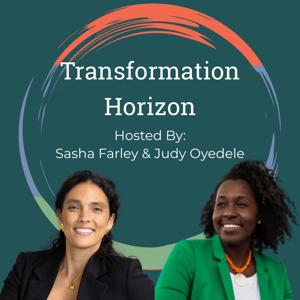


You rolled out the AI tools, ran the trainings, and explained the benefits, but people still aren't really using them. So why isn't adoption happening, and what are you missing?
Judy introduces the core reframe: adoption isn't the outcome you care about, behavior change is, so the real question is whether the work is actually being done differently or better. Sasha explains why this isn't a training problem. People don't trust that the tools won't be used to replace or surveil them, and under stress, the brain stops weighing goals and reverts to familiar habits, which is why even executives who want to use AI keep reaching for Post-It notes.
The key insight: AI adoption isn't a tool rollout; it's a change in how work gets done, and people adopt it when they understand their new role, trust that you care about them, and learn together rather than alone.
Have questions or want to share your thoughts? Email us at [email protected].
Please subscribe on YouTube, Spotify, or Apple Podcasts, give us a 5-star rating, and leave us a review! We love hearing from listeners!
#ODHorizonStories
How do you bring together a global network of stakeholders in electronics production to make an impact on worker safety?
In this re-release of an episode from Season 1, we interview Russ Gaskin of CoCreative Consulting about the Clean Electronics Production Network, an initiative that unites diverse stakeholders to understand, address, and eliminate workers' exposure to toxic chemicals in the electronics supply chain. We talk about leveraging feelings of overwhelm, how bringing diverse perspectives together to solve huge problems is an imperative rather than a luxury, the power of throwing a better party and letting people experience it, and getting in the right relationship with fear.
Check out the Green America Center for Sustainability Solutions to learn more about other projects focused on multi-stakeholder collaboration such as the Soil Climate Alliance.
Have a question, comment, or a recommendation for a perfect guest? Please email us at [email protected].
#ODHorizonStories
With all the return-to-office mandates and organizational changes happening, how can we design the way we work to actually support health, focus, and fulfillment instead of quietly burning everyone out?
Here's the reframe: this is a design challenge, not a people problem. In this episode, we explore how your brain's natural energy cycles shape your workday, why organizations need to get better at saying no strategically, and why doing less can actually mean accomplishing more. We also get real about why mission-driven organizations especially struggle with this paradox—and what to do about it.
The key insight: healthy organizations aren't cemented into one way of doing things. They're adaptive. And it's a practice, not a perfect.
Have a question similar to this one that you'd like us to answer in an upcoming episode? Send it to [email protected].
Please subscribe on YouTube, Spotify, or Apple Podcasts, give us a 5-star rating, and leave us a review!
#ODHorizonStories
Welcome to Season 4 of Transformation Horizon! We're switching things up this season with shorter, focused episodes where Judy and Sasha dig into the real questions leaders are grappling with right now. In this first episode, we tackle how healthy organizations balance empathy and flexibility with performance expectations when genuinely hard things happen—in our lives and in the world.
We explore why trust is your foundation, what to put in place before crises hit rather than scrambling to respond, and why acknowledging what's happening actually helps people move forward. The bottom line: people are emotional first and logical second. You can ignore it, but it's there.
Have a question, comment, or a recommendation for a perfect guest? Please email us at [email protected].
Please subscribe on YouTube, Spotify, or Apple Podcasts, give us a 5-star rating, and leave us a review!
#ODHorizonStories
From the publisher's feed