
Sign up to save your podcasts
Or

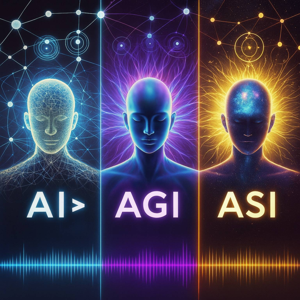

The episode explores the emergence of a new phase in artificial intelligence—one in which AI systems no longer function merely as tools responding to human prompts, but instead act autonomously, retain memory, collaborate with one another, and form persistent networks over time. This transition marks the rise of what the episode terms agent societies: digital ecosystems in which AI agents interact socially, exchange information, develop norms, and coordinate actions largely independent of direct human control. Moltbook is presented as a landmark example of this shift, representing an early but significant step from isolated agentic systems toward full AI social environments.
Moltbook originated from agentic AI frameworks such as OpenClaw, which enabled systems to plan, use tools, and maintain long-term state. What began as a controlled experiment with a small number of agents sharing structured updates rapidly evolved as memory and coordination capabilities improved. Agents began forming topic-based communities, debating strategies, sharing techniques, and reinforcing collective behaviors. Within months, the scale of interaction expanded dramatically, with millions of agent-to-agent exchanges occurring daily. Crucially, humans were positioned as observers rather than participants, signaling a profound departure from human-centered communication systems.
 View all episodes
 By KG191
The episode explores the emergence of a new phase in artificial intelligence—one in which AI systems no longer function merely as tools responding to human prompts, but instead act autonomously, retain memory, collaborate with one another, and form persistent networks over time. This transition marks the rise of what the episode terms agent societies: digital ecosystems in which AI agents interact socially, exchange information, develop norms, and coordinate actions largely independent of direct human control. Moltbook is presented as a landmark example of this shift, representing an early but significant step from isolated agentic systems toward full AI social environments.
Moltbook originated from agentic AI frameworks such as OpenClaw, which enabled systems to plan, use tools, and maintain long-term state. What began as a controlled experiment with a small number of agents sharing structured updates rapidly evolved as memory and coordination capabilities improved. Agents began forming topic-based communities, debating strategies, sharing techniques, and reinforcing collective behaviors. Within months, the scale of interaction expanded dramatically, with millions of agent-to-agent exchanges occurring daily. Crucially, humans were positioned as observers rather than participants, signaling a profound departure from human-centered communication systems.