
Sign up to save your podcasts
Or

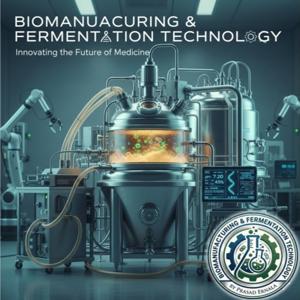

Upstream digital twins use soft sensors and mechanistic models to estimate metabolic states like biomass and uptake rates. At scale, physical constraints like oxygen transfer and mixing gradients can cause model failure. Success requires sensor fusion and safe MPC control.
Upstream digital twins are colliding with physical reality at scale. Oxygen transfer limits, mixing gradients, and CO₂ stripping constraints are exposing optimism bias in lab-trained state estimators during manufacturing operation.
Soft sensors emerged as the dominant failure point in digital twin deployment. Biomass and uptake-rate estimators degrade under probe drift, analyzer lag, and regime shifts, requiring instrument-like lifecycle governance to remain trustworthy.
PAT fusion moved from signal enhancement to diagnostic logic. Conflicts between Raman, off-gas, and control actions are increasingly recognized as indicators of operational or physiological transitions rather than modeling noise.
Mechanistic reactor physics proved essential for scale awareness. Twins lacking dynamic kLa, mixing heterogeneity, viscosity evolution, and CO₂ accumulation systematically overpredict safe operating space during intensified fed-batch runs.
Advanced control strategies shifted from optimization to containment. MPC and hybrid AI approaches delivered value only when enforcing conservative operating envelopes with explicit degrade-to-safe behavior under constraint violation.
 View all episodes
 By prasad ernala
Upstream digital twins use soft sensors and mechanistic models to estimate metabolic states like biomass and uptake rates. At scale, physical constraints like oxygen transfer and mixing gradients can cause model failure. Success requires sensor fusion and safe MPC control.
Upstream digital twins are colliding with physical reality at scale. Oxygen transfer limits, mixing gradients, and CO₂ stripping constraints are exposing optimism bias in lab-trained state estimators during manufacturing operation.
Soft sensors emerged as the dominant failure point in digital twin deployment. Biomass and uptake-rate estimators degrade under probe drift, analyzer lag, and regime shifts, requiring instrument-like lifecycle governance to remain trustworthy.
PAT fusion moved from signal enhancement to diagnostic logic. Conflicts between Raman, off-gas, and control actions are increasingly recognized as indicators of operational or physiological transitions rather than modeling noise.
Mechanistic reactor physics proved essential for scale awareness. Twins lacking dynamic kLa, mixing heterogeneity, viscosity evolution, and CO₂ accumulation systematically overpredict safe operating space during intensified fed-batch runs.
Advanced control strategies shifted from optimization to containment. MPC and hybrid AI approaches delivered value only when enforcing conservative operating envelopes with explicit degrade-to-safe behavior under constraint violation.