
Sign up to save your podcasts
Or

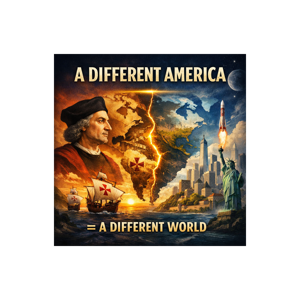

What if the New World had opened not to a crown of conquest, but to a republic of merchants?
In this episode, we explore the rise of a very different America—one shaped not first by kings, conquistadors, and vast inland empires, but by the logic of the Venetian Republic: ports, contracts, warehouses, fortified harbors, shipping routes, and profit.
After Christopher Columbus sails in Venetian service, America begins to develop as a maritime network. The Caribbean becomes a chain of commercial strongholds. Colonial cities grow around docks, customs houses, chapels, and trading compounds. Expansion moves first along coasts and islands, not deep inland—turning the Atlantic into a web of urban and financial power.
But trade does not mean peace. Venetian America still brings disease, slavery, coercion, and exploitation. Indigenous worlds are disrupted, local elites are drawn into new systems of dependency, and commerce becomes another instrument of empire. The difference is not moral innocence, but structure: this is a colonial order built less on feudal conquest and more on organized exchange, information, and strategic control.
As the centuries pass, a unique Atlantic society begins to emerge—urban, mixed, multilingual, commercially driven, and increasingly self-aware. Port elites grow richer, colonial identities grow stronger, and the republican spirit that Venice exported across the ocean slowly begins to turn against the metropolis itself.
This episode follows the making of that world from 1500 to 1800: the first footholds, the rise of commercial colonies, the slow penetration of the interior, the rivalry with Europe’s monarchies, and the tensions that would prepare the next great transformation.
Because if Venice had reached America first, the New World might not have become an empire of kings.
It might have become an empire of cities.
 View all episodes
 By Alan Maldam
What if the New World had opened not to a crown of conquest, but to a republic of merchants?
In this episode, we explore the rise of a very different America—one shaped not first by kings, conquistadors, and vast inland empires, but by the logic of the Venetian Republic: ports, contracts, warehouses, fortified harbors, shipping routes, and profit.
After Christopher Columbus sails in Venetian service, America begins to develop as a maritime network. The Caribbean becomes a chain of commercial strongholds. Colonial cities grow around docks, customs houses, chapels, and trading compounds. Expansion moves first along coasts and islands, not deep inland—turning the Atlantic into a web of urban and financial power.
But trade does not mean peace. Venetian America still brings disease, slavery, coercion, and exploitation. Indigenous worlds are disrupted, local elites are drawn into new systems of dependency, and commerce becomes another instrument of empire. The difference is not moral innocence, but structure: this is a colonial order built less on feudal conquest and more on organized exchange, information, and strategic control.
As the centuries pass, a unique Atlantic society begins to emerge—urban, mixed, multilingual, commercially driven, and increasingly self-aware. Port elites grow richer, colonial identities grow stronger, and the republican spirit that Venice exported across the ocean slowly begins to turn against the metropolis itself.
This episode follows the making of that world from 1500 to 1800: the first footholds, the rise of commercial colonies, the slow penetration of the interior, the rivalry with Europe’s monarchies, and the tensions that would prepare the next great transformation.
Because if Venice had reached America first, the New World might not have become an empire of kings.
It might have become an empire of cities.