
Sign up to save your podcasts
Or

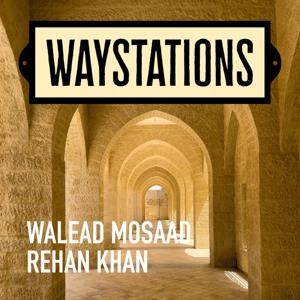

Sacred scriptures, and the literary works spawned by them, are full of images of paths and passages, of wandering and wayfaring. Many other traditions speak of a path, often straight and narrow, and warn of roadblocks, such as of one’s own pride.
In this episode we speak about walking with intention and also reflect on a recent 200km walk we undertook across desert and mountain.
Book recommendations:
Walden by Henry David Thoreau
About the hosts:
Walead Mosaad is an internationally recognized scholar in Islamic studies and human development. His academic and traditional training has accorded him the opportunity to work with communities worldwide as a teacher and project driver. He has completed degrees from Rutgers University and Fath Islamic Seminary in Damascus. He received his PhD from the University of Exeter in Arab and Islamic Studies, and was also classically trained at the Al-Azhar University.
He is currently the Chair and Scholar-in-Residence of Sabeel Community. He has traveled extensively throughout the Muslim world, as well as Europe and the Far East, delivering lectures on various topics, including spirituality, ethics and intercultural peace building.
Rehan Khan is a professor of leadership and novelist. He is an advocate for virtue-based storytelling as well as leading with a moral lens. Over 30 years Rehan has advised several global and regional brands. As an adjunct professor he teaches post-graduate courses in AI and the Future of Work, as well as Leadership: A Moral Perspective, and Personal Influence at one of the world’s leading international business schools.
He is a keen observer of history and techno-science. Rehan is the author of a Tomb of Empires (2024) a historical fiction set in 90BC in the Middle East, the Carnegie nominated A Tudor Turk trilogy (2019-2022) set in the Ottoman Empire and Tudor England, and the fantasy sci-fi series, Tales of Khayaal (2025) set on the Earth like planet of Ikleel. These gripping stories also ask readers to consider the role of virtue within the human story.
 View all episodes
 By Walead Mosaad & Rehan Khan
Sacred scriptures, and the literary works spawned by them, are full of images of paths and passages, of wandering and wayfaring. Many other traditions speak of a path, often straight and narrow, and warn of roadblocks, such as of one’s own pride.
In this episode we speak about walking with intention and also reflect on a recent 200km walk we undertook across desert and mountain.
Book recommendations:
Walden by Henry David Thoreau
About the hosts:
Walead Mosaad is an internationally recognized scholar in Islamic studies and human development. His academic and traditional training has accorded him the opportunity to work with communities worldwide as a teacher and project driver. He has completed degrees from Rutgers University and Fath Islamic Seminary in Damascus. He received his PhD from the University of Exeter in Arab and Islamic Studies, and was also classically trained at the Al-Azhar University.
He is currently the Chair and Scholar-in-Residence of Sabeel Community. He has traveled extensively throughout the Muslim world, as well as Europe and the Far East, delivering lectures on various topics, including spirituality, ethics and intercultural peace building.
Rehan Khan is a professor of leadership and novelist. He is an advocate for virtue-based storytelling as well as leading with a moral lens. Over 30 years Rehan has advised several global and regional brands. As an adjunct professor he teaches post-graduate courses in AI and the Future of Work, as well as Leadership: A Moral Perspective, and Personal Influence at one of the world’s leading international business schools.
He is a keen observer of history and techno-science. Rehan is the author of a Tomb of Empires (2024) a historical fiction set in 90BC in the Middle East, the Carnegie nominated A Tudor Turk trilogy (2019-2022) set in the Ottoman Empire and Tudor England, and the fantasy sci-fi series, Tales of Khayaal (2025) set on the Earth like planet of Ikleel. These gripping stories also ask readers to consider the role of virtue within the human story.