
Sign up to save your podcasts
Or


Episode Summary
What does the Chief Quality Officer role actually entail once you get past regulatory compliance and dashboards?
In this episode, Dr. Abraham Jacob draws on years as a system-level CQO to explain how quality leadership really works in practice: where to start, what to prioritize, and how culture, safety, and accountability interact over time. The conversation is grounded in lived experience, including successes, failures, and lessons learned during periods of workforce instability and change.
This episode is most useful for CQOs, CMOs, senior clinical leaders, and anyone building improvement capability at scale.
Core Ideas from the Conversation
Questions This Episode Raises for Leaders
Resources & References Mentioned
Continue the Conversation
You can connect with Dr. Abraham Jacob via email at [email protected] or on LinkedIn.
Reflection and dialogue are central to improvement, so take a moment to notice where these ideas show up in your own system.
New episodes published every other Thursday at 7AM Eastern Time.
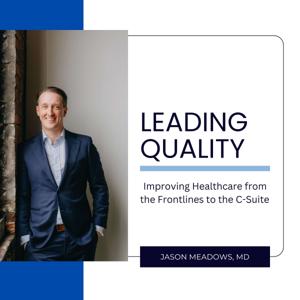
Leading Quality is a podcast for healthcare leaders committed to improving systems, culture, and outcomes.
If you found this episode valuable, follow the show, rate and review the podcast, or share it with a colleague working to improve care.
Connect with Jason Meadows on LinkedIn for more insights on healthcare quality and leadership.
Help us build this podcast community from the ground up: share your top insight from this episode and where you’re seeing it in your own work. I read every response and will share what we’re learning over time in future episodes and other ways.
New episodes published every other Thursday at 7AM Eastern Time.
Credits:
Host, Writer, and Executive Producer
Jason Meadows, MD
Produced by
Thrive Healthcare Improvement
Edited by
Milan Milosavljevic
 View all episodes
 By Jason Meadows, MD
Episode Summary
What does the Chief Quality Officer role actually entail once you get past regulatory compliance and dashboards?
In this episode, Dr. Abraham Jacob draws on years as a system-level CQO to explain how quality leadership really works in practice: where to start, what to prioritize, and how culture, safety, and accountability interact over time. The conversation is grounded in lived experience, including successes, failures, and lessons learned during periods of workforce instability and change.
This episode is most useful for CQOs, CMOs, senior clinical leaders, and anyone building improvement capability at scale.
Core Ideas from the Conversation
Questions This Episode Raises for Leaders
Resources & References Mentioned
Continue the Conversation
You can connect with Dr. Abraham Jacob via email at [email protected] or on LinkedIn.
Reflection and dialogue are central to improvement, so take a moment to notice where these ideas show up in your own system.
New episodes published every other Thursday at 7AM Eastern Time.
Leading Quality is a podcast for healthcare leaders committed to improving systems, culture, and outcomes.
If you found this episode valuable, follow the show, rate and review the podcast, or share it with a colleague working to improve care.
Connect with Jason Meadows on LinkedIn for more insights on healthcare quality and leadership.
Help us build this podcast community from the ground up: share your top insight from this episode and where you’re seeing it in your own work. I read every response and will share what we’re learning over time in future episodes and other ways.
New episodes published every other Thursday at 7AM Eastern Time.
Credits:
Host, Writer, and Executive Producer
Jason Meadows, MD
Produced by
Thrive Healthcare Improvement
Edited by
Milan Milosavljevic