
Sign up to save your podcasts
Or

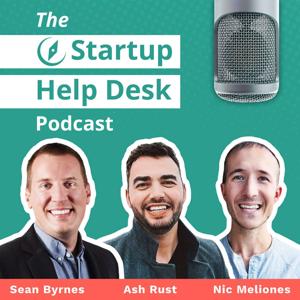

In this episode we answer questions about innovation. Startups are expected to innovate, but what does that mean? What is innovation and how does it become an advantage? We are here to help! In this episode we answer questions including:
All of these questions were submitted by listeners just like you. You can submit questions for us to answer on our website TheStartupHelpdesk.com or on X/Twitter @thestartuphd - we'd love to hear from you!
Your hosts:
Reminder: this is not legal advice or investment advice.
Q0: What is innovation?
Innovation is the process to generate a new method, idea, or product that solves a problem. Innovation is an umbrella term that includes entrepreneurship, corporate innovation, social innovation, and others.
Adoption is key.
Q1: Is there a process to innovation?
Yes! However, innovation is not a direct line process. While there are common paths and milestones, the process requires judgement and the ability to cycle backwards and iterate.
Key steps include:
Resources available online include content about Human Centered Design, Design Thinking, and more. In fact, two of our hosts have produced tons of fantastic content on the topic: Ash Rust on Medium and Sean Byrnes’ The Breaking Point on Substack.
Q2: What is the cost to not innovating?
The cost for doing nothing can be catastrophic. A PwC survey of more than 4,700 CEOs worldwide showed that “45% of the respondents were worried that their businesses wouldn’t be viable in a decade without reinvention.”
Innovation is a durable skill set.
Innovation is hard to learn, but it is one of the few advantages you have. You won’t win by playing by the rules, you win by creating a new game.
Q3: How do I know if I'm being innovative?
There is no set of rules to guarantee that you are being innovative. Your innovation success requires adoption.
That being said, if you answer “yes” to the following questions, you are on the right track:
If customers want your product or at least the idea of it, awesome. If competitors copy your idea, that’s a sign that you are bringing new value to an opportunity.
 View all episodes
 By Sean Byrnes, Ash Rust & Nic Meliones
In this episode we answer questions about innovation. Startups are expected to innovate, but what does that mean? What is innovation and how does it become an advantage? We are here to help! In this episode we answer questions including:
All of these questions were submitted by listeners just like you. You can submit questions for us to answer on our website TheStartupHelpdesk.com or on X/Twitter @thestartuphd - we'd love to hear from you!
Your hosts:
Reminder: this is not legal advice or investment advice.
Q0: What is innovation?
Innovation is the process to generate a new method, idea, or product that solves a problem. Innovation is an umbrella term that includes entrepreneurship, corporate innovation, social innovation, and others.
Adoption is key.
Q1: Is there a process to innovation?
Yes! However, innovation is not a direct line process. While there are common paths and milestones, the process requires judgement and the ability to cycle backwards and iterate.
Key steps include:
Resources available online include content about Human Centered Design, Design Thinking, and more. In fact, two of our hosts have produced tons of fantastic content on the topic: Ash Rust on Medium and Sean Byrnes’ The Breaking Point on Substack.
Q2: What is the cost to not innovating?
The cost for doing nothing can be catastrophic. A PwC survey of more than 4,700 CEOs worldwide showed that “45% of the respondents were worried that their businesses wouldn’t be viable in a decade without reinvention.”
Innovation is a durable skill set.
Innovation is hard to learn, but it is one of the few advantages you have. You won’t win by playing by the rules, you win by creating a new game.
Q3: How do I know if I'm being innovative?
There is no set of rules to guarantee that you are being innovative. Your innovation success requires adoption.
That being said, if you answer “yes” to the following questions, you are on the right track:
If customers want your product or at least the idea of it, awesome. If competitors copy your idea, that’s a sign that you are bringing new value to an opportunity.