
Sign up to save your podcasts
Or

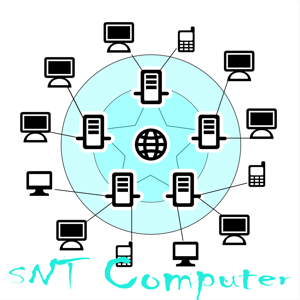

What is MAN (Metropolitan Area Network)?
A MAN structure is a high-speed network that covers a wide geographic area, providing the ability to integrate multiple services through data, voice, and video transmission over media transmission systems such as fiber optics.
Twisted pair copper-pair technology is perfect for building metropolitan networks due to its low latency, excellent stability, and radioelectric interference.
The concept of the metropolitan area network represents a broader evolution of the concept of local area network, in some cases, it encompasses wider areas that are not limited to the metropolitan environment but can reach regional or even national coverage by interconnecting different networks.
With a MAN network, it is possible to share and exchange any type of data with fiber optic or twisted pair cable. These types of networks represent an evolution of LAN networks as they help interconnection covering a larger surface area over a larger area. On the other hand, there is a WAN network that allows countries and continents to be connected.
MAN networks can be public or private. These networks are developed with two unidirectional buses, that is, each acts independently in data transfer.
When using fiber optics, as long as two networks of equal size are compared, the error rate is lower than when using copper cable. It is worth noting that both options are safe, as they do not allow their signals to be read or changed without physically breaking the connection.
High Availability
Availability refers to the percentage of time the network has been operating without errors. Metropolitan area networks have automatic fault recovery mechanisms. In the case of copper cable, EFM bonding is used, allowing flow to be collected in multiple cables.
High Reliability
Reliability refers to the network's rate of error during processing. The error rate is understood as the number of erroneous bits transmitted over the network.
Generally, the error rate for optical fiber is less than the same length of copper cable. The error rate, which is not detected by the error detection mechanisms, is 10-20.
This feature allows metropolitan area networks to operate in environments where errors such as air traffic control can be catastrophic.
High Security
Fiber optics and cable are a safe medium because it is not possible to read or change the signal without physically interrupting the connection.
Breaking a cable and placing mechanisms outside of the network means the connection is temporarily dropped; furthermore access, and action to the physical cable is required before such action is easily noticed.
 View all episodes
 By M. Sean
What is MAN (Metropolitan Area Network)?
A MAN structure is a high-speed network that covers a wide geographic area, providing the ability to integrate multiple services through data, voice, and video transmission over media transmission systems such as fiber optics.
Twisted pair copper-pair technology is perfect for building metropolitan networks due to its low latency, excellent stability, and radioelectric interference.
The concept of the metropolitan area network represents a broader evolution of the concept of local area network, in some cases, it encompasses wider areas that are not limited to the metropolitan environment but can reach regional or even national coverage by interconnecting different networks.
With a MAN network, it is possible to share and exchange any type of data with fiber optic or twisted pair cable. These types of networks represent an evolution of LAN networks as they help interconnection covering a larger surface area over a larger area. On the other hand, there is a WAN network that allows countries and continents to be connected.
MAN networks can be public or private. These networks are developed with two unidirectional buses, that is, each acts independently in data transfer.
When using fiber optics, as long as two networks of equal size are compared, the error rate is lower than when using copper cable. It is worth noting that both options are safe, as they do not allow their signals to be read or changed without physically breaking the connection.
High Availability
Availability refers to the percentage of time the network has been operating without errors. Metropolitan area networks have automatic fault recovery mechanisms. In the case of copper cable, EFM bonding is used, allowing flow to be collected in multiple cables.
High Reliability
Reliability refers to the network's rate of error during processing. The error rate is understood as the number of erroneous bits transmitted over the network.
Generally, the error rate for optical fiber is less than the same length of copper cable. The error rate, which is not detected by the error detection mechanisms, is 10-20.
This feature allows metropolitan area networks to operate in environments where errors such as air traffic control can be catastrophic.
High Security
Fiber optics and cable are a safe medium because it is not possible to read or change the signal without physically interrupting the connection.
Breaking a cable and placing mechanisms outside of the network means the connection is temporarily dropped; furthermore access, and action to the physical cable is required before such action is easily noticed.