
Sign up to save your podcasts
Or

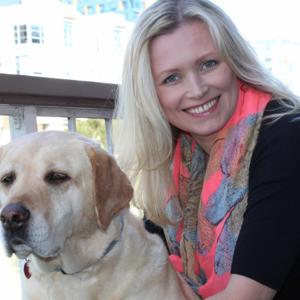

In a few days, I’ll be in live dialogue with Bill McKibben, just as the climate conversation moves beyond awareness and into accountability. The solutions are here; what remains is whether we’re willing to meet the moment we’ve created.
For a long time, climate conversations were shaped by a familiar set of obstacles: denial, uncertainty, and the absence of viable alternatives. The work — rightly — was about making the problem visible and undeniable.
But we are no longer in that moment.
Solar, wind, and storage have crossed thresholds that would have seemed implausible even a decade ago. It is no longer a question of whether we have the tools to address climate change.
Today, the question is why — despite having the solutions — we still hesitate to act at the scale and speed required.
This shift matters, because it changes what honesty requires of us.
In Change Fails When We Deny Choice, I argued that transformation stalls when people are asked to comply without agency. For years, denial in the climate space was external: bad actors obscuring facts, sowing doubt, delaying reckoning. It looks subtler now.
Today, denial shows up as an insistence that what’s missing is more willpower, more motivation, more exhortation — when what’s actually missing is agency embedded in systems that allow people and institutions to act without heroic effort.
The distinction between will and agency is not semantic. It is moral.
Framing climate delay as a failure of will quietly individualizes responsibility while leaving structural blockages intact. It allows systems that concentrate power, slow deployment, and reward delay to remain unexamined, while the burden of action is placed on consumers, activists, or future generations.
I debunked the perceived strength of this approach in What If I Told You That You Don’t Need To Change Minds To Create Powerful Change?
Asking people to care more is easier than redesigning the conditions that would let care turn into action. It is a copout.
This is why I’ve become increasingly interested in climate not just as an environmental challenge, but as a question of moral infrastructure.
In Your Support Of Public Libraries Changes Lives, I wrote about public libraries as institutions that exist not to optimize markets, but to protect dignity, access, and agency — to make choice possible in the first place. Energy — especially renewable energy — belongs in this category. Unlike fossil fuels, renewables are modular, distributable, and capable of being governed closer to the people who depend on them. They don’t just reduce emissions; they rearrange power.
So the question becomes: if we treated energy the way we treat other forms of moral infrastructure, what decisions would look different? Who would get to decide? What would no longer be acceptable to delay?
I’ve been sitting with these questions as I prepare for a live conversation with Bill McKibben, whose latest work (Here Comes The Sun, 2025) reflects a similar turn — from sounding the alarm to asking what, exactly, is in the way now that the alarm has been heard.
What interests me most in this moment is not whether people care enough, but how responsibility is structured once caring is no longer the bottleneck. When the tools exist, delay takes on a different moral weight. Leadership looks less like persuasion and more like stewardship. And the hardest work shifts from invention to honesty—about power, tradeoffs, and what this transition will actually demand of us.
This is a theme I returned to in What I’m Willing to Burn (and What I’m Choosing to Carry Forward): the move from urgency and accumulation toward custodianship —protecting the conditions that allow agency, dignity, and choice to exist at all. It’s also why I’ve grown wary of climate narratives that oscillate between optimism and despair, without grappling with responsibility in between.
That’s the terrain I want to explore with Bill: how his own work has evolved alongside these shifts, what truths about institutions and human behavior took the longest to accept, and how he thinks about telling the truth now — without either comforting people with illusions or paralyzing them with despair.
Before that conversation, I want to widen the aperture
If you had a genuine opportunity to ask one careful, non-performative question of someone who has spent decades at the center of the climate movement, what would you ask now?
Not a slogan.Not a policy preference.But the question you think this moment can no longer avoid.
I’m gathering your questions as I shape the interview, and I’ll carry some of them — crediting the originators — into the conversation itself.
This feels like a moment that deserves shared thinking.
If you find this inquiry useful, I’d invite you to share it with someone who’s been struggling to name what feels different about the climate conversation right now. And if you’re a paid subscriber, thank you: your support is what allows me to hold space for work that’s less about performance, and more about responsibility.
The interview is coming soon.The questions are already here.
What is yours?
* * *
Changemakers' Handbook is an audience supported publication, so please share, subscribe on Substack, follow in Apple Podcasts and Spotify, and engage with this growing global community of changemakers committed to perfecting our craft!
 View all episodes
 By Elena Bondareva
In a few days, I’ll be in live dialogue with Bill McKibben, just as the climate conversation moves beyond awareness and into accountability. The solutions are here; what remains is whether we’re willing to meet the moment we’ve created.
For a long time, climate conversations were shaped by a familiar set of obstacles: denial, uncertainty, and the absence of viable alternatives. The work — rightly — was about making the problem visible and undeniable.
But we are no longer in that moment.
Solar, wind, and storage have crossed thresholds that would have seemed implausible even a decade ago. It is no longer a question of whether we have the tools to address climate change.
Today, the question is why — despite having the solutions — we still hesitate to act at the scale and speed required.
This shift matters, because it changes what honesty requires of us.
In Change Fails When We Deny Choice, I argued that transformation stalls when people are asked to comply without agency. For years, denial in the climate space was external: bad actors obscuring facts, sowing doubt, delaying reckoning. It looks subtler now.
Today, denial shows up as an insistence that what’s missing is more willpower, more motivation, more exhortation — when what’s actually missing is agency embedded in systems that allow people and institutions to act without heroic effort.
The distinction between will and agency is not semantic. It is moral.
Framing climate delay as a failure of will quietly individualizes responsibility while leaving structural blockages intact. It allows systems that concentrate power, slow deployment, and reward delay to remain unexamined, while the burden of action is placed on consumers, activists, or future generations.
I debunked the perceived strength of this approach in What If I Told You That You Don’t Need To Change Minds To Create Powerful Change?
Asking people to care more is easier than redesigning the conditions that would let care turn into action. It is a copout.
This is why I’ve become increasingly interested in climate not just as an environmental challenge, but as a question of moral infrastructure.
In Your Support Of Public Libraries Changes Lives, I wrote about public libraries as institutions that exist not to optimize markets, but to protect dignity, access, and agency — to make choice possible in the first place. Energy — especially renewable energy — belongs in this category. Unlike fossil fuels, renewables are modular, distributable, and capable of being governed closer to the people who depend on them. They don’t just reduce emissions; they rearrange power.
So the question becomes: if we treated energy the way we treat other forms of moral infrastructure, what decisions would look different? Who would get to decide? What would no longer be acceptable to delay?
I’ve been sitting with these questions as I prepare for a live conversation with Bill McKibben, whose latest work (Here Comes The Sun, 2025) reflects a similar turn — from sounding the alarm to asking what, exactly, is in the way now that the alarm has been heard.
What interests me most in this moment is not whether people care enough, but how responsibility is structured once caring is no longer the bottleneck. When the tools exist, delay takes on a different moral weight. Leadership looks less like persuasion and more like stewardship. And the hardest work shifts from invention to honesty—about power, tradeoffs, and what this transition will actually demand of us.
This is a theme I returned to in What I’m Willing to Burn (and What I’m Choosing to Carry Forward): the move from urgency and accumulation toward custodianship —protecting the conditions that allow agency, dignity, and choice to exist at all. It’s also why I’ve grown wary of climate narratives that oscillate between optimism and despair, without grappling with responsibility in between.
That’s the terrain I want to explore with Bill: how his own work has evolved alongside these shifts, what truths about institutions and human behavior took the longest to accept, and how he thinks about telling the truth now — without either comforting people with illusions or paralyzing them with despair.
Before that conversation, I want to widen the aperture
If you had a genuine opportunity to ask one careful, non-performative question of someone who has spent decades at the center of the climate movement, what would you ask now?
Not a slogan.Not a policy preference.But the question you think this moment can no longer avoid.
I’m gathering your questions as I shape the interview, and I’ll carry some of them — crediting the originators — into the conversation itself.
This feels like a moment that deserves shared thinking.
If you find this inquiry useful, I’d invite you to share it with someone who’s been struggling to name what feels different about the climate conversation right now. And if you’re a paid subscriber, thank you: your support is what allows me to hold space for work that’s less about performance, and more about responsibility.
The interview is coming soon.The questions are already here.
What is yours?
* * *
Changemakers' Handbook is an audience supported publication, so please share, subscribe on Substack, follow in Apple Podcasts and Spotify, and engage with this growing global community of changemakers committed to perfecting our craft!