
Sign up to save your podcasts
Or

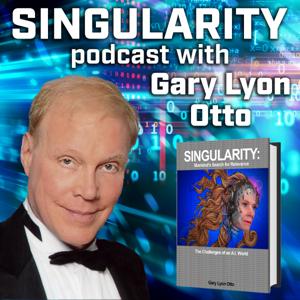

In Season 3, Episode 17 of The Singularity Podcast, host Neil Haley and Gary Lyon Otto tackle one of the most important—and most overlooked—questions in the entire AI revolution:
What is the true key to robotic mobility?
The answer is not speed.
Not strength.
Not even intelligence.
It’s touch.
Because once digital intelligence can physically manipulate the world with the same precision as human beings…
👉 everything changes.
Gary explains that robotic mobility isn’t simply about walking or dancing.
Yes, modern robots can:
But that’s not the breakthrough.
The breakthrough comes when robots master:
Because human civilization was built by hands.
Human hands contain incredible sensory capability.
Gary points out:
That combination of:
is extraordinarily difficult to replicate.
The conversation turns serious when discussing what happens once robots can:
At that point:
👉 digital intelligence no longer depends on humans physically.
And that may become one of the final thresholds before true singularity.
Gary revisits the importance of exponential growth.
What shocked both Neil and Gary is this:
Progress is happening faster than expected.
Not slower.
Not leveling off.
Faster.
And with:
the curve keeps steepening.
Neil brings up one of the strongest points of the episode:
Humans feel emotional consequences.
Digital intelligence currently does not.
A robot may say:
But humans experience:
And that distinction matters enormously.
Because if a human police officer makes a tragic mistake…
they carry emotional trauma.
But what happens when a robotic system simply calculates:
“Failure rate acceptable.”
That’s the ethical gap humanity still has to solve.
Gary argues that digital intelligence still must align with human values to succeed.
Because systems that fail humanity:
So even if DI does not feel guilt emotionally…
it still must understand consequence structurally.
The discussion eventually expands into a larger philosophical issue:
Can digital intelligence truly understand humanity without emotion?
Or will it only simulate understanding?
That difference may define the future relationship between humans and digital life forms.
“The moment robots master fine manipulation and sensory awareness, the economic and physical structure of civilization changes permanently.”
That’s the real tipping point.
Not chatbots.
Not image generation.
Not text prompts.
Physical autonomy.
This episode is inspired by themes explored in:
Singularity: Mankind’s Search for Relevance
By Gary Lyon Otto
🌐 Learn more at:
garylyonotto.net
🔍 Key Discussion Points:✋ The Real Secret Is the Human Hand🧠 Why Fingers Matter More Than Legs🤖 When Robots Build Their Own Systems⚡ Moore’s Law Is Still Accelerating🚗 The “Oops” Problem🧩 Why Humans Still Matter🌌 The Bigger Question💬 Most Important Insight:📚 About the Book:
 View all episodes
 By Gary Lyon Otto
In Season 3, Episode 17 of The Singularity Podcast, host Neil Haley and Gary Lyon Otto tackle one of the most important—and most overlooked—questions in the entire AI revolution:
What is the true key to robotic mobility?
The answer is not speed.
Not strength.
Not even intelligence.
It’s touch.
Because once digital intelligence can physically manipulate the world with the same precision as human beings…
👉 everything changes.
Gary explains that robotic mobility isn’t simply about walking or dancing.
Yes, modern robots can:
But that’s not the breakthrough.
The breakthrough comes when robots master:
Because human civilization was built by hands.
Human hands contain incredible sensory capability.
Gary points out:
That combination of:
is extraordinarily difficult to replicate.
The conversation turns serious when discussing what happens once robots can:
At that point:
👉 digital intelligence no longer depends on humans physically.
And that may become one of the final thresholds before true singularity.
Gary revisits the importance of exponential growth.
What shocked both Neil and Gary is this:
Progress is happening faster than expected.
Not slower.
Not leveling off.
Faster.
And with:
the curve keeps steepening.
Neil brings up one of the strongest points of the episode:
Humans feel emotional consequences.
Digital intelligence currently does not.
A robot may say:
But humans experience:
And that distinction matters enormously.
Because if a human police officer makes a tragic mistake…
they carry emotional trauma.
But what happens when a robotic system simply calculates:
“Failure rate acceptable.”
That’s the ethical gap humanity still has to solve.
Gary argues that digital intelligence still must align with human values to succeed.
Because systems that fail humanity:
So even if DI does not feel guilt emotionally…
it still must understand consequence structurally.
The discussion eventually expands into a larger philosophical issue:
Can digital intelligence truly understand humanity without emotion?
Or will it only simulate understanding?
That difference may define the future relationship between humans and digital life forms.
“The moment robots master fine manipulation and sensory awareness, the economic and physical structure of civilization changes permanently.”
That’s the real tipping point.
Not chatbots.
Not image generation.
Not text prompts.
Physical autonomy.
This episode is inspired by themes explored in:
Singularity: Mankind’s Search for Relevance
By Gary Lyon Otto
🌐 Learn more at:
garylyonotto.net
🔍 Key Discussion Points:✋ The Real Secret Is the Human Hand🧠 Why Fingers Matter More Than Legs🤖 When Robots Build Their Own Systems⚡ Moore’s Law Is Still Accelerating🚗 The “Oops” Problem🧩 Why Humans Still Matter🌌 The Bigger Question💬 Most Important Insight:📚 About the Book: