
Sign up to save your podcasts
Or

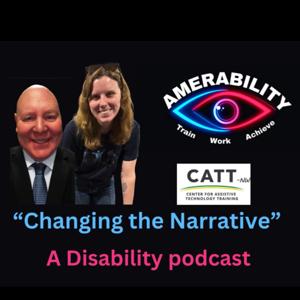

In Episode 12 of Changing the Narrative, Murray Elbourn and Elizabeth Rouse continue an honest, wide-ranging conversation about how growth happens when systems, expectations, and opportunities align. Drawing from lived experience and real-world observation, they explore how the structures surrounding blindness and low vision shape independence, confidence, and access to work, transportation, and financial stability. The discussion highlights how different approaches can either open doors or quietly place limits on what people are encouraged to pursue.
Throughout the episode, Murray and Elizabeth challenge assumptions about support and success, emphasizing the importance of environments that promote autonomy rather than restriction. Their conversation invites listeners to think differently about what meaningful inclusion looks like and how thoughtful design—both in policy and in everyday life—can create pathways toward economic mobility, contribution, and self-determination. The episode leaves listeners with a clearer sense of why changing the narrative requires more than awareness—it requires systems that truly work.
That perspective naturally connects to organizations like the National Federation of the Blind, whose work reflects many of the ideas explored in this episode. Listeners who are curious about advocacy, community leadership, and how collective action can influence opportunity will find this conversation especially relevant, offering context and insight that encourages deeper engagement beyond the episode itself.
 View all episodes
 By Murray Elbourn (Host) & Elizabeth Rouse (Co-Host)
In Episode 12 of Changing the Narrative, Murray Elbourn and Elizabeth Rouse continue an honest, wide-ranging conversation about how growth happens when systems, expectations, and opportunities align. Drawing from lived experience and real-world observation, they explore how the structures surrounding blindness and low vision shape independence, confidence, and access to work, transportation, and financial stability. The discussion highlights how different approaches can either open doors or quietly place limits on what people are encouraged to pursue.
Throughout the episode, Murray and Elizabeth challenge assumptions about support and success, emphasizing the importance of environments that promote autonomy rather than restriction. Their conversation invites listeners to think differently about what meaningful inclusion looks like and how thoughtful design—both in policy and in everyday life—can create pathways toward economic mobility, contribution, and self-determination. The episode leaves listeners with a clearer sense of why changing the narrative requires more than awareness—it requires systems that truly work.
That perspective naturally connects to organizations like the National Federation of the Blind, whose work reflects many of the ideas explored in this episode. Listeners who are curious about advocacy, community leadership, and how collective action can influence opportunity will find this conversation especially relevant, offering context and insight that encourages deeper engagement beyond the episode itself.